
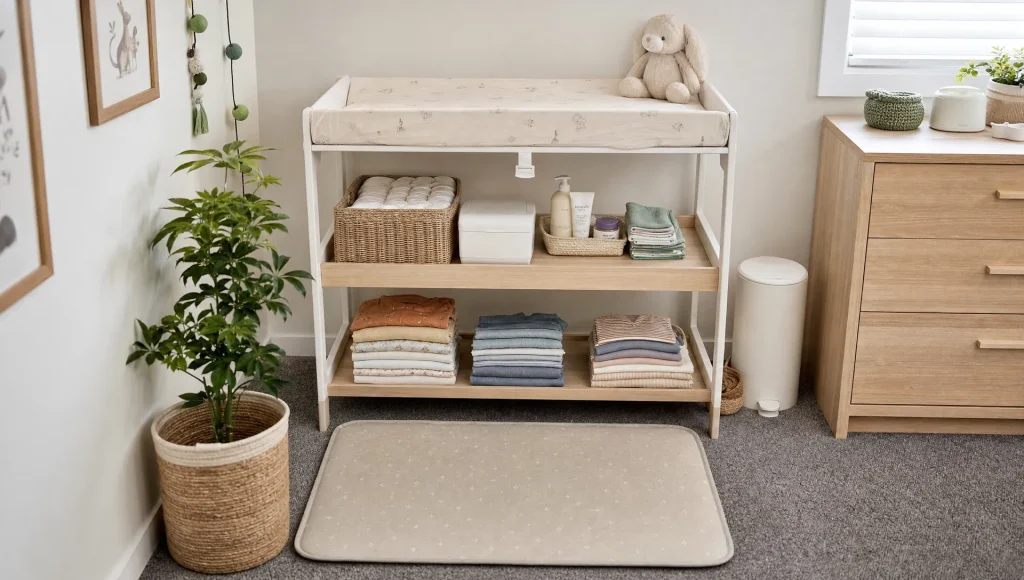
Changing your newborn’s nappy can feel awkward at first. Their legs are tiny, their skin is delicate and the umbilical cord stump can make even a simple change feel like a high-stakes task. The good news is that changing a newborn nappy safely is mostly about preparation, gentle handling and a consistent routine.
This guide walks you through each stage clearly, with NZ parents and caregivers in mind. Whether you use disposable nappies, cloth nappies or a mix of both, the safety principles are the same.
Before you start: the key safety rules
The biggest safety risk during a nappy change is not the nappy itself. It is falls. Newborns can jerk, wriggle or roll unexpectedly, even before they can roll with control. If you are using a change table, keep one hand on baby at all times and make sure everything you need is already within reach.
If you are tired, recovering from birth or changing baby during the night, the safest option may be a changing mat on the floor. It is not fancy, but it removes the risk of baby falling from a raised surface.
The NHS guidance on changing nappies also recommends keeping all supplies close, cleaning gently and washing your hands before and after the change. These basics matter because newborns have sensitive skin and immature immune systems.
What you need for a newborn nappy change
You do not need a complicated setup. You just need the right items close enough that you never have to step away from baby.
Keep these supplies ready before you undo the dirty nappy:
- A clean newborn nappy or cloth nappy
- Baby wipes or cotton wool with warm water
- A clean changing mat, towel or waterproof pad
- Nappy cream or barrier cream if baby’s skin needs it
- A nappy bag, bin or wet bag for cloth nappies
- Spare clothes in case the nappy has leaked
- Hand sanitiser for travel changes, plus soap and water when available
If you are still building your changing station, NappyCare’s practical newborn essentials checklist can help you separate must-haves from nice-to-haves. Wipes are one of the items families tend to go through quickly, so it can also be worth planning ahead with a guide to buying baby wipes in bulk once you know what suits your baby’s skin.
Quick safety checklist
Use this as a mental check before every change, especially in the early weeks when you are sleep deprived.
| Safety point | What to do | Why it matters |
|---|---|---|
| Fall prevention | Keep one hand on baby or change them on the floor | Newborns can move suddenly |
| Hygiene | Wash or sanitise hands before and after | Helps reduce germ transfer |
| Skin protection | Clean gently and pat dry | Newborn skin irritates easily |
| Cord care | Keep the umbilical stump clean and dry | Helps the area heal naturally |
| Comfort | Avoid pulling baby’s legs high or wide | Newborn hips and joints are still developing |
Changing a newborn nappy safely: step-by-step
Step 1: Wash your hands and prepare the area
Start by washing your hands with soap and water. If you are out and about, use hand sanitiser until you can wash properly. Place the clean nappy, wipes, cream and disposal bag beside you before you put baby on the change mat.
If you are using a raised changing surface, check that it is stable. Do not rely on straps alone. They can help, but they are not a substitute for active supervision and one steady hand on baby.
Step 2: Lay baby down gently
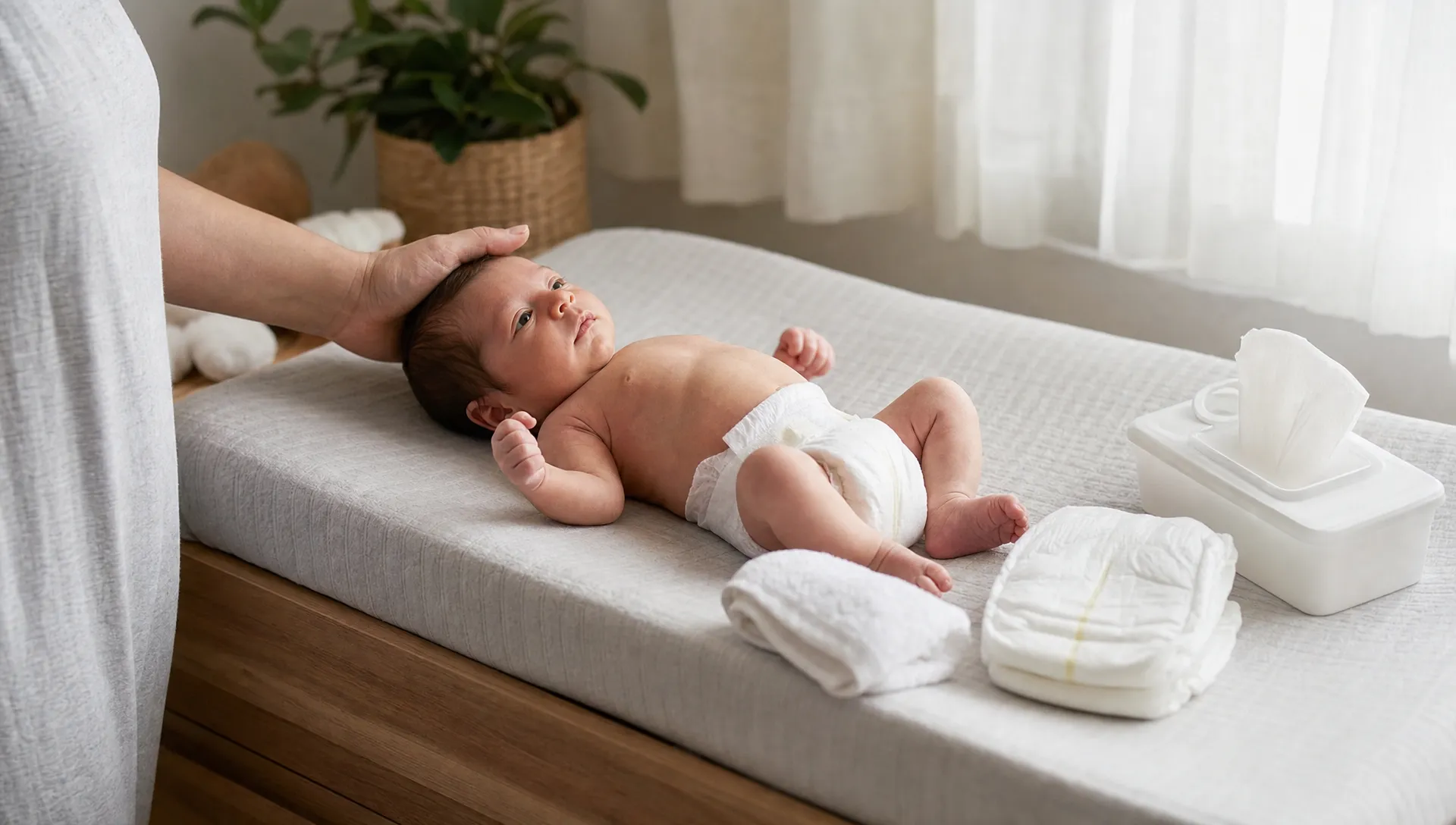
Place baby on their back with their head supported as you settle them. Speak softly or keep a hand on their tummy if they are unsettled. Newborns often dislike being undressed, so a calm voice and warm room can make the change easier.
Undo the lower half of baby’s clothing and move it well out of the way. If the nappy has leaked, roll clothes away from the mess rather than dragging them over baby’s legs.
Step 3: Open the dirty nappy slowly
Undo the tabs or fasteners, then pause for a moment. Newborns, especially boys, may wee when cool air hits their skin. You can loosely place the front of the nappy back over baby for a few seconds or keep a cloth nearby.
If there is poo, use the clean front part of the nappy to gently wipe away the bulk of it before removing the nappy. Fold the dirty nappy under baby with the clean outer side facing up. This gives you a temporary clean surface while you finish wiping.
Step 4: Clean gently from front to back
Wipe from front to back, especially for girls, to reduce the chance of bacteria moving toward the urinary tract. Clean between skin folds gently, but do not scrub. For sticky newborn poo, warm water on cotton wool or a soft cloth can help loosen it without rubbing.
For boys, clean around the penis and scrotum but do not force back the foreskin. For girls, wipe between the outer folds only and avoid trying to clean internally. Some newborn girls have a little white discharge or even a small amount of blood-stained discharge in the first days due to maternal hormones. If you are unsure, ask your midwife, GP or Well Child Tamariki Ora nurse.
Step 5: Lift baby safely while cleaning underneath
To clean under baby’s bottom, gently lift their lower body by holding both ankles together and raising just enough to wipe. Avoid pulling the legs sharply upward or spreading them wide. Another gentle method is to roll baby slightly to one side, then the other, while supporting their hips.
This is particularly useful for babies who seem uncomfortable when their legs are lifted. Newborns naturally keep their hips bent and turned out, so slow, supported movement is best.
Step 6: Let the skin dry before the clean nappy goes on
After wiping, pat the skin dry with a soft cloth or give baby a short moment of nappy-free time if the room is warm. Moisture trapped under a nappy can make irritation more likely.
If baby’s skin looks healthy, you may not need cream at every change. If there is redness or your baby is prone to irritation, apply a thin layer of barrier cream. More cream is not always better. A thick, sticky layer can be difficult to remove and may lead to extra rubbing at the next change.
Step 7: Position the clean nappy correctly
Slide the clean nappy under baby’s bottom, with the fastening tabs at the back for most disposable nappies. The back of the nappy should sit high enough to catch leaks, but the front should not rub against the umbilical stump.
If the stump is still attached, fold the top of the nappy down or use a newborn nappy shape that leaves the cord area uncovered. The aim is to keep the stump clean, dry and exposed to air where possible.
Step 8: Fasten the nappy without making it too tight
Bring the front of the nappy up between baby’s legs and fasten the tabs evenly. It should feel snug, not tight. You should be able to slide a finger comfortably between the nappy waistband and baby’s tummy.
Check the leg cuffs are sitting out, not tucked in. Tucked cuffs are a common cause of leaks. If red marks appear around the waist or thighs, the nappy may be too tight or too small. If poo or wee regularly leaks out, the nappy may be too loose, the fit may be wrong or baby may be ready for the next size.
Step 9: Dress baby and dispose of the dirty nappy
Fasten baby’s clothing before you turn away from the change area. If you are using a raised surface, move baby to a safe place such as their cot, bassinet or the floor before cleaning up.
Wrap disposable nappies securely and place them in the bin. For cloth nappies, follow your wash routine and store used nappies safely away from children and pets. Wash your hands when finished, even if you used wipes or gloves.
How often should you change a newborn nappy?
Newborns need frequent nappy changes because they feed often and have small bladders. As a simple rule, change a poo nappy as soon as you can and check for wet nappies around feeds, before sleep and when baby wakes.
In the first week, your midwife may ask about wet and dirty nappies because output is one sign that baby is feeding well. If your baby has fewer wet nappies than expected, very dark urine, a dry mouth, unusual sleepiness or you are worried about feeding, get advice promptly from your LMC, GP, PlunketLine or another health professional.
Night changes are a little different. If baby has done a poo, change them. If the nappy is only wet and baby is sleeping comfortably, some parents wait until the next feed, depending on the nappy, baby’s skin and professional advice. For babies with nappy rash, more frequent changes may be needed.
Caring for the umbilical cord during nappy changes
The umbilical cord stump usually dries, darkens and falls off on its own. During nappy changes, keep the area clean and dry. Fold the nappy down if it rubs against the stump and avoid covering it tightly with waistbands.
A small amount of dried blood can be normal as the stump separates, but seek medical advice if you notice spreading redness, swelling, pus, a bad smell, fever or if baby seems unwell. Do not pull the stump, even if it looks like it is nearly ready to come away.
Preventing nappy rash
Nappy rash is common, even with careful changing. Moisture, friction and contact with wee or poo can irritate the skin. Healthify NZ explains that nappy rash is often linked to prolonged contact with urine and faeces, so prompt changes and gentle cleaning are the foundation of prevention.
Helpful habits include changing dirty nappies quickly, patting the skin dry, using a suitable barrier cream when needed and giving baby some nappy-free time in a warm, safe space. Avoid scrubbing, heavily fragranced products and tight nappies if your baby’s skin is sensitive.
Call a health professional if the rash is severe, blistering, bleeding, spreading into skin folds, not improving after a few days of home care or if baby has a fever or seems unwell.
Common nappy changing mistakes to avoid
Even confident parents make small mistakes when they are tired. These are the ones most worth watching for.
| Mistake | Better approach |
|---|---|
| Leaving baby to grab wipes or clothes | Set everything up before baby goes on the mat |
| Wiping back to front | Wipe front to back, especially for girls |
| Fastening the nappy over the cord stump | Fold the front down until the stump has healed |
| Pulling legs too high | Lift gently or roll baby side to side |
| Using too much cream | Apply a thin layer only when needed |
| Forgetting the leg cuffs | Run a finger around each leg opening to prevent leaks |
Tips for calmer changes
A safe change is the priority, but comfort matters too. Keep the room warm enough that baby does not feel shocked when undressed. Use a soft voice, gentle touch and slow movements. Some babies settle if you place one hand lightly on their chest before you begin.
If baby cries through every change, do not assume you are doing something wrong. Many newborns dislike being cold, naked or handled when hungry. Try changing before a feed if baby is calm enough or halfway through a feed if they usually poo while feeding. Over time, you will learn your baby’s pattern.
For changes outside the house, pack more than you think you need. A portable change mat, extra nappies, wipes, a spare outfit and a sealable bag can save a lot of stress. If you are preparing your changing bag alongside other first-month items, the NappyCare newborn essentials guide is a useful place to check what is genuinely practical.
Frequently Asked Questions
Should I change my newborn before or after a feed? It depends on your baby. Some newborns poo during or just after feeding, so changing after can make sense. If your baby is too sleepy to feed, a gentle nappy change before feeding may help wake them.
Do I need to use wipes for every newborn nappy change? No. Many parents use wipes, but cotton wool and warm water can be a gentle option, especially in the early days or if baby’s skin is irritated. Choose what suits your baby’s skin and change routine.
How tight should a newborn nappy be? The nappy should be snug enough to prevent leaks but not tight. You should be able to fit a finger comfortably at the waistband, and there should be no deep red marks on baby’s tummy or thighs.
Is it normal for newborn poo to be very dark at first? Yes, the first poo is usually meconium, which is dark, sticky and tar-like. Over the next few days it typically changes as feeding becomes established. If you are worried about colour, frequency or baby’s wellbeing, ask your midwife or doctor.
Can I change a newborn nappy on a bed or couch? You can, but only with constant supervision and one hand on baby. Beds and couches are soft, uneven and easy to roll from. A changing mat on the floor is often the safer option if you are tired or distracted.
Make newborn changes easier with the right essentials
Changing a newborn nappy safely gets easier with repetition, but the right setup helps from day one. Keep your changing supplies simple, gentle and close at hand, then focus on slow handling and clean, dry skin.
For practical baby care items, gifts and everyday newborn essentials, you can explore NappyCare’s baby products for NZ families.