Two hours is the usual window for using leftover expressed breast milk after a feed. The best bottles for breastfed babies make it easier to offer a suitable portion, manage flow, and wash parts. No nipple shape guarantees acceptance. Matching the bottle to your baby and feeding caregiver matters more than choosing one marketed as breast-like.
Start with one bottle, not a multipack. Judge the feed and washing routine before adding more.
1. Slow-flow nipples for controlled feeding
What it changes
Flow rate is how quickly milk comes through the nipple. A slower flow gives your baby more time to suck, swallow, and breathe. That can make feeds easier to manage, especially while your baby is learning to feed from a bottle.
A “slow-flow” label gives you a starting point, not a shared standard. Brands use different nipple designs and flow levels, so two nipples with the same label can feel different during a feed. Don’t assume the label means one fixed speed.
What to compare
Start with the slowest flow available for that bottle line. Then watch your baby, rather than moving up by age alone. Repeated gulping, coughing, milk leaking from the mouth, or pulling away can mean the flow feels too fast. One sign alone doesn’t confirm the cause.
A flow that’s too slow can also frustrate a baby. If feeding regularly stalls or your baby struggles to get milk, check the bottle’s assembly and ask your pediatrician or a lactation professional for help. Don’t cut or enlarge a nipple opening. That can make the flow uneven and hard to control.
Who it suits
A slow-flow nipple is a sensible first option when a baby is new to bottle-feeding. It’s also worth keeping in mind when choosing a bottle for a caregiver who hasn’t fed your baby before. Don’t choose a faster flow just to shorten feeds. Your baby’s comfort and coordinated feeding matter more than saving a few minutes.
2. Nipple shape and texture for a comfortable latch
What it changes
A bottle nipple can feel different from the breast in its shape, length, firmness, and surface. Your baby may accept one design and resist another. There’s no single shape that works for every mouth, and a breast-like profile can’t guarantee acceptance.
During a bottle feed, look for a comfortable seal and steady sucking. Milk repeatedly leaking from the corners of the mouth, slipping off the nipple, or frequent pulling away can show that the fit or flow needs another look. These signs can have more than one cause, so consider them alongside your baby’s overall feeding pattern.
What to compare
Compare the nipple’s length and the width of its base. Some babies manage a shorter nipple more comfortably, while others latch more easily on a different shape. Texture and firmness also vary. If a nipple feels unusually firm or your baby keeps losing the seal, try a different design rather than pushing the same one.
Don’t judge by appearance alone. A wide base or soft surface can look convincing but still feel awkward to your baby. The baby’s latch matters more than a label or shape claim. Watch whether your baby opens their mouth, keeps a steady seal, and feeds without repeated slipping.
Who it suits
This feature matters most when your baby has trouble staying latched or refuses a particular bottle. Try a different nipple design before buying a large supply. The term nipple confusion is used in different ways, but no bottle shape can promise to prevent feeding changes or guarantee a smooth switch between breast and bottle.
3. Paced feeding for a baby-led rhythm
What it changes
The bottle and nipple aren’t the only things that affect milk flow. The way a caregiver holds the bottle and responds to feeding cues also matters. Paced feeding gives your baby room to pause instead of letting gravity push milk quickly through the nipple.
Paced bottle-feeding lets the baby pause and control the rhythm while a caregiver holds the bottle and watches feeding cues.
What to compare
Hold your baby semi-upright, with their head and neck supported. Keep the bottle closer to horizontal, while making sure the nipple has milk in it. This reduces the steep downward angle that can let milk run quickly. Follow your baby’s pauses instead of keeping the nipple in their mouth.
Your baby may slow down, turn away, or stop sucking when they need a break. Pause and give them time to respond. Don’t prop the bottle or encourage your baby to finish it. The caregiver sets the pace by responding to the baby, not by emptying the bottle on a schedule.
Who it suits
Paced feeding is useful when a baby switches between nursing and bottles, or when another caregiver gives expressed milk. Practice holding the bottle in a position that feels steady and comfortable. The drawback is that it takes attention throughout the feed, so caregivers need a little practice before it feels natural.
4. One-bottle acceptance test before buying multiples
What it changes
Bottle acceptance depends on the baby, the caregiver, and the feeding moment. A nipple described as breast-like can’t guarantee that your baby will take it. Your baby may respond differently to a new texture, a different feeding position, or a caregiver who doesn’t usually feed them.
One refusal doesn’t prove that a bottle will never work. Babies may be less willing to try when tired, very hungry, or unsettled. Test one bottle before buying a multipack so you can judge the feed and the cleanup without collecting parts your baby won’t use.
What to compare
Offer the bottle when your baby is calm and showing early hunger cues, rather than waiting until they’re very upset. Keep the first try low-pressure. If your baby turns away or cries, pause instead of repeatedly putting the nipple in their mouth. Try again at another feed if it still suits your feeding plan.
Notice how the bottle feels in the hands of the person who’ll use it most. A caregiver may find the bottle easy to hold but struggle with the latch or the assembly. Your baby’s response and the caregiver’s comfort both affect whether a design works in daily life.
Who it suits
This approach suits families planning a first expressed-milk feed or a regular caregiver handoff. If you’re comparing two shapes, try one at a time so you can tell which details your baby responds to. When feeding is difficult or you have concerns about milk intake, ask a pediatrician or lactation professional rather than relying on product claims.
5. Capacity matched to the usual feed
What it changes
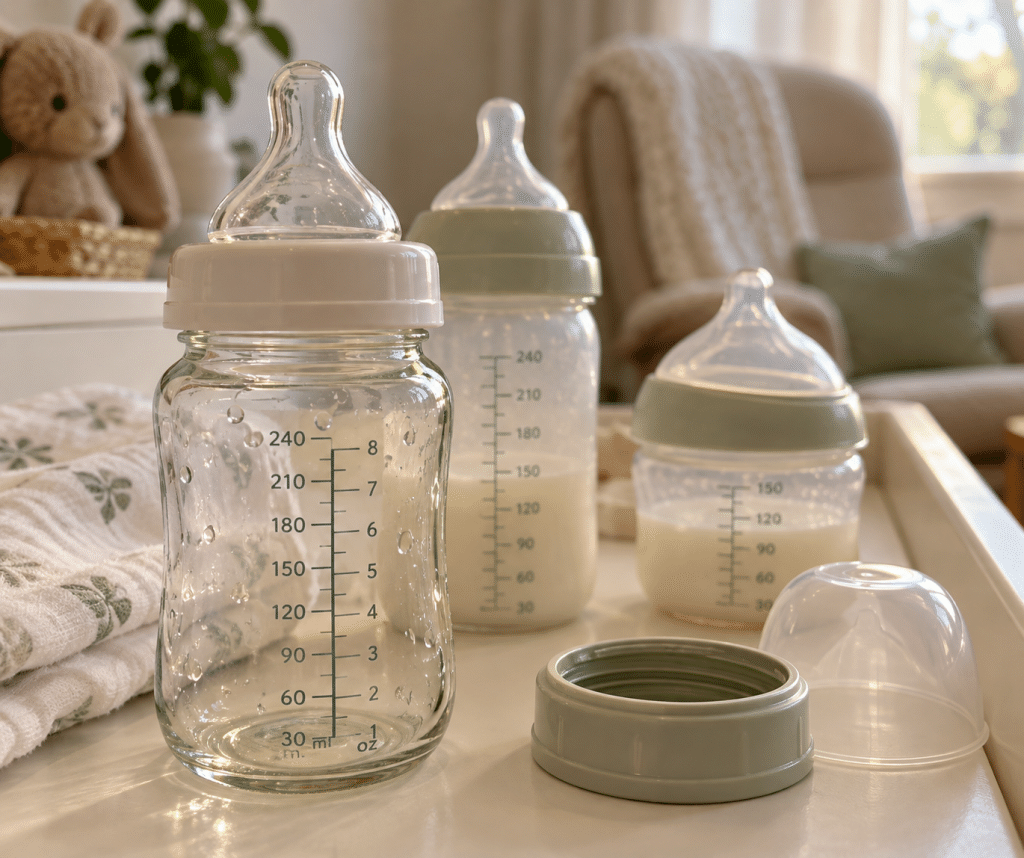
A bottle’s capacity tells you how much it can hold, not how much your baby should drink. Feed amounts change with age and vary between babies. Choose a bottle for your baby’s usual feed, not the largest number on its label.
In the United States, 4-ounce and 8-ounce bottles are common examples. A smaller bottle can be easier to fill for early, smaller feeds. A larger bottle gives more room as amounts grow, but takes up more space and may feel bulky during a short feed.
What to compare
Use the amount your baby usually takes at that time, based on your feeding plan. If you’re not sure, ask your pediatrician or lactation professional what portion makes sense for your baby. Don’t treat a full bottle as a target, and don’t make a baby finish simply because milk remains.
Check whether the measurement marks are easy to read. Clear ounce or milliliter lines help caregivers prepare the same amount without guessing. Read them on a level surface when filling the bottle, since holding it at an angle can make the markings harder to judge.
Who it suits
A smaller-capacity bottle may be convenient for occasional feeds or a young baby who takes small portions. A larger one can reduce refills as feed amounts increase. The trade-off is less convenience when carrying an oversized bottle for a small serving, so match capacity to the feeds you expect.
6. Glass, plastic, or silicone for everyday handling
What it changes
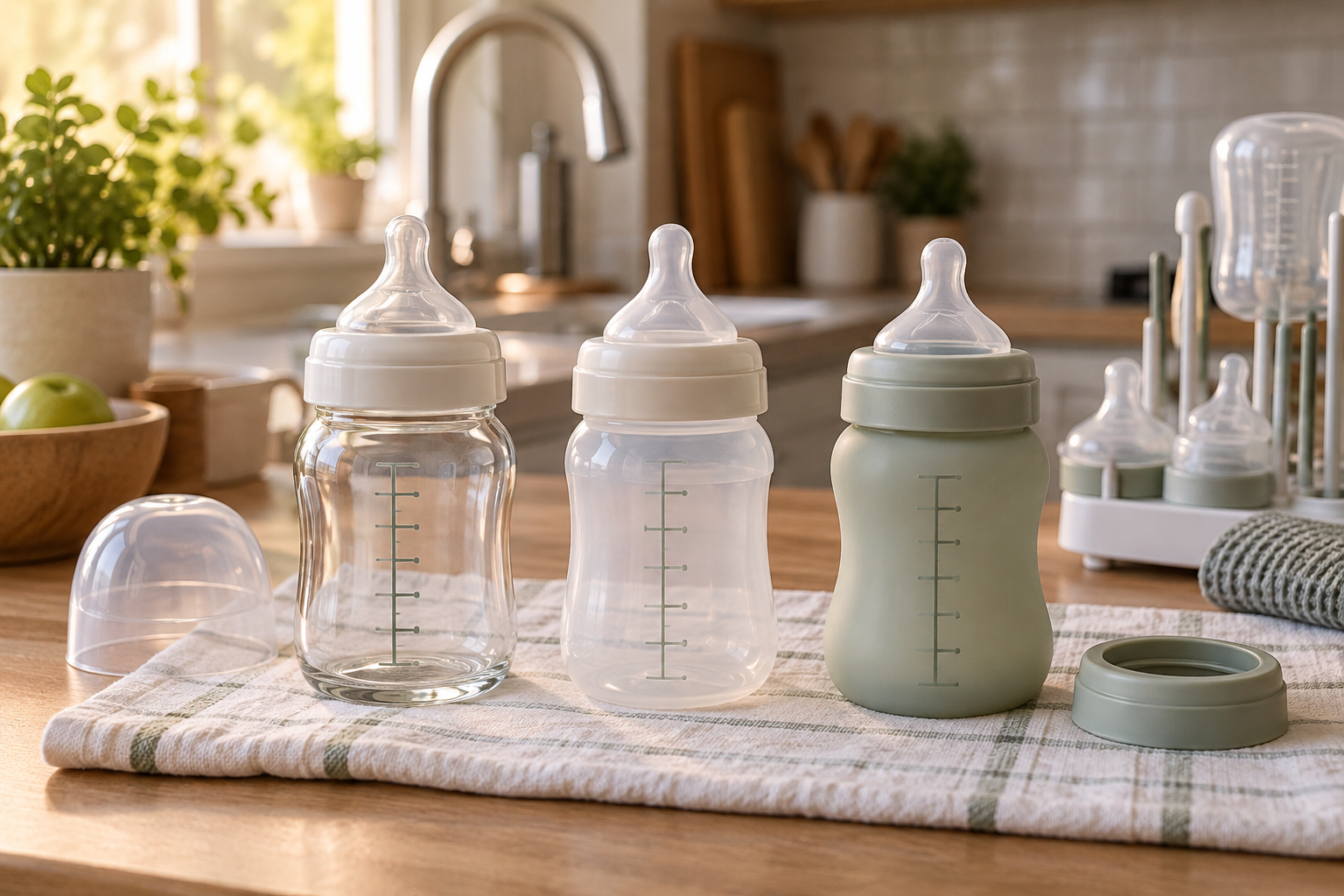
Bottle material affects weight, grip, and how the bottle wears. It doesn’t decide whether your baby will accept the nipple. Compare how each option fits your home and travel routine, then check the maker’s care instructions before washing or heating it.
What to compare
Material
Everyday benefit
Trade-off to weigh
Glass
Resists retaining odors and colors
Heavier and can break; check for chips or cracks
Plastic
Lightweight and easy to carry
Can scratch or wear; follow the product’s care limits
Silicone
Lightweight and flexible
Flexible bottles can feel less steady; designs may need extra parts
Glass is easy to see through and doesn’t pick up odors as readily as some other materials. Its weight and breakage risk matter if caregivers often feed on the go. Remove a glass bottle from use if it gets chipped or cracked.
Plastic is convenient to carry, but the care limits vary by product. Follow the package instructions for washing, sterilizing, and heating. Silicone bottles can bend when held, which some caregivers like and others find awkward. Choose the material that feels manageable during a full feed and cleanup.
Who it suits
Glass can suit a home setup where a heavier bottle is comfortable to handle. Plastic may be easier to pack, while silicone appeals to caregivers who prefer a flexible feel. Each has a drawback, so check the actual bottle’s instructions instead of assuming all bottles made from one material get the same care.
7. Easy-clean vents and compatible replacement parts
What it changes
A bottle with fewer pieces is often quicker to take apart, wash, and reassemble. Vented bottles route air through a valve or separate path, depending on the design. That changes the parts you need to clean, but an anti-colic label can’t guarantee less gas, fussing, or discomfort.
What to compare
Look at how many pieces separate for washing and whether you can reach every surface. Valves, straws, or narrow openings can add cleaning steps. If you choose a vented design, make sure you can take it apart and put it back together correctly after each wash.
Check that the nipple, collar, and bottle match the same product line and size. Parts that appear to fit may not seal properly. Use replacement parts the manufacturer lists as compatible. Inspect nipples for tears, sticky patches, or stretched openings, and replace damaged parts according to the maker’s instructions.
Who it suits
A simple design suits caregivers who want fewer parts to wash at each feed. A vented bottle may suit someone willing to manage extra assembly, but it shouldn’t be chosen as a sure fix for colic. The best test is whether the baby feeds comfortably and the caregiver can keep every part clean.
Use your baby’s usual expressed-milk amount for that feed, not the bottle’s full capacity. If you’re unsure about the amount, ask your pediatrician or lactation professional, especially if your baby is very young or has weight concerns.
How many bottles should I buy at first?
Start with one bottle and test both feeding and cleanup. Once your baby accepts it, choose how many you need based on feeds between washes; having more saves sink trips but takes extra storage space.
Can I use bottle parts from different brands together?
Only use mixed parts if the manufacturer confirms that the exact bottle and nipple lines fit. Neck sizes and sealing parts differ, so a piece that seems to attach may still leak or sit incorrectly.
Should I choose an anti-colic bottle if my baby seems gassy?
An anti-colic label can’t explain why your baby is gassy or guarantee relief. If gas comes with repeated vomiting, poor feeding, or concerns about growth, ask your pediatrician rather than switching bottles repeatedly.