
It is 2am, your baby is eleven days old, and you are staring at a nursery cupboard stuffed with gadgets you have not touched since the baby shower. The wipe warmer is collecting dust. The bottle steriliser bin is still in its box. The expensive cot mobile plays a lullaby nobody asked for. Meanwhile, the six things you actually reach for at every feed and change are either in the wash or running low. If this sounds familiar, you are not alone. Most first-time parents in New Zealand overspend on newborn essentials they never use and underbuy the boring basics that get them through the night.
This guide is different from the standard checklist. Instead of listing everything you could buy, it separates what you will actually use from what you can safely skip for now, with specific product counts, NZ-specific season guidance, and honest verdicts on the items baby stores love to push. For a printable version of the full checklist with quantities, see our newborn essentials checklist.
The Only Newborn Essentials List You’ll Actually Use
The core of your newborn kit comes down to five categories: feeding, sleep, clothing, bath and nappy, and a handful of health basics. Within each, there are three to five items you will use every single day, and a long tail of products that are either nice-to-haves or outright skips. The goal here is not minimalism for its own sake. It is about spending your budget where it counts and delaying the rest until you know your baby.
The trap most first-time parents fall into is buying for every possible scenario before the baby arrives. Babies have opinions. They may hate the expensive swaddle you researched for weeks, refuse certain bottle teats, or outgrow newborn clothes in ten days. Buy enough to function through the first month, then top up as you learn what your baby actually prefers. Feeling anxious about getting it right is not a parenting fail, it is a sign of how much you care.
Feeding Essentials: What You’ll Reach For at 2am
Whether you are breastfeeding, bottle feeding, or a combination, the feeding essentials boil down to a few items that keep you comfortable, clean, and hydrated through long feed sessions. The rest, from bottle warmers to steriliser bins, can wait until you know your feeding journey.
Breastfeeding vs Bottle Feeding Basics
If you are breastfeeding, the non-negotiables are breast pads (you will leak, especially in the first few weeks), nipple cream, and burp cloths. A feeding pillow is optional. Many parents find a regular cushion works fine, but a dedicated pillow helps with positioning, especially after a caesarean. If you are bottle feeding, start with four to six bottles with slow-flow newborn teats and one to two tins of stage 1 formula. Do not stockpile one brand until you know your baby tolerates it.
Pro Tip: Set up two feeding stations in your home, one in the bedroom and one in the living area. At each station, keep a water bottle, burp cloth, breast pads or a spare bottle, and your phone charger with a long cable. You will spend a lot of time in these spots.
Must-Haves: The Feeding Kit You’ll Use Daily
- Breast pads: 2 to 3 pairs washable, or 1 box of disposables
- Nipple cream: 1 tube, lanolin-based or natural
- Burp cloths: 4 to 6. Muslin cloths are cheap, versatile, and double as light covers
- Bottles (if bottle feeding): 4 to 6, with slow-flow newborn teats
- Formula (if bottle feeding): 1 to 2 tins of stage 1. Do not stockpile
- Bottle brush: 1, for cleaning
- Water bottle for you: 1 to 2. Keep one at every feeding spot
Skip For Now: Bottle Warmers, Steriliser Bins, Special Laundry Detergent
Bottle warmers are one of the most commonly returned baby products in New Zealand. A bowl of warm water from the tap does the same job in three minutes. Steriliser bins are similarly overhyped. You can sterilise bottle parts by boiling them for five minutes or using a microwave steriliser bag, which costs a fraction of the price. Special “baby laundry detergent” is another skip. A regular, fragrance-free detergent without enzymes works for most babies. Save the money for nappies.
Sleep Essentials for NZ Nights
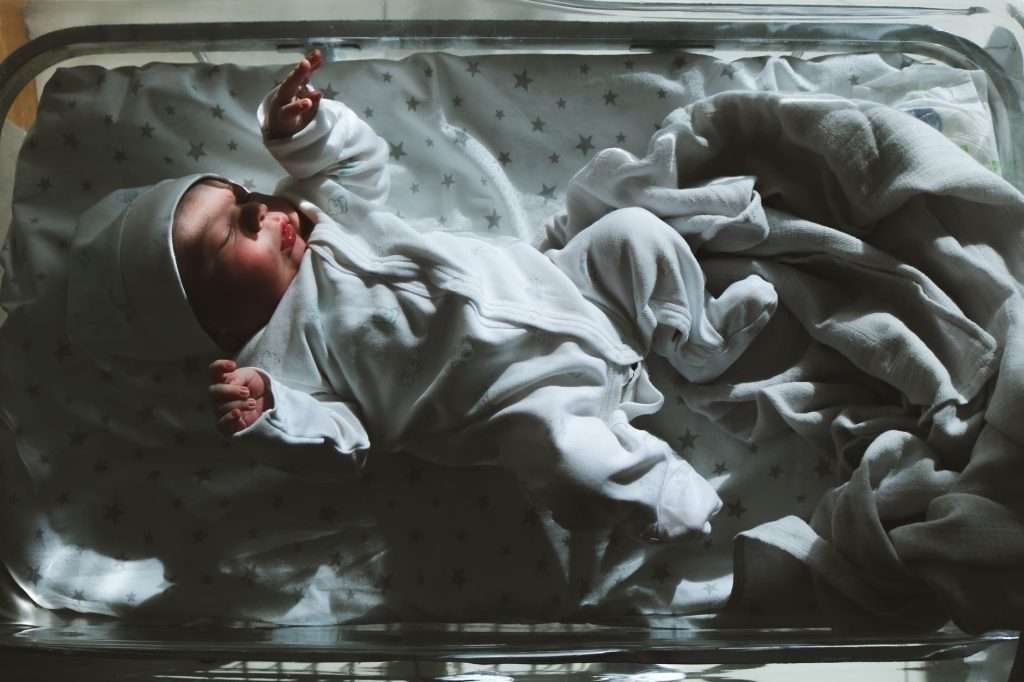
Safe sleep is the one area where you cannot afford to cut corners, but you also do not need to spend a fortune. Plunket’s safe sleep guidance is clear and specific: baby sleeps on their back, in their own sleep space, in the same room as you for at least the first six months, with nothing near their face. That means no loose blankets, no pillows, no bumpers, and no soft toys in the cot. A firm, flat mattress, two fitted sheets, and a tog-rated sleep sack are the core of it.
If you are deciding between a bassinet, a co-sleeper, or going straight to a cot, our co-sleeper bassinet buying guide covers the safety standards, height compatibility, and features worth paying for in the NZ market.
Tog-Rated Sleep Sacks for Our Climate
New Zealand homes vary wildly in temperature depending on your region, insulation, and whether you run a heater overnight. Tog ratings tell you how warm a sleep bag or swaddle is, and matching the tog to your room temperature is one of the most practical things you can do for safe sleep. Here is a breakdown aligned with common NZ room temperatures:
| Tog Rating | Room Temperature | When You’ll Use It in NZ | How Many to Buy |
|---|---|---|---|
| 0.2 tog | 24 to 27 degrees | Summer nights in Auckland, Northland, or any well-heated room | 1 (if summer baby) |
| 1.0 tog | 20 to 24 degrees | Spring, autumn, and mild summer nights. The all-rounder for many NZ homes | 2 |
| 2.5 tog | 16 to 20 degrees | Winter nights and unheated rooms. Staple for South Island and Wellington winters | 2 |
| 3.5 tog | Below 16 degrees | Cold, unheated rooms in deep winter. Not commonly needed if you have a heater | 1 (only if cold, drafty home) |
For most families, a 1.0 tog and a 2.5 tog cover the year. Buy two of each so you have a spare when one is in the wash, because blow-outs and spit-up happen at 3am. Merino sleep bags are popular in NZ because they are not tog-rated but naturally regulate temperature across a wider range, which suits our variable climate.
Practical rule: dress for the room, not the calendar. A baby in a heated Auckland lounge in July does not need the same layers as a baby in an unheated Dunedin bedroom.
Skip: Cot Bumpers, Fancy Sleep Positioners, Sheepskins
Cot bumpers are explicitly listed as unsafe by Plunket. They restrict airflow and pose a suffocation risk. Sleep positioners and wedges are not endorsed by any NZ health authority. Sheepskins are not recommended if your family has a history of asthma or allergy, as they collect dust mites. If a product is marketed as making the sleep surface “cosier,” that is usually a red flag. The sleep surface should be firm and flat, full stop.
Clothing: Dressing a Newborn Through NZ Seasons
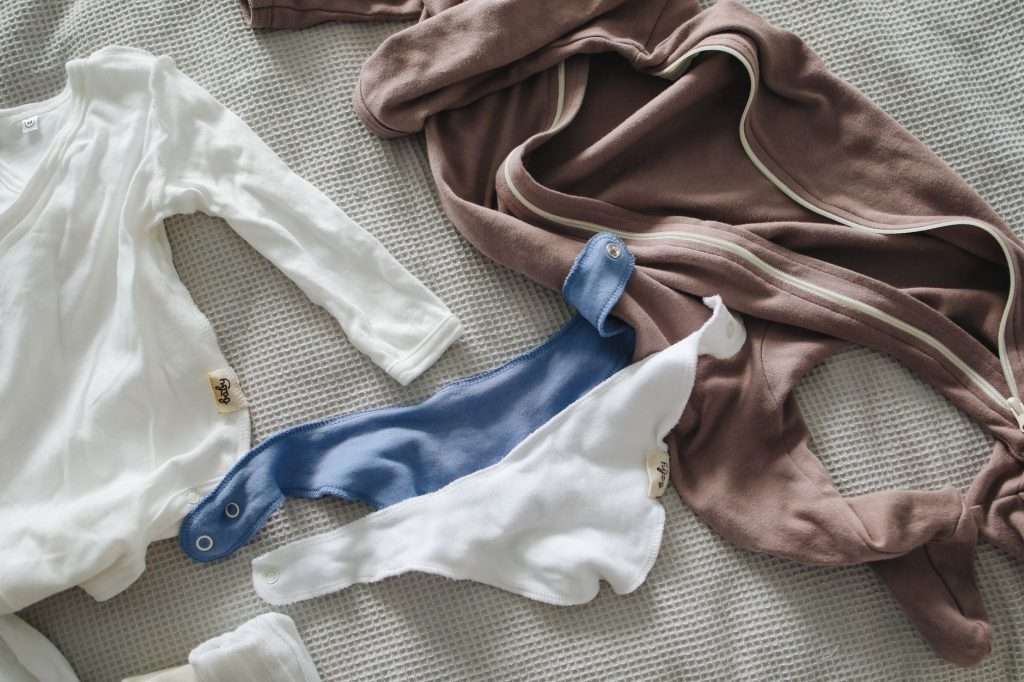
New Zealand’s Southern Hemisphere seasons mean summer babies arrive in December to February and winter babies arrive in June to August. Your clothing list changes significantly depending on when your baby is due, but the layering principle stays the same: a cotton base layer next to the skin, a warm middle layer when needed, and a sleep sack for overnight. For a deep dive into one of the most useful winter layers, our newborn fleece onesie guide covers fabric weights, sizing, and safe layering for NZ climates.
Layering for Summer (Dec to Feb) and Winter (Jun to Aug)
For a summer baby, start with 6 to 8 short-sleeve bodysuits in size 0000, 2 to 3 lightweight sleepsuits, 1 to 2 light layers like a cardigan or zip jacket for air-conditioned spaces or cooler evenings, and 1 wide-brim sun hat for outings. Keep baby in shade, not in direct sun. Use a 0.2 or 1.0 tog sleep bag.
For a winter baby, switch to 6 to 8 long-sleeve bodysuits, 4 to 6 sleepsuits in fleece or heavier cotton, 2 to 3 warm layers such as merino tops or cardigans, 1 to 2 warm hats, and 1 to 2 pairs of socks. Use a 2.5 tog sleep bag, and add a 3.5 tog if your home is cold and unheated.
For spring or autumn babies, a mix is best: 6 to 8 bodysuits in a mix of short and long sleeve, 4 sleepsuits, 1 to 2 mid-weight layers, and a 1.0 tog sleep bag with a 2.5 tog on standby for cold snaps. Merino is your friend in these changeable shoulder seasons. It breathes when it is warm and insulates when it is cool.
Essential Counts by Category
- Bodysuits (0000): 6 to 8. This is the workhorse of the newborn wardrobe. You will go through two or three a day in the first weeks.
- Sleepsuits (0000): 4 to 6. These are the day-to-night outfit for newborns. Choose heavier weight for winter.
- Warm layers: 2 to 3. Cardigans, merino tops, or a zip jacket. Essential for winter, handy for autumn.
- Socks: 3 to 4 pairs, mainly for winter
- Hats: 1 sun hat (summer) or 1 to 2 warm hats (winter)
- Muslin wraps: 3 to 4. Multi-use for shade, burp cloth, light cover, or pram drape
Skip: Shoes, Denim, Anything With Fiddly Buttons
Newborn shoes are adorable and completely useless. Babies do not walk, and shoes can interfere with foot development. Socks are enough for warmth. Denim and stiff fabrics look cute in photos but are miserable for a baby who spends most of their day lying down and being changed. Anything with small buttons up the front is a pain at 3am. Look for zip or snap closures that open fully for quick nappy changes.
Pro Tip: Do not buy too many in one size. Most full-term babies start in 0000, but if your baby is over 4kg you may skip straight to 000. Have a couple of 00000 sizes on hand if you expect a smaller baby. You can always buy the next size up after the birth.
Bath, Nappy and Hygiene Basics
The bath and change category is where the baby industry tries hardest to upsell. The reality is that you need a handful of inexpensive items, and most of the dedicated “baby bath” products can be replaced with things you already own.
Nappies, Wipes, and Gentle Wash
- Newborn nappies: 1 to 2 jumbo packs to start. Newborns go through 8 to 12 nappies a day in the first few weeks. Do not stockpile one brand until you know it fits, as nappy shapes vary and babies come in different shapes too.
- Wipes: 1 to 2 packs, fragrance-free and alcohol-free. Many parents use cotton wool and water for the first few weeks, which is gentler and cheaper.
- Cotton wool balls: 1 pack. The gentlest option for the first weeks.
- Changing mat: 1. A portable changing mat is the most versatile option because it works at home and on the go.
- Gentle baby wash: 1 bottle, fragrance-free and pH balanced.
- Soft baby towels: 2 to 3. Hooded towels are handy but not essential.
- Baby nail clippers or file: 1. A soft nail file is easier and safer for wiggly newborn fingers.
- Digital thermometer: 1. The underarm type is fine for home use.
If your baby is under three months and has a temperature of 38 degrees or above, contact your GP or PlunketLine free on 0800 933 922 straight away. That is not a wait-and-see situation.
Skip: Wipe Warmers, Special Bath Thermometers, Dedicated Changing Tables
Wipe warmers are the classic example of a product that sounds thoughtful but solves a problem most babies do not have. A cold wipe startles a newborn for about two seconds. Save the bench space. Special bath thermometers are another skip. Your elbow in the bathwater works just as well. Aim for lukewarm, around 37 degrees. And a dedicated changing table is not essential. A changing mat on top of a dresser, the floor, or your bed works perfectly well and saves you several hundred dollars.
A baby bath itself is optional. Many parents use a clean sink or shower with a parent in the early weeks. If you want one, borrow one rather than buying, because you will only use it for a few months.
What You Can Leave Off the List
Baby stores are designed to make you feel like you need everything before the baby arrives. You do not. Here is a summary of the most commonly pushed products that NZ parents rarely use, along with what to do instead.
- Bottle warmers: A bowl of warm tap water does the same thing in three minutes.
- Steriliser bins: Boil parts for five minutes or use a microwave steriliser bag.
- Wipe warmers: Cold wipes are fine. Babies survive two seconds of mild surprise.
- Cot bumpers: Unsafe, full stop. Plunket explicitly lists them as a suffocation risk.
- Special baby laundry detergent: Regular fragrance-free detergent works for most families.
- Newborn shoes: Adorable, useless. Socks are enough.
- Dedicated changing tables: A changing mat on a dresser or bed works just as well.
- Baby bath thermometers: Your elbow is free and accurate enough.
- Expensive cot mobiles: Nice to have, not essential, and must be out of reach.
- Sleep positioners and wedges: Not endorsed by Plunket or any NZ health authority.
The honest truth is that many of these products exist because they are profitable, not because they are practical. The pattern is consistent: if a product adds a step to your routine (warm the wipes, sterilise the bin, check the bath thermometer), you will stop using it within weeks. The newborn essentials that survive are the ones that are simple, fast, and require no extra thought at 3am.
Building Your Essentials Kit
Start with the items you will use every day: 6 to 8 bodysuits, 4 to 6 sleepsuits, 2 to 3 sleep sacks in the right tog for your season, a safe sleep space with a firm mattress and two fitted sheets, nappies and wipes, a changing mat, feeding supplies, and a digital thermometer. That is your foundation. Everything else can be added once your baby arrives and you know what works.
If you are assembling your kit and want to browse options in one place, NappyCare.store carries a range of newborn essentials including sleep bags, feeding supplies, nappies, and grooming items. Every order ships with free delivery and a 30-day hassle-free return policy, so if a product does not work for your baby, you are not stuck with it. You can also contact your Plunket nurse or call PlunketLine free on 0800 933 922 for medical questions about your baby’s health, feeding, or safe sleep setup. No question is too small.
You are doing an amazing job, and we are so excited to be part of your family’s story.
Frequently Asked Questions
What newborn essentials do I actually need before the baby arrives?
You need a safe sleep space with a firm mattress and two fitted sheets, 6 to 8 bodysuits, 4 to 6 sleepsuits, 2 to 3 tog-rated sleep sacks, newborn nappies and wipes, a changing mat, feeding supplies, and a digital thermometer. Everything else can be bought after the birth once you know what your baby prefers.
What tog sleep sack do I need for a New Zealand baby?
For most NZ homes, a 2.5 tog sleep bag covers winter nights when room temperatures sit between 16 and 20 degrees, and a 1.0 tog works for spring, summer, and autumn when rooms are 20 to 24 degrees. If your home gets very warm in summer, add a 0.2 tog. Buy two of each so you have a spare when one is in the wash.
What can I skip to save money on newborn essentials?
You can safely skip wipe warmers, bottle warmers, steriliser bins, special baby laundry detergent, newborn shoes, cot bumpers, dedicated changing tables, and baby bath thermometers. A bowl of warm water replaces a bottle warmer, your elbow replaces a bath thermometer, and a changing mat on a dresser replaces a changing table.
How many bodysuits and sleepsuits does a newborn need?
Six to eight bodysuits and four to six sleepsuits in size 0000 are a good starting point. You may go through two or three bodysuits a day in the first weeks due to spit-up and nappy leaks. Do not buy too many in one size because babies grow quickly, and you can always buy more after the birth.
When should I start buying newborn essentials in New Zealand?
Most parents start assembling their kit around 30 to 36 weeks of pregnancy. This gives you time to research, compare prices, and pack your hospital bag. Buy the essentials first, then add items as needed after the baby arrives. Your baby’s size, feeding preferences, and temperament will guide what you actually need beyond the basics.