
Newborn laundry doesn’t need a complicated system, but products touching your baby’s clothes deserve a closer look. A baby laundry detergent should clean everyday messes without strong scent or excess residue. A low-scent, fragrance-free detergent, correctly dosed, is a practical starting point when sensitive skin or skin sensitivity is a concern.
The best choice is usually simple: use the right amount, rinse thoroughly, and follow the fabric care label. A dermatologically tested label can help with comparisons, but it isn’t a guarantee of suitability.
Key Takeaways for Newborn Laundry
- Choose fragrance-free detergent rather than merely “unscented.” Unscented products can still contain ingredients that mask a product’s smell.
- A standard free and clear or sensitive-skin formula can work as well as a baby-branded detergent. The label matters more than the baby picture on the bottle.
- Use the amount recommended for your load size, soil level, and water hardness. More detergent can leave more residue.
- Skip fabric softener and scented dryer sheets, especially for towels, muslins, reusable nappies, and sleepwear.
- Treat fresh milk, formula, and poo marks promptly with cool water before washing.
- Keep detergents locked up and out of reach. Laundry products can cause serious harm if swallowed.
What Should a Baby Laundry Detergent Contain?
The term is descriptive, not an official safety standard. Look for a low-additive formula that suits your household and cleans your usual loads without seeming to aggravate your baby’s skin.
Why Choose Fragrance-Free Detergent for Sensitive Skin?
Synthetic fragrances can cling to thick cotton, towels, fleece, and bedding long after washing. That lingering scent may make it harder to work out whether freshly laundered clothing is bothering a baby with reactive skin.
The Eczema Association of New Zealand’s fragrance-free guidance explains why “unscented” isn’t the same as fragrance-free. An unscented formula may use masking ingredients to cover its smell, while fragrance-free products don’t contain added fragrance.
“Hypoallergenic detergent,” “dermatologically tested,” and “gentle” can be useful signals, but they aren’t guarantees. None confirms a reaction-free result. Check the full product information where available, then introduce only one new laundry product at a time.
Keep the Ingredient List Practical
Many parents prefer products without dyes and avoid optical brighteners, harsh surfactants, and heavily fragranced boosters. These choices reduce the number of additives sitting against baby’s clothes, sheets, and feeding cloths.
The American Academy of Dermatology recommends fragrance-free and dye-free detergent for eczema-friendly care, which may be relevant to routines involving atopic dermatitis. However, detergent is only one possible trigger. Heat, dry skin, fabric texture, moisture, wipes, and illness can also affect eczema-prone skin.
Do You Need a Special Baby Detergent?
No, most families don’t need a baby-specific detergent. A regular formula may suit the whole household when its ingredients, dose, and cleaning performance fit your needs and garment-care instructions.
Choose the Formula, Not the Marketing
Baby-specific products often cost more because of their packaging and positioning. That doesn’t automatically make them safer, milder, or better at stain removal than a free and clear sensitive skin detergent.
For example, ecostore describes its Ultra Sensitive Laundry Liquid as fragrance-free, colourant-free, dermatologically tested, and suitable for baby clothes. Those claims can help parents compare products, but no formula is risk-free for every child.
A non-bio detergent contains no enzymes. Biological formulas use enzymes to break down protein-based stains, such as milk or food. Neither type is automatically right for every baby, so use the simplest formula that works for your household.
When to Change Your Family Routine
You can usually wash lightly soiled items with family laundry when colours, fabrics, and care labels match. Keep heavily soiled workwear, pet bedding, gym gear, and items contaminated with body fluids out of that load.
For a calmer start, wash the clothes that touch skin most often before first use: bodysuits, sleepsuits, socks, bibs, burp cloths, towels, fitted sheets, swaddles, and blankets. This newborn essentials checklist can help you prepare useful basics without buying duplicate specialty products.
A simpler routine makes it easier to spot a possible irritation. Switching detergent, softener, scent booster, and washing temperature all at once makes the cause harder to identify.
Read the Label Before You Buy
The front of a bottle can be crowded with reassuring claims. When comparing a detergent for baby clothes, turn it around and look for a free and clear formula.
Choose a detergent that is:
- Fragrance-free, with a dye-free detergent preferred, particularly if your baby has dry or eczema-prone skin.
- Appropriate for your washing machine, whether high-efficiency or standard.
- Clear about its dose instructions for load size, soil level, and water hardness.
- Compatible with the fabrics you wash most, including wool, merino, fleece, or reusable nappy materials.
Check the ingredient information where available. If your baby has skin sensitivity, you may prefer formulas without optical brighteners or harsh surfactants.
Don’t treat “natural ingredients,” “eco-friendly detergent,” or “toxic ingredients” claims as proof a product will suit your baby. These terms don’t predict how one child’s skin will react. An environmental working group rating or database can offer another comparison point, but it isn’t definitive proof of safety.
“Dermatologically tested” describes a testing process, not a guarantee that every baby will tolerate the formula. If a new detergent seems to line up with persistent redness, dry patches, or skin irritation, stop using it and speak with your midwife, GP, or Plunket nurse. Laundry changes don’t replace medical advice.
Wash Infant Clothes With Less Residue
Good wash mechanics matter as much as the detergent itself. Overfilling the drum, using too much product, or adding extra scented products can leave fabrics less comfortable, not more.
Measure, Don’t Pour Freely
Use the laundry detergent amount printed on the pack for your load size, water hardness, and soil level. Adding more doesn’t make a small wash cleaner. It can create excess suds and leave product behind if the machine can’t rinse it away well.
Sort by colour, fabric, and how dirty items are. Cotton bodysuits and bibs can often go on a normal cycle at the temperature listed on their labels. Delicate merino, fleece, knitwear, and items with special finishes need gentler handling.
For marks, use a small amount of your usual product as stain pre-treatment only when the care label permits it.
Don’t overload the machine. Water needs space to move through the fabrics and carry product away.
Skip Softener and Use an Extra Rinse Cycle Selectively
Fabric softener can coat fibres and reduce the absorbency of towels, muslins, and reusable nappies. Scented dryer sheets add another fragrance source. A careful rinse and complete drying are usually enough.
An extra rinse cycle is useful after accidental overdosing, in hard-water areas, or when thick fabrics still feel slippery or soapy. It isn’t necessary for every load. Correct dosing should be your everyday starting point.
For winter layers, follow this newborn fleece onesie care guide before changing temperature or drying settings. High heat can flatten fleece, weaken elastic, and shrink natural fibres.
Handle Milk, Formula, and Poo Stains Gently
Whether a product uses a plant-based formula matters less than its ingredients and washing process. These factors affect how well it cleans everyday newborn laundry and how much residue remains.
Start With Cool Water
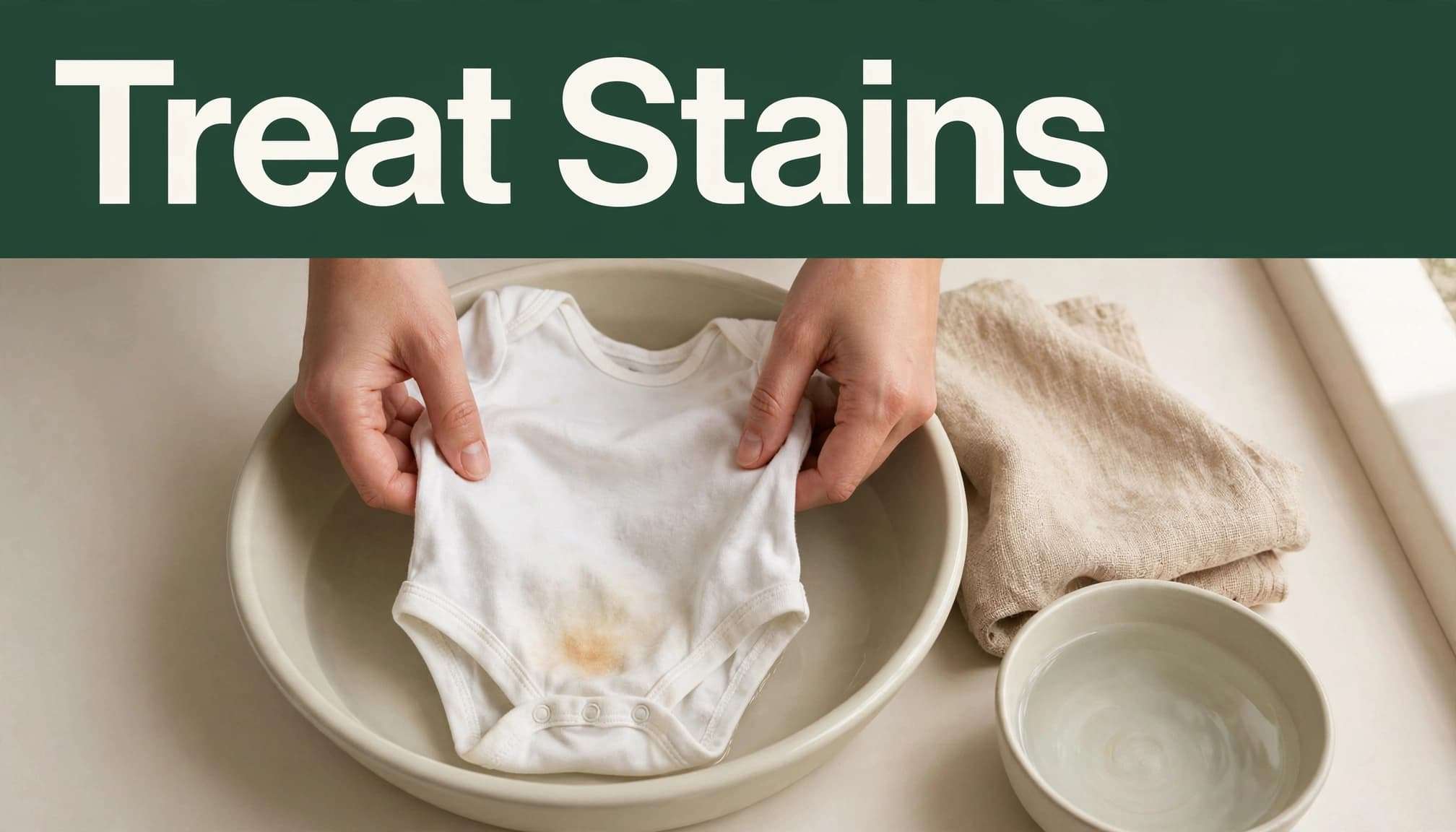
Rinse fresh breastmilk, formula, spit-up, and poo marks in cool water as soon as you can. Heat can set protein stains into fabric, making them harder to remove later.
For dried marks, begin stain removal by soaking the affected area in cool water. Apply a small amount of your usual laundry detergent as a stain pre-treatment, if the garment label allows it.
Avoid vigorous scrubbing, which can roughen cotton, damage prints, and stretch delicate knits.
Check the item before drying. If the mark remains, repeat the treatment rather than setting it with heat.
Keep Reusable Nappies Separate
Cloth diapers (reusable nappies) need their own wash process because they may contain urine or faeces. Store used nappies in a designated dry pail or washable wet bag, out of reach of children and pets, then follow the nappy manufacturer’s instructions for washing, detergent, and drying.
Don’t wash reusable nappies with clean infant garments, towels, or bedding. Wash your hands after handling them, as you would after any nappy change. For practical hygiene habits between loads, see this guide to safe newborn nappy changing.
Store Laundry Products Like Medicines
Liquid laundry detergent, pods, powders, stain removers, and bleach are household products that may contain harsh chemicals. Keep them in their original containers, close lids tightly, and lock them in a high cupboard or secured storage area.
Don’t transfer detergent into drink bottles, food jars, or unlabelled containers. A curious toddler can mistake colourful capsules or liquid for something edible.
Health NZ advises calling the National Poisons Centre on 0800 764 766 for poisoning concerns. Its consumer-product safety advice says to call 111 if someone is unconscious or has stopped breathing. Do not make a child vomit or give food or drink before getting professional advice.
Frequently Asked Questions
Can I wash baby clothes with adult laundry?
Usually, yes. Combine baby clothes with lightly soiled family items when fabric type, wash temperature, and colour are compatible. Keep nappies, pet bedding, heavily soiled workwear, and items with body fluids separate.
If another household member uses a strongly scented detergent, consider washing baby’s clothing separately until you know how your baby responds.
When can my child use regular detergent?
There is no fixed age. A child can use regular family laundry detergent whenever the formula suits the household and doesn’t seem to irritate their skin. Many families choose a fragrance-free detergent for everyone’s laundry when fragrance is a concern.
If your baby develops eczema or persistent dry patches, simplify the routine and seek individual advice from a health professional.
Is an extra rinse always necessary?
No. An extra rinse is helpful after using too much detergent or when clothes feel soapy. For most loads, the right dose and a machine that rinses properly are enough.
Should I use fabric softener on baby clothes?
Usually, no. It can leave a coating on fabric and reduce absorbency in towels, muslins, and reusable nappies. Strong fragrances can also remain after drying. Follow the garment label, especially for flame-resistant sleepwear.
A Gentle Routine Is Usually the Best One
A dependable newborn-care routine starts with a simple laundry routine. Choose a straightforward formula, measure carefully, and rinse thoroughly to keep clothes clean with less residue against your baby’s skin. This approach can also limit unnecessary ingredients, including harsh surfactants.
Keep the routine steady unless you have a clear reason to change it. Clean, well-rinsed clothes matter more than a baby-branded bottle or a perfectly scented laundry room.