
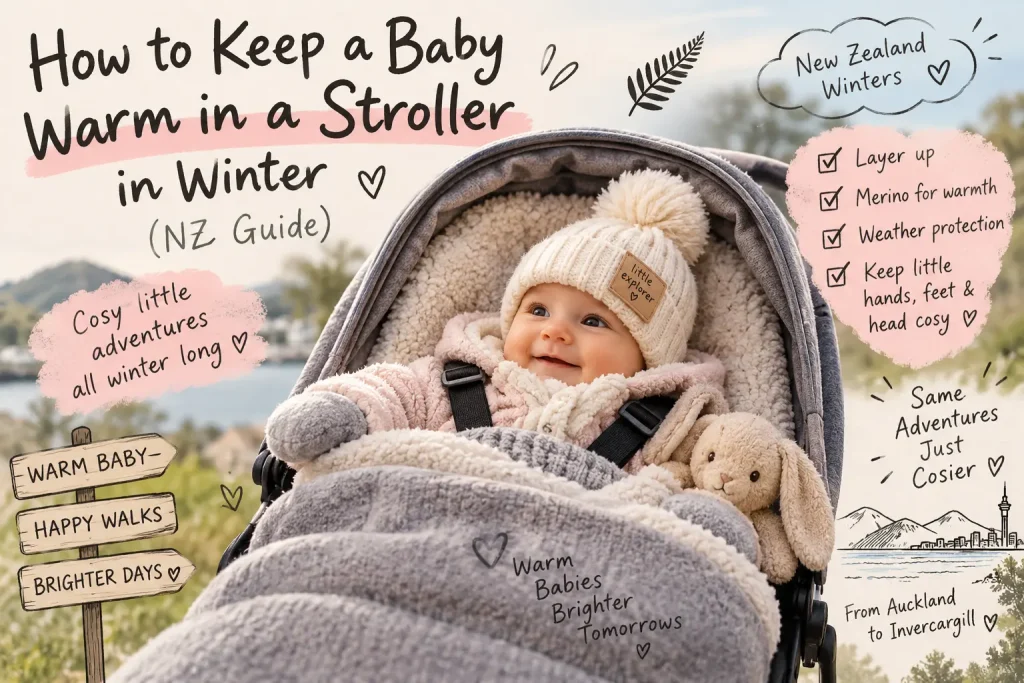
How to Keep a Baby Warm in a Stroller in Winter (NZ Guide)
Learn how to keep a baby warm in a stroller in winter with this NZ guide featuring layering tips and gear advice to protect your little one from damp cold.
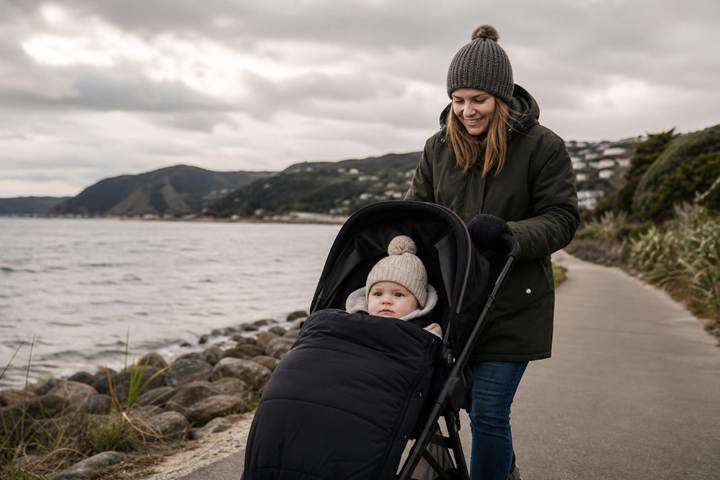
New Zealand winters can be deceptively harsh on little ones. Between the biting southerlies, sideways rain, and that damp cold that seems to creep into every layer, keeping your baby warm in a stroller during winter takes a bit of strategy. It’s not quite packing for an Antarctic expedition, but some days it feels close.
The tricky part is that babies lose heat much faster than adults. Their small bodies and limited ability to regulate temperature mean you can’t just throw on a blanket and hope for the best. And because NZ weather can shift from crisp sunshine to a freezing downpour in the time it takes to walk to the dairy, you need a system that’s flexible and safe.
This guide is built specifically for New Zealand parents. We’ll cover the layering principles that work best in our climate, the stroller accessories worth investing in, safety considerations you shouldn’t skip, and how to adapt for the wildly different conditions you’ll encounter from Auckland to Invercargill. Whether you’re doing a quick supermarket run or a longer bush walk with the pram, these tips will help you keep your baby cosy without overdoing it.
Respiratory illness in young children is a serious concern here. Over the past 25 years, child hospitalisations for respiratory illnesses have surged by 60%, with infants under one year old being particularly vulnerable. Keeping babies properly protected from cold and damp conditions isn’t just about comfort: it’s a genuine health priority.
Essential Winter Layering for New Zealand Babies
Getting your baby’s clothing right is the single most important factor in keeping them warm during winter stroller outings. The NZ climate rewards a thoughtful layering approach over any single heavy garment. Layers trap warm air between them, and they give you the flexibility to add or remove pieces as conditions change throughout your walk.
The key principle is simple: start with moisture management next to the skin, add insulation in the middle, and finish with weather protection on the outside. This three-part system works whether you’re facing a dry Christchurch frost or a drizzly Wellington afternoon.
The Benefits of Merino Wool as a Base Layer
New Zealand is home to some of the world’s finest merino wool, and there’s a reason Kiwi parents swear by it for their babies. Merino is naturally temperature-regulating, meaning it helps keep your baby warm when it’s cold and prevents overheating when you duck into a warm café or shop. Unlike synthetic fabrics, merino wicks moisture away from the skin, so if your baby sweats a little, the fabric won’t leave them sitting in dampness.
Merino is also naturally antibacterial, which means fewer washes and less wear on the garment. A good merino bodysuit or onesie as a base layer is one of the baby essentials worth spending money on, because cheaper synthetic alternatives simply don’t perform the same way in our damp climate. Look for 100% merino with a weight of around 200gsm for winter: light enough to layer over but warm enough to make a real difference.
Managing Heat with the Three-Layer Rule
The three-layer rule is your best friend for winter stroller walks. Here’s how it works for babies:
- Base layer: A merino or wool-blend bodysuit that sits snug against the skin. This manages moisture and provides the first level of warmth.
- Mid layer: A fleece or wool jumper, cardigan, or all-in-one suit. This is your main insulation piece, and it’s the layer you’ll add or remove most often.
- Outer layer: A wind-and-water-resistant jacket or bunting suit. This shields against the elements without adding excessive bulk.
The beauty of this system is its adaptability. If you’re walking through town and the sun comes out, you can unzip the outer layer or remove the mid layer without starting from scratch. If you’re heading into a shopping centre, stripping back to the base layer keeps your baby comfortable indoors.
One common mistake is using a single thick puffer jacket as the only source of warmth. This creates problems: it’s hard to adjust, it can interfere with harness fit, and it doesn’t manage moisture well. Three thinner layers will always outperform one thick one.
Footwear and Headwear for Kiwi Winters
Babies lose a surprising amount of heat through their heads and feet. A warm hat is non-negotiable for any winter outing, and merino beanies are ideal because they won’t cause overheating if you move indoors. Look for beanies that cover the ears fully: those cute knitted caps that sit on top of the head look adorable but do very little in a cold wind.
For feet, booties with a stay-on design are essential. Babies are remarkably talented at kicking off socks and shoes, often without you noticing until their toes are ice-cold. Fleece-lined booties with velcro or snap closures tend to stay put better than pull-on styles. Layering wool socks underneath adds extra warmth for particularly cold days.
Don’t forget hands. Mittens attached to the jacket sleeves with clips or strings prevent the inevitable loss-and-replacement cycle that every parent knows too well.
Stroller Accessories for Maximum Insulation
Beyond clothing, your stroller setup itself plays a huge role in how warm your baby stays. The right accessories can turn an ordinary pram into a genuinely sheltered cocoon, blocking wind and trapping warmth where it matters most.
Choosing the Right Footmuff or Sleeping Bag
A quality footmuff is probably the single best accessory for keeping a baby warm in a stroller during winter. It’s essentially an insulated sleeping bag that attaches to your pram, wrapping your baby from the chest down in a warm, padded cocoon. Because it’s fixed to the stroller, it can’t be kicked off: a huge advantage over loose blankets.
When choosing a footmuff, look for these features:
- Slots for a five-point harness so you don’t compromise safety
- A water-resistant outer shell for drizzly conditions
- A removable or zip-open top so you can ventilate on milder days
- A soft fleece or sherpa lining for comfort against the skin
Universal-fit footmuffs work with most strollers, but if you have a specific brand, it’s worth checking whether they make a model designed for your pram. The fit tends to be neater, and the harness slots line up properly without any fiddling.
A good footmuff means you can often get away with lighter clothing layers, since the baby is essentially wrapped in a portable sleeping bag. This is especially useful for longer walks where you might need to quickly pop your baby out of the stroller and into a carrier or car seat.
Using Rain Covers as Windbreaks
Most parents think of rain covers purely as wet-weather gear, but they’re actually one of the most effective wind barriers you can use on a stroller. Even on dry days, a rain cover blocks cold gusts from reaching your baby, creating a warmer microclimate inside the pram.
The key is ventilation. A fully sealed rain cover with no airflow can cause condensation buildup and, on milder days, overheating. Choose a cover with ventilation panels or leave a small gap at the top to allow air circulation. You want to block the wind, not create a sauna.
Clear covers also let your baby see out and let you see in, which is better for everyone’s peace of mind. If your stroller didn’t come with a rain cover, aftermarket universal covers are widely available and usually cost between $30 and $60.
Insulating the Stroller Seat from Below
Cold radiates up through the stroller seat, especially on metal-framed prams. This is something many parents overlook entirely. A sheepskin liner or thick fleece pad placed in the seat creates a barrier between your baby and the cold surface beneath them.
Sheepskin is particularly effective because it naturally regulates temperature and wicks moisture. A medical-grade lambskin liner sits flat in the pram, adds cushioning, and provides genuine insulation from below. These liners are a worthwhile investment for winter babies and can be used in car seats and bassinets too.
If sheepskin isn’t in your budget, a folded wool blanket or thick fleece liner does a decent job. Even a layer of bubble wrap under the seat pad (hidden beneath the fabric) can add a surprising amount of insulation in a pinch.
Safety Considerations for Winter Outings
Keeping your baby warm is important, but keeping them safe while doing so matters even more. Winter gear introduces some specific risks that are easy to overlook when you’re focused on warmth.
Monitoring for Overheating in Cold Weather
It sounds counterintuitive, but overheating is a real risk during winter outings. Parents tend to pile on layers, add a footmuff, zip up the rain cover, and then walk into a heated shop: suddenly the baby is sweltering. Overheating is linked to increased SIDS risk, so it’s something to take seriously.
The best way to check your baby’s temperature is to feel the back of their neck or their chest. These areas give you a much more accurate reading than hands or feet, which tend to feel cool even when the baby is perfectly warm. If the skin feels hot or sweaty, it’s time to remove a layer.
Watch for flushed cheeks, damp hair, and rapid breathing: all signs that your baby is too warm. A good rule of thumb is that your baby needs one more layer than you’re comfortable in, not three more.
Ensuring Proper Airflow and Ventilation
Bundling your baby up tightly and sealing the stroller with a rain cover can restrict airflow to a concerning degree. Babies need fresh air circulating around them, even in cold weather. Stale, humid air inside a sealed stroller isn’t healthy and can contribute to respiratory problems that are already a growing concern for NZ infants.
Never drape a blanket, muslin, or scarf over the front of the stroller as a windbreak. This dramatically reduces airflow and can cause dangerous heat buildup underneath. Purpose-built rain covers with ventilation panels are the safe alternative.
If you’re using a rain cover on a dry day purely for wind protection, crack it open at the top or sides to maintain air circulation. Check on your baby frequently: every 10 to 15 minutes during longer walks is a sensible interval.
Harness Safety and Bulky Clothing Risks
Here’s a safety issue that catches many parents off guard: bulky winter jackets and snowsuits can prevent the stroller harness from fitting snugly. If there’s too much padding between the harness straps and your baby’s body, the straps can’t do their job properly. In a sudden stop or tip, a loosely harnessed baby can slide or be ejected.
The solution is straightforward. Strap your baby in wearing their base and mid layers, then add warmth on top of the harness. A footmuff goes over the harness. A blanket goes over the harness. The puffy outer jacket either goes on after the harness is tightened, or you skip it entirely and rely on the footmuff for outer warmth.
Always check that you can’t pinch excess strap material between your fingers once the harness is fastened. If you can, the harness is too loose, regardless of how many layers are causing it.
Adapting to New Zealand’s Microclimates
New Zealand’s weather varies dramatically by region, and what works for a winter walk in Tauranga might leave your baby shivering in Dunedin. Understanding your local conditions helps you prepare properly rather than guessing.
Preparing for Damp Southern Conditions
The South Island’s eastern and southern regions experience a penetrating damp cold that feels worse than the thermometer suggests. Christchurch frosts can be brutal, and Southland’s combination of low temperatures and persistent moisture creates conditions where cotton clothing becomes genuinely dangerous: once wet, cotton loses its insulating properties and actively draws heat away from the body.
For parents in these areas, wool and synthetic layers are essential. Avoid cotton as a base layer entirely during winter. A waterproof outer layer on the stroller and on your baby is critical, because even on days without rain, the damp air can saturate clothing over a longer walk.
Timing matters too. The coldest part of the day in southern regions is typically early morning and late afternoon. If you can schedule your walks for midday, you’ll often gain several degrees of warmth and avoid the worst of the frost.
Dealing with Rapid Coastal Temperature Shifts
Auckland, Wellington, and other coastal cities are notorious for weather that changes by the hour. You might leave home in calm sunshine and find yourself battling a cold front 20 minutes later. Wellington parents know this feeling intimately: a northerly can flip to a southerly in minutes, dropping the temperature dramatically.
The layering system described earlier is your best defence here. Keep a small bag on the stroller with an extra mid layer, a spare hat, and a rain cover that you can deploy quickly. The goal is to be able to add or remove warmth in under a minute without stopping to rummage through a massive nappy bag.
Wind chill is the biggest factor in coastal areas. A day that’s technically 12°C can feel like 5°C in a strong wind, and babies in open strollers cop the full force of it. Position the stroller hood to block prevailing wind, use a rain cover as a windbreak, and consider a stroller with a deeper seat that naturally shields your baby from gusts.
Practical Tips for Longer Winter Walks
If you’re planning walks longer than 30 minutes, a few extra precautions make a big difference. Start by checking the weather forecast and wind chill, not just the temperature. A calm 8°C day is manageable; a windy 8°C day is a different story entirely.
Bring a warm drink for yourself in a thermos. This sounds unrelated to baby care, but if you’re cold and miserable, you’ll cut the walk short, and regular outdoor time is genuinely good for both you and your baby’s wellbeing, even in winter. A warm parent is a patient parent.
Here are some practical habits that experienced Kiwi parents rely on:
- Check your baby’s temperature (back of neck) every 15 minutes during longer outings
- Carry a spare dry layer in case of spit-up, drool, or unexpected rain getting through
- Plan your route past warm stops: a library, a café, a friend’s house: so you have options if conditions deteriorate
- Keep the stroller’s brake engaged whenever you stop, since wet or icy surfaces can cause it to roll
- If your baby falls asleep, check that blankets or the footmuff haven’t ridden up over their face
The best winter walks are the ones where your baby is so comfortable they doze off, and you get 45 minutes of fresh air and peace. With the right layers, a decent footmuff, and a bit of weather awareness, that’s entirely achievable, even in the depths of a New Zealand winter.
Your baby doesn’t need to be wrapped in seven layers and sealed behind plastic to stay warm. They need the right layers, proper stroller insulation, and a parent who checks in regularly. Get those three things right, and winter walks become something you both look forward to rather than dread. So rug up, grab the pram, and get out there: a bit of cold air never hurt anyone, as long as you’re prepared for it.