

For most New Zealand parents between bassinet vs cot, a bassinet is the better first choice. It keeps your baby close for night feeds, fits easily in a bedroom, and suits the first few months when room-sharing is safest. That said, both bassinets and cots can be safe sleep choices for a newborn — the real differences come down to size, portability, and how long you need the product to last.
Here is a quick guide for common situations:
- Small bedroom or apartment: A bassinet takes up far less floor space and can sit right beside your bed.
- Recovering from a cesarean: The raised height of a bassinet means less bending and straining during night feeds.
- Tight budget: A cot costs more upfront but lasts from birth through toddlerhood, so it may save money overall.
- Frequent travelers: A portable bassinet or travel cot is worth the extra consideration.
- Long-term value: A cot from birth skips the bassinet stage entirely and works for years.
New Zealand health authorities, including the Ministry of Health NZ, Red Nose NZ, and Plunket, all recommend room-sharing during the early months. Your baby should sleep in their own separate sleep space in your room, not in your bed. That guidance shapes everything below.
Key Takeaways
A bassinet suits most newborns for the first 3–6 months, while a cot from birth offers better long-term value — and both are safe when used with a firm, flat mattress and a clear sleep space.
| Point | Details |
|---|---|
| Start with a bassinet for most families | Compact size and bed height make room-sharing practical in small NZ bedrooms. |
| Transition when development signals it | Move to a cot when your baby rolls, pushes up, or reaches the bassinet’s weight limit. |
| Follow NZ safe-sleep rules for both | Back-to-sleep, firm flat mattress, clear sleep space, and room-sharing for the first six months. |
| Check second-hand items carefully | Always buy a new mattress and verify no recalls apply to the model before use. |
| Nappycare for vetted options | Browse newborn beds and baby accessories at Nappycare to find products that meet the safety basics. |
Table of Contents
- How does a bassinet compare to a cot?
- What is a bassinet, and is it right for your newborn?
- What is a cot, and what does choosing one from birth actually mean?
- When should you move your baby from a bassinet to a cot?
- What do NZ health authorities say about safe infant sleep?
- What should you look for when buying a bassinet or cot in New Zealand?
- How do space, cost, and portability shape your decision?
- What are the alternatives to a standard bassinet or cot?
- Which option fits your situation?
- Our perspective on bassinets and cots at Nappycare
- Find vetted baby sleep products at Nappycare
- Where to read more about safe infant sleep in New Zealand
- Sources
How does a bassinet compare to a cot?
| Dimension | Bassinet | Cot |
|---|---|---|
| Age suitability | Birth to ~3–6 months | Birth to toddlerhood (2–3+ years) |
| Safety | Safe when used correctly; firm flat mattress required | Safe with correct mattress fit and slat spacing |
| Size and portability | Compact, lightweight, easy to move room to room | Larger, heavier, usually stays in one room |
| Cost and value | Lower upfront cost; shorter lifespan | Higher upfront cost; much longer use period |
| Bedside access | Excellent; sits at bed height for night feeds | Harder; lower sides and larger footprint |
| Mattress and fit | Smaller mattress; must fit snugly with no gaps | Larger mattress; NZ standard sizing available |
| When to transition | When baby rolls, pushes up, or hits weight limit | No transition needed unless converting to toddler bed |
Top trade-offs to weigh:
- Portability vs. lifespan: A bassinet moves easily between rooms; a cot is a longer-term investment.
- Bedside access vs. space: Bassinets sit closer to your bed, but cots take up more room.
- Cost now vs. cost later: Buying a bassinet and then a cot means two purchases; a cot from birth is one.
- Transition disruption: Moving a baby from bassinet to cot at 3–6 months can briefly disrupt sleep routines.
- Room-sharing ease: A bassinet makes the Ministry of Health’s room-sharing recommendation easier to follow in a small bedroom.
Who each suits best: A bassinet suits parents who want maximum bedside convenience in the newborn months and have limited bedroom space. A cot from birth suits parents who prefer one product for the long haul and have a dedicated nursery or larger room.
What is a bassinet, and is it right for your newborn?
A bassinet (also called a newborn cradle or infant sleeper) is a small, lightweight sleeping space designed specifically for newborns. They are typically used during the newborn stage until the baby shows developmental readiness or reaches the product’s weight limit.
Why parents love bassinets in the early weeks
The biggest practical advantage is proximity. A bassinet sits at bed height, so you can check on your baby, settle them, and get them back to sleep without fully getting out of bed. For parents recovering from birth, especially a cesarean, that matters enormously at 2 AM. Portability is the other major draw. Most bassinets weigh under 10 kg and can move from the bedroom to the living room during the day, keeping your baby close wherever you are.

Safe-sleep basics for bassinets
The same safe-sleep rules that apply to cots apply here. Public-health guidance recommends a firm, flat surface with a tightly fitted sheet, no loose bedding or soft objects, and room-sharing for the first six months. For bassinets specifically, watch for these red flags:
- A mattress that does not fit snugly against all four sides (any gap is a risk)
- Soft padding, quilted sides, or plush inserts inside the sleep space
- A base that rocks or wobbles when nudged
- Missing or damaged parts on second-hand units
Pro Tip: Before using a bassinet at night for the first time, place your baby in it during the day and check that the mattress sits completely flat and does not shift. Then gently push the base from different angles to test stability. A bassinet that wobbles on carpet may be fine on a hard floor, and vice versa.
New Zealand does not currently have a mandatory safety standard specific to bassinets the way it does for cots, which makes that hands-on check even more important. Look for products that reference AS/NZS or international safety standards on the packaging, and always follow the manufacturer’s weight and height limits.
What is a cot, and what does choosing one from birth actually mean?
In New Zealand and the UK, a cot is what Americans call a crib: a full-sized, four-sided sleeping space with fixed or adjustable sides, designed to last from birth through toddlerhood. The terminology differs by country, but the product and the safety standards that govern it are essentially the same.
Pros and cons of choosing a cot from birth
Advantages:
- Lasts from birth to 2–3 years (some convert to toddler beds, extending use further)
- No transition disruption at 3–6 months
- More mattress options, including NZ-standard sizes
- Often sturdier construction with better long-term value per dollar
Disadvantages:
- Larger footprint; harder to fit beside a bed in a small room
- Heavier and not portable between rooms
- Higher upfront cost than a bassinet
- Lower sides make nighttime access harder in the early weeks
Cot safety: what to check
Slat spacing is the most commonly overlooked detail. Slats should be no more than 60 mm apart so a baby’s head cannot become trapped. Drop-side cots are no longer recommended anywhere in the world. The mattress must fit the cot frame with no gaps at the sides or ends. AAP patient education materials emphasize back-to-sleep, a firm flat sleep surface, and keeping the sleep space free of soft objects — that means no bumper pads, no pillows, and no loose blankets inside the cot.
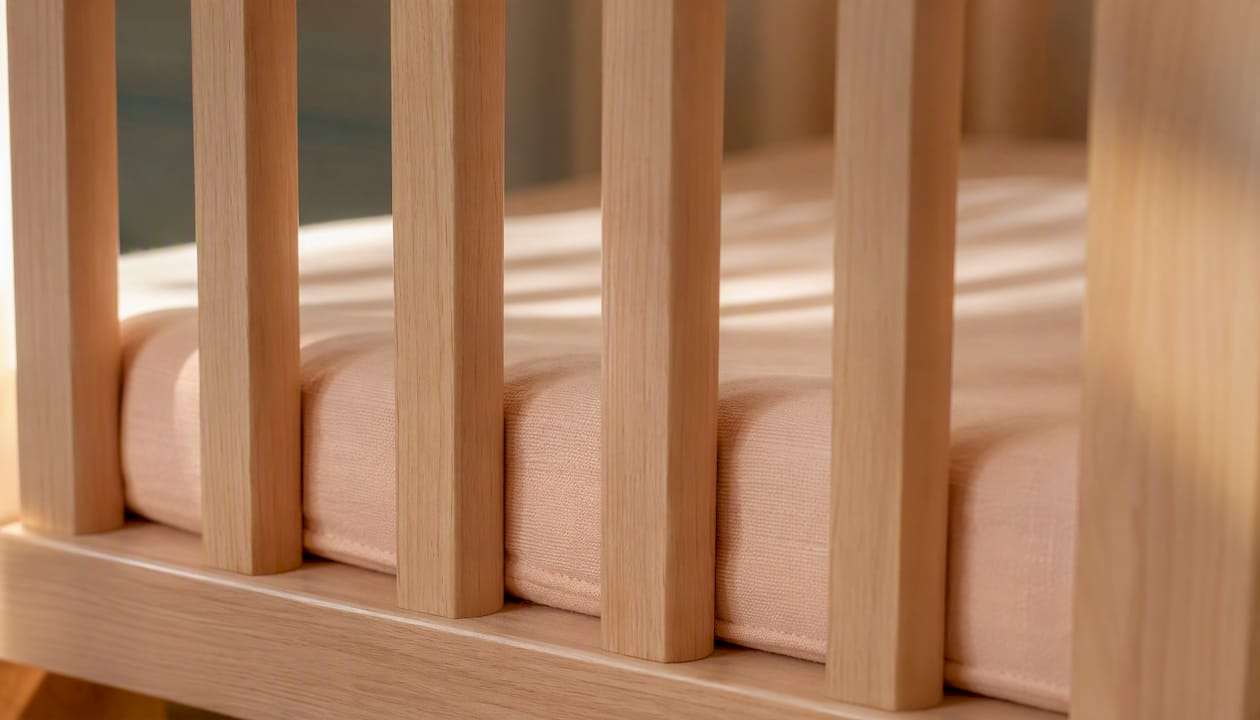
Pro Tip: When buying a cot mattress, bring the cot’s internal dimensions with you (or check the manufacturer’s spec sheet). A mattress that leaves a gap wider than two adult fingers on any side is too small and should not be used.
When should you move your baby from a bassinet to a cot?
The move should be guided by your baby’s development and safety signs, not strictly by age. A bassinet typically suits the newborn stage, and the transition to a cot should be based on development signs or reaching the product’s weight limit. Most babies make this move somewhere during infancy, but readiness varies individually.
Signs it is time to transition
- Your baby is rolling. Once a baby can roll from back to front, the confined space of a bassinet becomes a safety concern.
- Your baby is pushing up on their arms. This is the precursor to rolling and a clear signal to move.
- Your baby is sitting with support. At this point, the bassinet’s low sides offer insufficient containment.
- Your baby has reached the weight limit. Check the manufacturer’s stated limit and move before your baby hits it, not after.
- Your baby’s head or feet are touching the ends. Length limits matter as much as weight limits.
- Your baby seems uncomfortable or restless. Some babies simply outgrow the snug feeling of a bassinet before the physical milestones arrive.
To ease the transition, keep your bedtime routine exactly the same. If possible, move the cot into your bedroom for the first week or two so your baby adjusts to the new sleep space without also losing the familiar sounds and smells of your room. A consistent routine, the same sleep sack or swaddle, and the same settling approach all help.
What do NZ health authorities say about safe infant sleep?
New Zealand’s main health authorities, including the Ministry of Health NZ, Red Nose NZ, and Plunket, align closely with international guidance. The core recommendation is room-sharing: your baby should sleep in their own separate sleep space in your room for the first six months. This is not the same as bed-sharing, which carries significantly higher risk.
Room-sharing, not bed-sharing, combined with back-to-sleep, a firm flat surface, and a clear sleep space is the arrangement consistently recommended by public health authorities to reduce the risk of sudden unexpected death in infancy (SUDI), which includes SIDS. Red Nose NZ specifically advises keeping the sleep space completely clear of pillows, duvets, bumpers, and soft toys.
NZ safe-sleep checklist (applies to both bassinets and cots):
- Always place your baby on their back to sleep
- Use a firm, flat mattress with a fitted sheet only
- Keep the sleep space free of loose bedding, pillows, and soft toys
- Room-share during the baby’s early months (baby in their own sleep space)
- Avoid bed-sharing, especially after alcohol, medication, or when very tired
- Keep the room smoke-free before and after birth
- Breastfeed if you can (associated with reduced SUDI risk)
This guidance directly affects the bassinet vs cot decision. If your bedroom is small and a full cot does not fit comfortably beside your bed, a bassinet makes room-sharing far more practical for those critical first six months. Once your baby moves to their own room, a cot becomes the natural long-term choice.
What should you look for when buying a bassinet or cot in New Zealand?
Safety comes first, then practicality. Whether you are buying new or second-hand, these are the checks that matter most.
Buying checklist:
- Mattress firmness and fit: The mattress must be firm (not soft or springy) and fit snugly with no gaps wider than two adult fingers on any side.
- Stable base: Test it on the surface you plan to use. No rocking, no wobbling.
- Weight and height limits: Check the manufacturer’s stated limits and plan to transition before your baby reaches them.
- Breathable sides: Mesh or slatted sides improve airflow. Solid padded sides trap heat.
- No loose bedding or bumpers included: If a product comes with a padded insert or bumper, set it aside. It should not go in the sleep space.
- Certifications: Look for AS/NZS compliance markings or references to international safety standards on the product label or packaging.
- Slat spacing (cots): No more than 60 mm between slats.
- No drop sides: Drop-side cots are not recommended anywhere in current guidance.
Red flags to walk away from:
- Soft nests, cocoon-style inserts, or padded liners marketed as sleep spaces
- Any visible damage, cracked wood, or missing hardware on second-hand items
- A mattress that does not match the frame’s dimensions
- No manufacturer information or weight limits listed
Second-hand buying tips: Always request the original manual so you can verify parts are complete. Check that no recalls have been issued for the model (search the product name on the Consumer NZ or ACCC recall databases). Never use a second-hand mattress, even if it looks clean. Bacteria and mold can be present without being visible, and a new mattress is a low-cost safety upgrade.
Pro Tip: Nappycare’s baby accessories range includes fitted sheets and mattress protectors sized for infant beds. Pairing a new mattress with a waterproof protector and a fitted sheet is one of the simplest ways to keep your baby’s sleep space hygienic and safe.
How do space, cost, and portability shape your decision?
Bedroom size is the single most important practical factor for most New Zealand families. If your baby’s sleep space cannot sit within arm’s reach of your bed, room-sharing becomes harder to maintain through the night.
Practical trade-offs:
- Space vs. lifespan: A bassinet fits almost anywhere but lasts only months. A cot lasts years but needs a dedicated spot.
- Cost now vs. cost later: A bassinet costs less upfront, but buying both a bassinet and a cot later adds up. A cot from birth is one purchase.
- Portability for travel: A lightweight bassinet or a dedicated travel cot is far easier to transport than a full cot.
- Bedside access: A bassinet at bed height means less movement during night feeds. A cot’s lower sides require more bending.
- Recovery needs: Parents recovering from surgery or a difficult birth benefit significantly from the reduced physical effort a bassinet allows.
Two common scenarios:
A family in a two-bedroom Auckland apartment with a small master bedroom will likely find a bassinet the only realistic option for room-sharing in the first six months. Once the baby moves to the second bedroom, a cot becomes the practical long-term choice.

A family with a larger home and a dedicated nursery set up before birth may choose a cot from day one, moving it into the master bedroom for the first six months and then back to the nursery. This avoids the bassinet-to-cot transition entirely.
What are the alternatives to a standard bassinet or cot?
Not every family needs a traditional bassinet or a standard cot. Several alternatives are worth knowing about, along with their safety trade-offs.
Alternatives and where they fit:
- Bedside sleeper (co-sleeper bassinet): Attaches or sits flush against the adult bed, allowing easy access without bed-sharing. Features like adjustable height and breathable mesh sides (common on products designed for this purpose) make them practical for the first few months. They follow the same safe-sleep rules as a standard bassinet.
- Travel cot: Lightweight and foldable, designed for temporary use at grandparents’ homes or on holiday. Most are suitable from birth but check the manufacturer’s age and weight guidance. Not ideal as a permanent sleep space due to thinner mattresses.
- Moses basket: A traditional woven basket with handles. Portable and cozy-looking, but typically has a shorter use window than a bassinet and should meet the same mattress-fit and firmness standards.
Safety warnings for products often used for naps:
- Car seats: Safe for travel, not for sleep. A baby left to sleep in a car seat outside a moving vehicle can slump into a position that restricts their airway.
- Baby nests and pods: Soft-sided sleep positioners are not recommended as a sleep surface by any major health authority. They are not a safe substitute for a firm flat surface.
- Slings and carriers: Fine for daytime carrying, but a sleeping baby should always be moved to a firm flat sleep space.
Accessories that genuinely help:
- Fitted sheets sized for your specific bassinet or cot (avoid loose or oversized sheets)
- A waterproof mattress protector under the fitted sheet
- A wearable sleep sack or swaddle instead of loose blankets
Avoid bumper pads, positioning pillows, and any soft insert marketed as a sleep aid. None of these are recommended by NZ health authorities, and several have been linked to infant deaths overseas.
Which option fits your situation?
Match your most limiting constraint to the product that solves it. Here is a quick guide:
- Small bedroom: Choose a bassinet. Bedside access and compact size make room-sharing practical when space is tight.
- Cesarean or difficult birth recovery: Choose a bassinet. The raised height reduces bending and physical strain during night feeds.
- Long-term value and one purchase: Choose a cot from birth. Move it into your room for the first six months, then to the nursery.
- Frequent travel: Add a travel cot or portable bassinet to whichever primary option you choose.
- Twins: Two bassinets for the newborn stage is often more practical than two full cots in a shared room. Transition both to cots at the same developmental milestones.
- Tight budget: A cot from birth avoids the double purchase. If you do start with a bassinet, buy second-hand and invest in a new mattress.
- Dedicated nursery already set up: A cot from birth works well. Keep it in your room for the first six months, then move it.
One important note: convenience should never override safety. If a product does not meet safe-sleep standards, no scenario justifies using it. A firm flat surface with a snug-fitting mattress is non-negotiable regardless of which option you choose.
Our perspective on bassinets and cots at Nappycare
At Nappycare, we generally recommend starting with a bassinet for the newborn stage, then transitioning to a cot when your baby shows the developmental signs described above. That approach aligns with the room-sharing guidance from the Ministry of Health NZ and Red Nose NZ, and it gives you the bedside access that makes those early weeks genuinely manageable.
What we have noticed is that parents often focus on aesthetics or price first and safety second. The mattress fit, the base stability, and the absence of soft inserts matter more than the color or the brand name on the side. A simple, well-made bassinet with a firm mattress and stable base will always outperform a stylish but poorly constructed one.
If you have questions about which products meet these standards, our team is happy to help via our product pages. Browse our newborn baby bed range for options that prioritize the basics: firm surfaces, stable construction, and practical sizing for New Zealand bedrooms.
Find vetted baby sleep products at Nappycare
Choosing a safe sleep space is one of the first decisions you make as a parent, and you deserve products that have been checked against the basics: firm mattresses, stable frames, and clear safety information.
Nappycare stocks a curated range of baby beds and newborn sleep essentials selected with NZ families in mind. You will also find the accessories that complete a safe sleep setup, including fitted sheets and mattress protectors, in our baby accessories section. Every order comes with straightforward returns, so if a product does not suit your setup, you are not stuck with it. Browse the full range at Nappycare and filter by age, size, or product type to find what fits your bedroom and your budget. If you are not sure where to start, the buying checklist in this article covers exactly what to look for before you add anything to your cart.
Where to read more about safe infant sleep in New Zealand
These are the sources worth bookmarking. Follow local NZ guidance first, and always check the manufacturer’s instructions for product-specific weight and height limits. This article is general information, not medical advice. If you have concerns about your baby’s sleep or health, speak with your Plunket nurse, midwife, or GP.
- Ministry of Health NZ: The primary NZ government source for SUDI prevention and safe-sleep guidance. Start here for current national recommendations.
- Red Nose NZ: Focused specifically on sudden unexpected death in infancy. Detailed safe-sleep resources and a helpline for parents.
- Plunket: New Zealand’s leading child health service. Practical guidance on sleep, feeding, and development from birth.
- American Academy of Pediatrics (AAP): International reference for safe-sleep standards, including back-to-sleep, firm flat surface, and room-sharing guidance.
- Canada: A clear, practical public-health brochure that aligns closely with NZ guidance on room-sharing and sleep surface safety.
- Healthline: Bassinet vs. Crib: A parent-friendly overview of the practical differences between the two options.
- Boori: Bassinet vs Cot Buying Guide: Useful for understanding developmental transition signs and product lifespan considerations.
This article is general information, not a substitute for advice from a qualified doctor. Consult a qualified healthcare professional about your own circumstances before acting on anything here.
Sources
- Bassinet vs. Crib: What’s Better for Baby? | Healthline
- Crib vs Cot for Newborns: What’s the Difference? | Babysential
- Canada
- Patiented
- Bassinet vs Cot | Newborn Sleep Buying Guide | Boori UK