
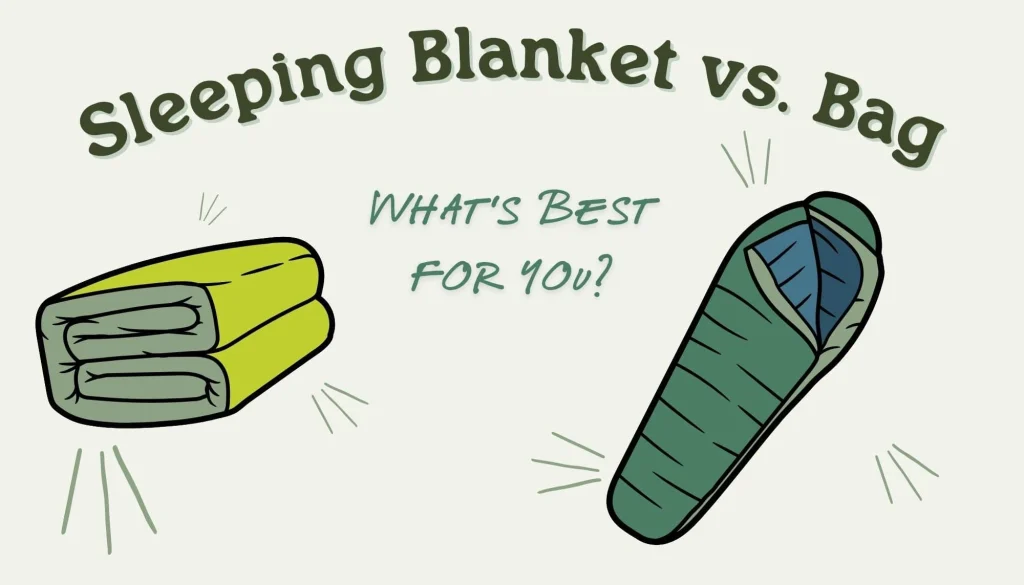
Stroller Sleeping Bag vs Blanket: Which Keeps Baby Warmer?
Compare insulation and safety in our guide on whether a stroller sleeping bag vs. blanket keeps baby warmer to ensure your little one stays cozy all winter.
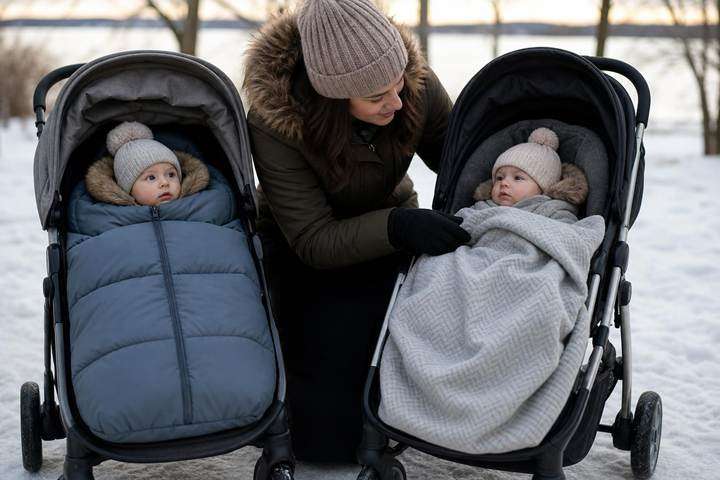
Few parenting debates spark as much winter-morning chaos as this one: should you tuck a blanket around your baby in the stroller, or zip them into a dedicated stroller sleeping bag? Both options promise warmth, but they deliver it in very different ways. With the global baby stroller market projected to reach $2.8 billion in 2026, manufacturers are investing heavily in cold-weather accessories, and parents have more choices than ever. That abundance of options, though, can make the decision feel overwhelming.
If you’ve ever stood in a store aisle comparing tog ratings and fleece linings while your toddler slowly lost patience, you know the struggle. The real question isn’t just which keeps baby warmer: it’s which keeps baby warmer, safer, and easier to manage on a Tuesday morning when you’re already running late. This guide breaks down the key differences so you can pick the right solution for your family, your climate, and your sanity.
Core Differences Between Stroller Sleeping Bag vs Blanket
A stroller sleeping bag (often called a footmuff or cosytoes) and a blanket might seem like they serve the same purpose, but they’re built on fundamentally different principles. Understanding those differences is the first step toward making a smart choice.
Design and Attachment Mechanisms
A stroller sleeping bag is essentially a wearable cocoon that attaches directly to your stroller. Most models feature slits or openings in the back panel that thread over the stroller’s harness straps, anchoring the bag in place. This means the bag stays put whether your baby kicks, squirms, or decides to reenact a wrestling match with an invisible opponent.
Many universal-fit footmuffs are designed with multiple harness slot positions to accommodate different stroller brands and models. The top section typically zips open for easy access, and some designs fold back entirely so the bag doubles as a seat liner in milder weather.
Blankets, by contrast, have no attachment system at all. You drape them over your baby and tuck the edges around the sides. Some parents use clips or straps to hold a blanket in place, but these are aftermarket fixes for a fundamental design limitation. The blanket relies on gravity and friction, both of which lose the battle against an active baby within about four minutes.
Insulation and Material Composition
Stroller sleeping bags use layered construction. The outer shell is usually a water-resistant or windproof fabric like polyester or nylon, while the interior lining is soft fleece, sherpa, or quilted padding. Higher-end models use thermally rated insulation similar to what you’d find in adult outerwear, with tog ratings that indicate warmth levels.
Blankets vary wildly in material. A thin muslin blanket and a thick wool throw are both “blankets,” but they perform nothing alike in cold weather. Most parents default to fleece or knitted blankets for stroller use, which provide decent insulation but zero wind or moisture protection. A fleece blanket in a 15-mph crosswind is basically decorative.
The structural difference matters most here: a sleeping bag traps warm air in a sealed pocket around your baby’s body, while a blanket creates an open-ended layer that loses heat from every unsealed edge.
Thermal Efficiency: Which Offers Superior Warmth?
This is the core of the debate, and the answer is pretty clear-cut once you understand how heat loss works with small bodies.
Draft Prevention and 360-Degree Coverage
Babies lose body heat fast. Their surface-area-to-weight ratio is much higher than an adult’s, which means cold air strips warmth from them quickly. The biggest enemy isn’t low temperatures: it’s drafts.
A stroller sleeping bag wraps around your baby’s legs, feet, and torso in a continuous envelope. There are no gaps at the bottom where wind can sneak in, no loose edges that flap open. The zipper closure along the front creates a seal, and the harness integration keeps the bag snug against the stroller seat. Wind hits the outer shell and stops there.
Blankets fail at draft prevention almost by design. Even if you tuck a blanket tightly, your baby’s movements create openings. A single kick exposes their legs. A reach for a toy pulls the blanket sideways. And strollers moving through wind create constant air movement that lifts and shifts loose fabric. You’ll spend half your walk re-tucking.
The result is a measurable warmth gap. A sleeping bag maintains a consistent microclimate around your baby, while a blanket’s warmth fluctuates with every gust and wiggle. For walks longer than 15-20 minutes in genuinely cold weather, that difference becomes significant.
Temperature Regulation and Breathability
Keeping baby warm doesn’t mean keeping baby as hot as possible. Overheating is a real concern, and good cold-weather gear needs to regulate temperature, not just trap heat.
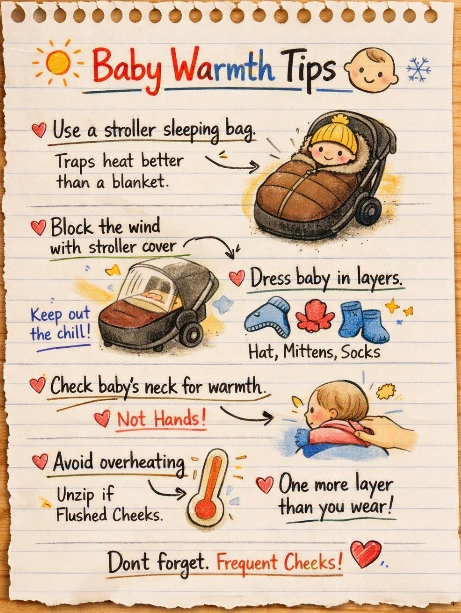
Quality stroller sleeping bags address this with breathable linings and adjustable ventilation. Many models have dual zippers that let you open the top, bottom, or sides independently. If your baby’s cheeks are flushed or their neck feels sweaty, you can unzip the top half while keeping their legs covered. Some bags also feature removable inner linings, so you can adjust the insulation level as seasons shift.
Blankets actually offer decent breathability since they’re not sealed, but that breathability comes at the cost of temperature consistency. Your baby might be perfectly warm one minute and exposed the next. There’s no controlled way to vent a blanket: you either cover your baby or you don’t.
The best sleeping bags give you a spectrum of warmth options within a single product. A blanket gives you two settings: on and off.
Safety Considerations for Winter Strolling
Warmth matters, but safety matters more. Both options carry specific risks that parents should understand before heading out in cold weather.
Harness Compatibility and Proper Fit
One of the most common winter safety mistakes is placing bulky layers between your baby and the stroller harness. Thick snowsuits and puffy jackets can prevent the harness from fitting snugly, which means the straps might not hold your child securely in an emergency stop or tip.
Stroller sleeping bags solve this problem elegantly. Because the bag goes over the harness (the straps thread through the back panel and sit against your baby’s body), you can dress your baby in lighter layers underneath while the bag provides the bulk of the insulation. The harness maintains direct contact with your child’s body, and you get the warmth without the safety compromise.
You can see this harness-over-bag setup demonstrated in stroller footmuff fitting guides, which show how the straps thread through designated slots. The key is ensuring your sleeping bag is compatible with your specific stroller’s harness configuration: most universal models accommodate 3-point and 5-point systems, but always check.
Blankets don’t interfere with the harness at all, which is a genuine advantage. But they also don’t stay in place, which creates a different safety issue: loose fabric. A blanket that slides down can bunch around a baby’s face, particularly if the child slumps forward while sleeping. This is a suffocation risk, especially for younger infants who can’t push fabric away from their nose and mouth.
Risk of Overheating and Monitoring Tips
Overheating during sleep is a known risk factor for SIDS, and while stroller naps aren’t the same as overnight sleep, the principle still applies. You need to monitor your baby’s temperature regardless of which option you choose.
Signs of overheating include:
- Damp hair or a sweaty neck and chest
- Flushed or red cheeks
- Rapid breathing
- Fussiness or restlessness that seems heat-related
With a sleeping bag, check your baby’s temperature by feeling the back of their neck or chest: not their hands or feet, which tend to feel cool even when the rest of their body is warm. If they’re overheating, unzip the bag partially or remove an underlayer.
With blankets, overheating is less common simply because blankets don’t retain heat as effectively. But parents sometimes overcompensate by piling on multiple blankets, which creates the same problem. One well-chosen blanket is better than three thin ones stacked together, both for temperature management and for reducing loose fabric around your baby’s face.
A good rule of thumb: dress your baby in one more layer than you’re comfortable wearing yourself, then let the sleeping bag or blanket do the rest. If you’re in a t-shirt and light jacket, your baby probably needs a long-sleeve onesie, a light fleece layer, and their outer covering.
Practicality and Ease of Use in Daily Life
The warmest option in the world is useless if it’s so annoying to use that you leave it at home. Real-world practicality matters just as much as thermal performance.
Convenience for Quick Transfers
Here’s where blankets have a genuine edge. If you’re popping in and out of shops, transferring your baby from stroller to car seat, or making quick stops, a blanket is infinitely easier to manage. You lift it off, carry your baby inside, and drape it back over when you return. No zipping, no threading, no fuss.
Stroller sleeping bags require more setup. Getting your baby in means unzipping the bag, placing them in the stroller, threading the harness through, buckling up, and then zipping the bag closed. Getting them out is the reverse. If you’re making six stops on a Saturday morning errand run, that process gets old fast.
Some newer sleeping bag designs address this with quick-release systems or magnetic closures that speed things up. But even the fastest sleeping bag takes longer to manage than tossing a blanket aside. For parents who prioritize grab-and-go convenience, this is a meaningful consideration.
The flip side: once your baby is zipped in, you’re done. You don’t need to adjust, re-tuck, or chase a blanket that’s blown onto the sidewalk. For longer walks or park outings where you won’t be transferring your baby frequently, the sleeping bag’s one-time setup pays off.
Storage and Portability Factors
A folded blanket takes up almost no space. You can stuff it in a diaper bag, drape it over the stroller handle, or shove it in the basket underneath. It weighs next to nothing and doesn’t require any particular storage method.
Stroller sleeping bags are bulkier. Even compact models take up real estate in your diaper bag, and thicker winter versions can feel like you’re packing for a weekend away just to go to the grocery store. Most parents leave the sleeping bag attached to the stroller semi-permanently during winter months, which works fine if you have one stroller but becomes a hassle if you switch between an everyday buggy and a jogging stroller.
If storage space is tight or you use multiple strollers regularly, a blanket’s portability is hard to beat. If you have one primary stroller and can leave the bag installed, the storage issue becomes irrelevant.
Choosing Based on Climate and Lifestyle
The “right” answer depends heavily on where you live and how you use your stroller. A parent in Minnesota faces completely different challenges than a parent in San Francisco.
Best Options for Extreme Sub-Zero Weather
If you regularly walk in temperatures below 20°F (-7°C), a stroller sleeping bag isn’t just the better option: it’s practically the only responsible one. Blankets simply can’t provide reliable protection against sustained cold and wind at those temperatures.
Look for sleeping bags with these features for serious cold:
- A tog rating of 2.5 or higher
- A windproof and water-resistant outer shell
- A fleece or sherpa inner lining
- A hood or high collar to protect the neck and chin
- Full-length zipper coverage with a draft flap behind the zipper
Pair the sleeping bag with appropriate underlayers: a merino wool base layer and a fleece mid-layer work well. Avoid cotton, which holds moisture and chills quickly. Add a warm hat and mittens, since the sleeping bag won’t cover your baby’s head and hands.
For truly extreme conditions (think sustained sub-zero temperatures with wind chill), some parents use both: a sleeping bag for core insulation with a light blanket tucked over the top as an additional wind barrier. This layered approach gives you maximum warmth with the option to remove the blanket if your baby gets too warm.
Ideal Solutions for Mild Autumn Days
On crisp fall mornings where temperatures hover between 45-60°F (7-15°C), a blanket is perfectly adequate and often preferable. Your baby doesn’t need heavy insulation at these temperatures, and the flexibility of a blanket matches the unpredictability of autumn weather. If the sun comes out and warms things up, you fold the blanket down. If a breeze picks up, you tuck it higher.
A lightweight sleeping bag with a low tog rating (around 1.0) also works well for mild conditions, especially if you want the security of knowing it won’t blow away or slide off. Many parents find that a thin sleeping bag becomes their go-to for spring and fall, while a heavier model handles winter.
The hybrid approach works beautifully for transitional seasons. Keep a light blanket in the stroller basket as a backup, and use the sleeping bag as your primary layer. You can always add the blanket on top if the temperature drops unexpectedly, or remove the sleeping bag entirely if the day warms up.
For families in mild climates where temperatures rarely drop below freezing, a good blanket might genuinely be all you need. The investment in a high-end sleeping bag makes less sense if you’ll only use it a handful of times per year. But if you’re in a climate with a real winter lasting three or more months, the sleeping bag pays for itself in comfort and convenience within the first few weeks.
The Right Choice for Your Family
The stroller sleeping bag wins the warmth contest in almost every scenario. Its sealed design, draft prevention, and consistent insulation make it the superior choice for keeping your baby warm during cold-weather outings. Blankets can’t match that performance, especially in wind or sustained cold.
But warmth isn’t the only factor. Blankets win on convenience, portability, and cost. They’re easier to manage during quick errands, simpler to store, and far cheaper to replace. For mild climates and short outings, they do the job just fine.
Our recommendation: if you can afford one good sleeping bag, buy it for winter and keep a blanket as your warm-weather backup. If budget is tight, invest in a quality fleece blanket with some heft to it and reserve the sleeping bag purchase for when your baby will face genuinely cold conditions. Either way, monitor your baby’s temperature, keep the harness snug against their body, and don’t let perfect be the enemy of warm enough. Your baby cares a lot less about tog ratings than you think: they just want to be cozy while you push them past the same tree for the fourteenth time.