
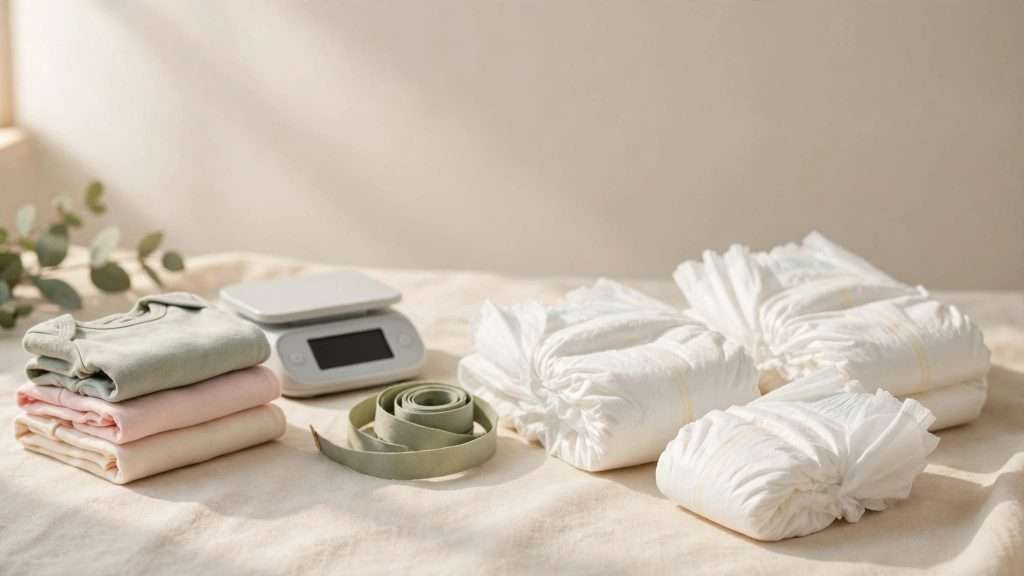
A nappy that fits well supports baby comfort, keeps changes calmer, and helps keep clothing drier. Yet newborn nappy sizes can feel confusing when packaging varies and babies grow at their own pace.
Use this nappy size guide as a starting point: your baby’s current weight is more useful than age, especially as baby growth milestones vary. Check the manufacturer’s diaper size chart on the exact pack, since local product ranges can differ from generic online guidance.
How newborn nappy sizes work
Nappy sizes usually follow weight bands, because two babies of the same age can have very different builds. A diaper size chart offers a starting point, but your baby’s fit should make the final choice. A long, slim baby and a rounder baby may need different cuts within the same baby weight range.
In some regions, nappies are called diapers, while the same product category may be described as an infant nappy. The name changes, but the fitting rule stays the same: use the pack’s weight guide first, then let your baby’s body shape settle the choice.
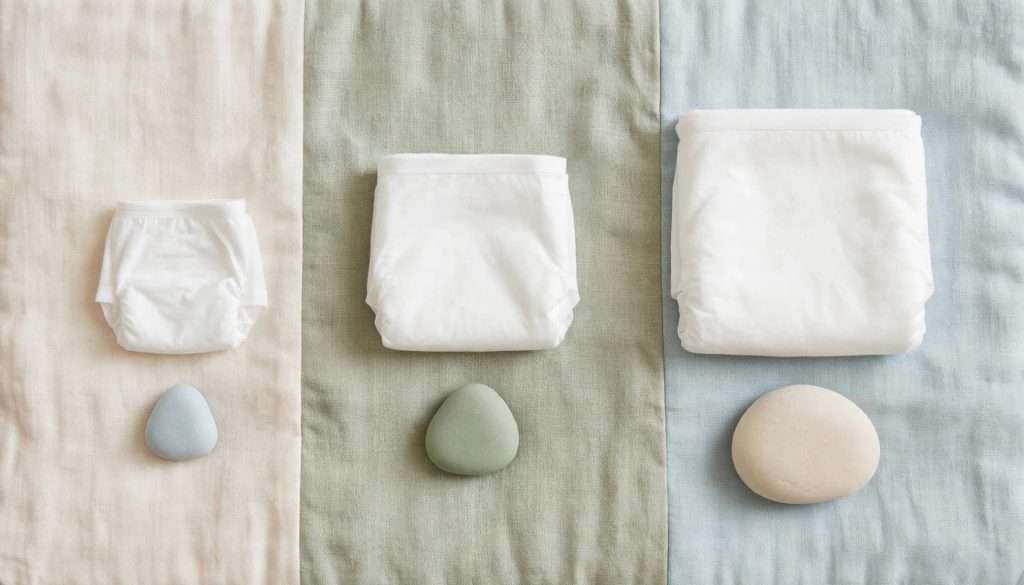
Put weight ahead of age
Newborn nappies commonly suit babies up to about 5 kg, although the lower and upper limits differ by brand. For example, the Huggies New Zealand nappy range lists Newborn as up to 5 kg, followed by Size 2 at 4 to 8 kg.
Those overlapping ranges are helpful. If your baby is near the upper end of one size, you can try the next size without waiting for a birthday or milestone.
Treat the pack as the final guide
No diaper size chart is universal, so it offers a starting point rather than a final answer. Product lines within the same brand may use different ranges, and imported packs can differ from New Zealand versions.
Weigh your baby at a check-up, pharmacy, or home if you have scales. Then compare that number with the diaper size chart printed on the exact pack, using your baby’s fit to make the final choice.
A newborn nappy size guide for the first months
Most babies spend little time in newborn sizes. Some start in them, while others fit a Size 1 from birth. Premature or smaller babies may need preemie sizes or a smaller specialist size, if available.
Use the baby weight range below as a starting point only. Treat this diaper size chart as a guide, not a rule.
| Nappy stage | Common weight band from a diaper size chart | What to check |
|---|---|---|
| Preemie or Size 0 | Under about 3 kg | Look for a close fit without pressure around tiny legs. |
| Newborn or Size 1 | About 2 to 5 kg | The nappy should sit below the cord area if it has a notch or fold-down front. |
| Size 2 | About 4 to 8 kg | This often suits babies who have outgrown a snug newborn fit. |
| Size 3 | About 6 to 12 kg | Use the pack’s range and check fit as movement increases. |
These displayed bands are examples, and body shape can affect how each size fits. The manufacturer’s own diaper size chart overrides this table, so check the individual pack before opening a large box.
Overlapping sizes in a diaper size chart let you choose for fit, rather than waiting for the maximum weight.
When your baby falls in two ranges
Try a small pack of each size when your baby is in an overlap zone. Choose the smaller option if it sits smoothly and holds through a typical sleep. Move up if tabs barely meet, leg marks appear, or leaks increase.
The upper weight on a pack is not a finish line. A nappy that is technically within range can still be too tight for your baby’s build.
How many newborn nappies should you buy?
Newborns often need 8 to 10 nappy changes a day, and some days involve more. Frequent feeds, bowel motions, and unsettled periods can all increase the count.
That level of daily usage adds up quickly, but it is still wise not to fill a cupboard before birth. Your baby may arrive larger than expected, grow fast, or prefer another brand’s cut.
Build a small, flexible supply
Begin with one or two packs in the smallest size and a small pack of the next size. It gives you another option for overnight protection if the first size becomes snug.
The Huggies nappy size calculator offers estimates by size, but check the pack’s diaper size chart before buying multiple boxes.
Keep nappies somewhere dry and easy to reach. A basket near the changing space is useful, but avoid storing large supplies in a damp bathroom.
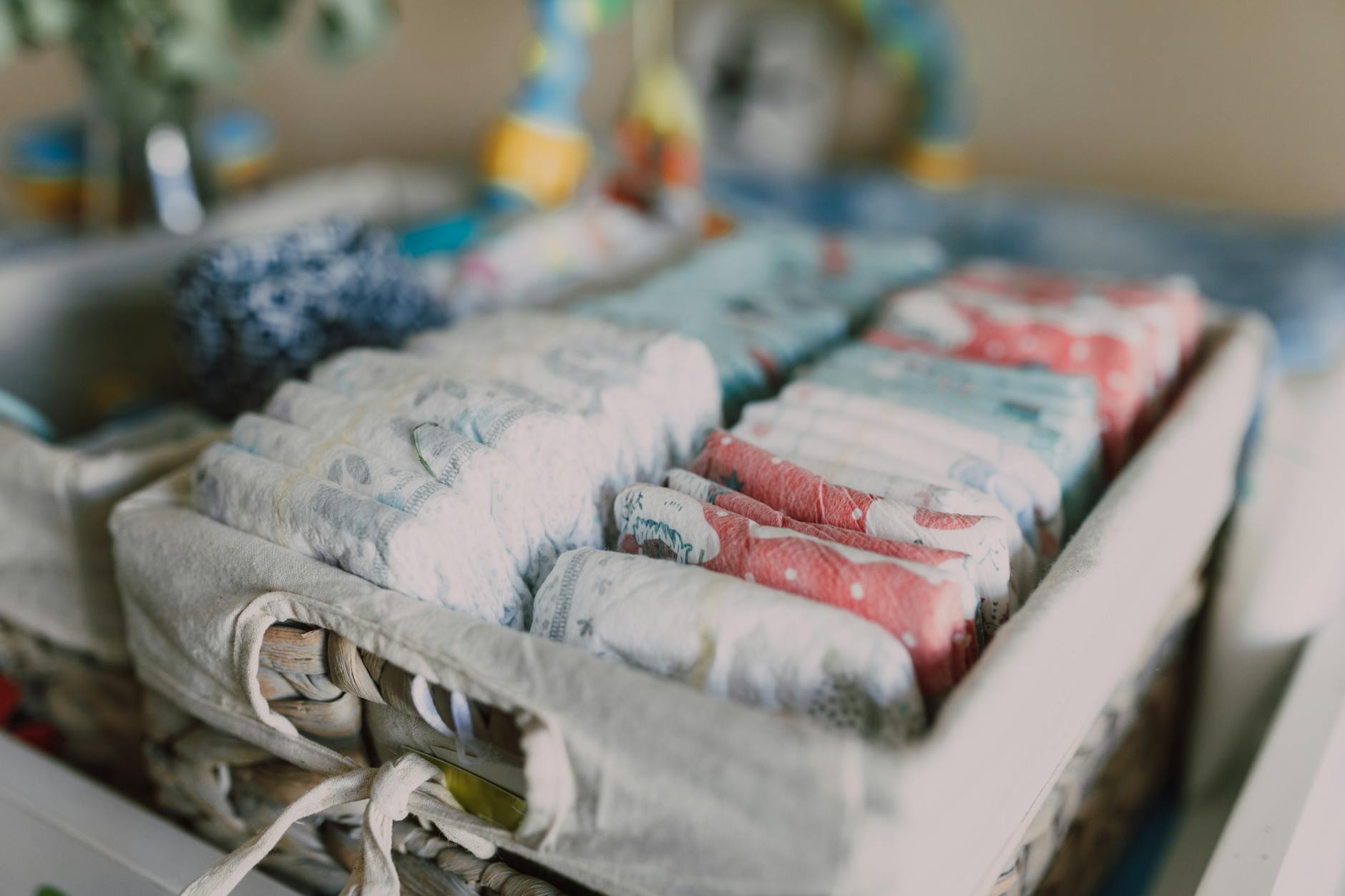
Photo by RDNE Stock project
Check the fit at the waist, legs, and back
A good nappy fit looks secure without looking restrictive. A diaper size chart can guide you, but it can’t replace checking the actual fit. Nappy tabs should fasten evenly without being pulled hard, and the nappy shouldn’t sag soon after a change.
Fit checks are especially useful after moving up a size, changing brands, or seeing a run of leaks.
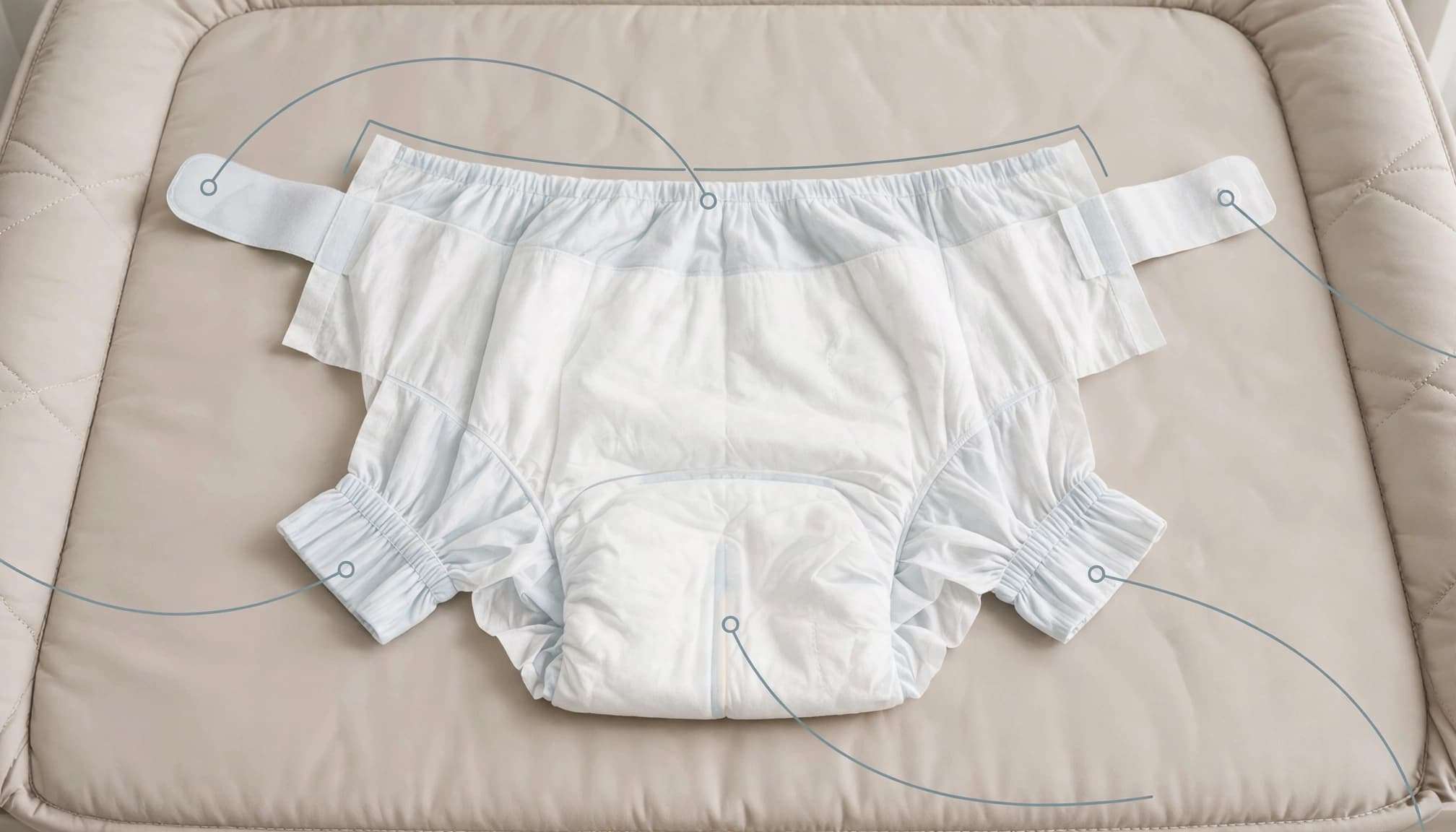
Check the waist and back coverage
The waistband should sit flat against your baby’s tummy, with room for a finger beneath it. Fastening tabs should reach the front panel easily and sit symmetrically, without causing red marks.
At the back, the nappy needs to cover the bottom comfortably. If it sits low or slips down when your baby curls their legs, the rise may be too short. Moving up one size often gives more back coverage.
For a newborn with an umbilical cord stump, choose a nappy with a shaped front where possible. If it doesn’t have one, make sure the front edge sits below the stump without rubbing or pressing on it. Keep the area clean and follow advice from your midwife or health professional if you have concerns.
Look at the leg cuffs and leak pattern
Run a finger around each leg cuff after fastening. The ruffled edge should sit outside the nappy rather than tucked inward. A tucked cuff creates a direct path for wee or poo to escape.
Small, faint marks that fade quickly can happen, especially with sensitive skin. Deep red marks, lasting redness, or clear discomfort mean the nappy may be too tight or fastened poorly. Seek advice from a health professional if irritation persists, rather than guessing whether it is diaper rash.
Leaks also tell a story. A wet feeling against the skin can mean the nappy needs a prompt change. A leak at the legs often points to a gap or folded cuff. A leak up the back can mean the nappy is too small, too low at the waist, or overdue for a change.
Why nappy brands can fit differently
Weight guides are useful, but nappy absorbency, shape, waistband stretch, and tab placement differ between brands. Two products with the same weight range can therefore perform differently. One brand may suit fuller thighs, while another may sit better on a narrow waist.
Pampers and Huggies both offer weight-based sizing, yet their bands and product cuts vary by market. Check the Pampers size and weight chart against another official diaper size chart before using disposable nappy reviews to compare reports about fit and leaks. Then rely on the pack sold in your area.
Test before committing to a bulk box
A small pack lets you check two things: daytime fit and overnight performance. Use the nappy through ordinary feeds, naps, and movement, as active babies can expose fit differences. Disposable nappy reviews can’t replace this small-pack trial, since babies vary in shape and routine.
The most expensive nappy isn’t automatically the best fit. Store brands can work well, while premium brands may suit another baby better. A higher price doesn’t make a product automatically safer or more absorbent. Comfort and consistent leak protection matter more than the logo.
Later labels such as a crawler nappy, toddler nappy, or nappy pants describe different stages. They aren’t a reason to choose a larger newborn product now.
Prevent leaks and blowouts during early growth
A larger nappy isn’t always the answer. If it looks loose around the legs, size down or try a different cut. If it’s tight, low at the back, or hard to fasten, move up a nappy size. In US search terms, this may be called “size up diapers,” but fit matters most.
Use a simple changing routine
Change wet or soiled nappies promptly. Before closing a fresh nappy, place the back edge high enough to cover the bottom, bring the front up between the legs, then fasten both nappy tabs evenly.
Next, pull the leg ruffles out and check that the waistband lies flat. This takes seconds and helps the nappy provide better leak protection.
Reset after a leak
When a leak happens, check where it started before changing size. A front leak may happen if a boy’s penis points upward, so point it down before fastening. A leg leak may come from a cuff folded inside.
If the same leak happens across several properly fitted nappies, test the next size or another brand. Keep the opened pack for daytime use if it still fits reasonably well. Seek professional advice for persistent skin irritation or other health concerns.
Key takeaways for buying newborn nappies
- Choose sizes by your baby’s current weight and fit, not age alone.
- Buy modestly before birth, since smaller sizes may last days or weeks.
- Check the waist, fastening tabs, leg cuffs, and back coverage at each size change.
- Use the leak location as a clue before assuming you need a larger size.
- Test small packs when comparing brands, especially near an overlapping weight range.
A comfortable fit makes changes easier
The right nappy size should feel ordinary once it’s on: secure at the waist, roomy around the legs, and high enough at the back. Your baby’s weight starts the decision, while everyday fit confirms it.
Keep a small supply of the next size, check the packaging each time you shop, and adjust when your baby tells you the current fit has changed. Later, nappy pants may suit a more mobile child, while toilet training doesn’t affect newborn sizing today.
Frequently asked questions
What is the best way to choose the right nappy size for a newborn?
Start with your baby’s weight and the manufacturer’s pack. A nappy size guide can help, but the exact pack is more reliable than a generic diaper size chart. Then check that the tabs fasten without pulling, the leg cuffs sit outside, and the nappy covers the bottom well. A small trial pack is useful when two sizes overlap.
How do I know when to size up diapers?
Move to the next nappy size when the tabs barely reach, the nappy leaves deep marks, the back sits too low, or repeated leaks happen despite correct fastening. A baby can need the next size before reaching the top of the stated weight range.
Should I buy lots of newborn nappies before my baby arrives?
Buy enough for the first days, plus a small pack of the next size. Avoid a large newborn stash because birth weight, growth rate, body shape, and brand preference are hard to predict before you meet your baby.