

It is 6:30pm, your seven-month-old has just discovered the joy of splashing, and one enthusiastic kick sends them lurching sideways toward the tap. You catch them with one soapy hand while the flannel slides off the bath edge onto the floor. Bath time with a baby who is learning to sit is a proper juggling act, and it is completely reasonable to wonder whether a baby bath seat would give you back a free hand.
Here is the truth that New Zealand safety organisations want every parent to know: a baby bath seat is a helping hand, not a safety device. Product Safety New Zealand is explicit, stating that a baby bath aid gives your child some support while in the bath, but it does not keep them safe. Babies have drowned while using bath aids, including products with warning labels and suction cups. If you use one, you are gaining a bit of hand freedom, not permission to step away. The supervision requirement does not change.
This guide compares the three main types of baby bath seats available in New Zealand, covers when each is genuinely useful (and when it is not), and lays out the safety rules that apply no matter which type you choose. If you are also sorting out the rest of your baby kit, our newborn essentials guide for NZ parents covers bath basics alongside sleep, feeding, and clothing with specific quantities and season notes.
Quick Answer: When a Bath Seat Helps and When It Doesn’t
A baby bath seat is genuinely useful in a narrow window: from when your baby can sit independently (around 5 months) until they begin pulling to a standing position (around 10 months). During that window, an upright seat can free one hand for washing hair, cleaning skin folds, and managing a sibling in the same bath. Outside that window, a seat is either unnecessary or actively risky. Reclined supports (mesh and contoured) cover the pre-sitting stage from birth, but they are a different category of product with their own limitations.
When a Bath Seat Genuinely Helps
- Sitting babies who need a free hand. Once your baby sits unaided, an upright support seat lets you use both hands for washing rather than dedicating one to supporting their back. This matters most when you are washing hair, which babies famously dislike, or cleaning neck folds and leg creases that trap milk and sweat.
- Bathing two children at once. If you have a baby and a toddler sharing the bath, a seat keeps the younger one positioned while you quickly wash the older one. You still stay within arm’s reach of both, but the seat reduces the chaos.
When a Bath Seat Does Not Help (or Adds Risk)
- Newborns and pre-sitters (under 5 months). Upright seats are designed for babies who can sit independently. Using one with a baby who cannot support their own torso is dangerous. For this stage, use a reclined mesh or contoured support, or simply bathe your baby in your arms.
- Babies pulling to stand (around 10 months). The moment your baby starts trying to pull themselves up, any bath seat becomes a climbing frame. This is the point where every manufacturer and safety body says stop. We cover this in detail below.
- When you feel tempted to step away. If the reason you want a bath seat is so you can answer the phone, grab a towel, or check on dinner, do not buy one. Product Safety NZ is unambiguous: if you need to leave the bathroom for any reason, take your child with you.
It is worth knowing that NZ safety bodies have taken strong positions on these products. Safekids New Zealand produced a position paper in 2004 recommending against the use of bath seats entirely, and Water Safety New Zealand states that bath rings, seats, and other contraptions are dangerous and should not be used. These are not casual cautions. They reflect real drowning incidents in New Zealand, including cases where parents stepped away for what they believed was a moment. If you choose to use a bath seat, do so with full awareness of these positions and with the understanding that constant supervision is the only thing that makes any product acceptably safe.
Pro Tip: Set up everything you need before running the bath. Towel, washcloth, clean nappy, and clothes all within arm’s reach. The number one reason parents step away from the bath is forgetting something, and stepping away is the single most dangerous thing you can do. If you have ever forgotten the towel and dripped down the hallway to grab one, you are not alone. Put an end to that by preparing first, every single time.
Types of Baby Bath Seats Compared
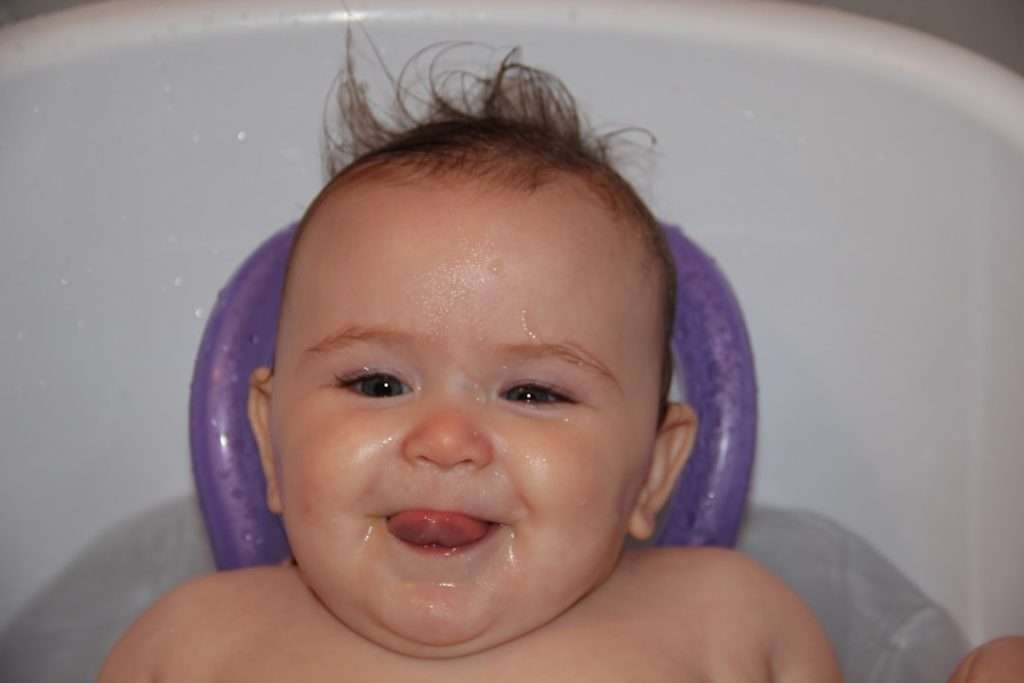
The three main types of baby bath seat serve different stages of your baby’s development. The mesh hammock and contoured reclined support are for babies who cannot yet sit (birth to approximately 6 months). The upright support seat is for babies who can sit independently (approximately 5 to 10 months). Here is how they compare side by side, followed by a detailed look at each type.
| Type | Position | Age Range | Best For | Key Limitation |
|---|---|---|---|---|
| Mesh hammock | Reclined, lying back | Birth to approx. 6 months | Non-sitters; freeing both hands for washing | Short window; only for pre-sitting babies |
| Contoured reclined | Reclined, cradled | Birth to approx. 6 months | Gradual water intro; structured head and neck support | Short window; water can pool if overfilled |
| Upright support seat | Sitting upright | Approx. 5 to 10 months | Babies who sit independently; shared baths with siblings | Stop when pulling to stand; drowning risk if unsupervised |
Mesh Hammock Style
The mesh hammock is the most open and breathable design. A soft mesh fabric is stretched across a rigid plastic frame, and your baby lies back in a reclined position while water flows freely through the mesh. You place it inside your existing baby bath or the main tub.
Best for: Newborns to around 6 months, or until your baby can sit independently. The reclined position supports babies who cannot hold themselves upright. The mesh lets water drain through, so your baby is warm but not submerged, and it frees both your hands for washing.
What to watch: The window of use is short, roughly 4 to 5 months. Once your baby starts trying to sit up, the reclined position becomes a frustration and a tipping risk. Check the mesh regularly for wear and mould, which is a real concern in humid Auckland bathrooms where airflow is limited. Replace the product if you see any fraying or discolouration.
Contoured Reclined Support
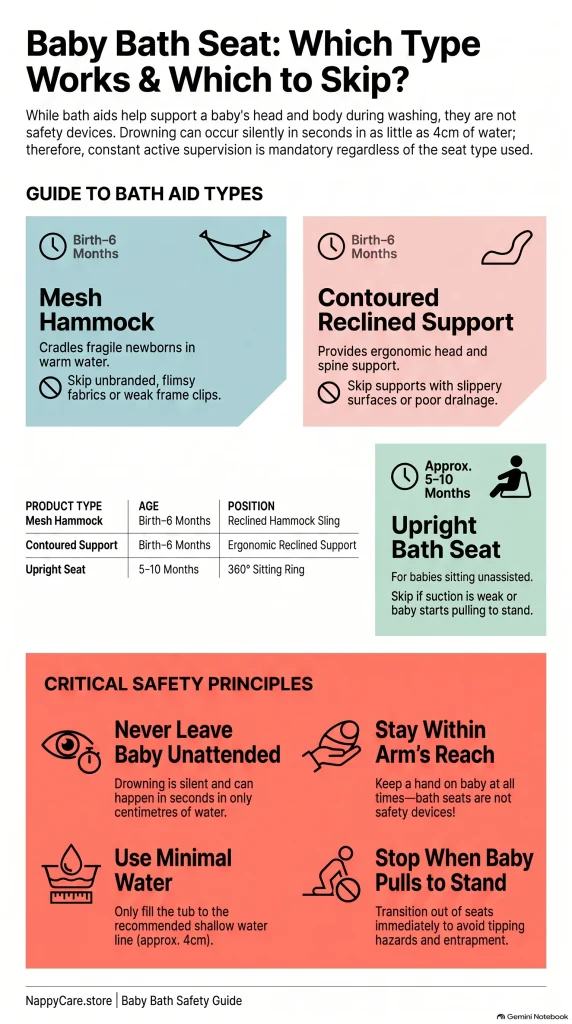
A contoured support is a solid, moulded piece, usually plastic or foam, that cradles your baby in a reclined position with ergonomic shaping for the head, back, and bottom. Think of it as a shaped cradle that sits inside a baby bath or the main tub.
Best for: Newborns to around 6 months, like the mesh hammock. The contoured shape holds your baby more securely than mesh, and many models include a water level indicator so you know exactly how much water is safe. The structured backrest offers more consistent head and neck support than a mesh frame, which can sag over time.
What to watch: Same short window as mesh. Also, because it is a solid surface rather than mesh, water can pool around your baby if the bath is overfilled. Keep water levels low, following the product’s indicator. In New Zealand homes, where hot water from the tap can reach 50 degrees or higher (up to 55 degrees in older homes), overfilling also increases scald risk if your baby accidentally reaches the spout.
Upright Support Seat
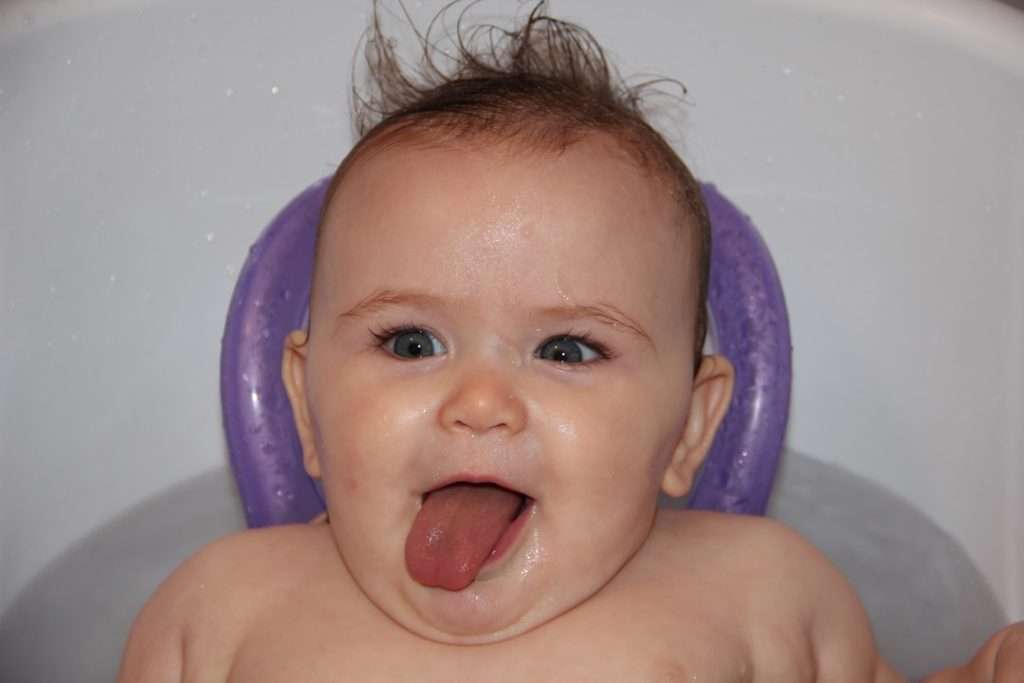
The upright seat is what most people picture when they hear “bath seat.” It is a plastic seat, often ring-shaped, with a backrest and side supports, attached to the adult tub with suction cups. Your baby sits upright inside it. This is the type designed for the sitting stage, and it is also the type most commonly associated with safety incidents.
Best for: Babies who can sit independently (approximately 5 months) until they begin pulling to a standing position (approximately 10 months). It frees both your hands for washing, which is genuinely helpful when your baby is at the age of grabbing for taps and cups. It also makes shared baths with a sibling more manageable.
What to watch: This is the type that has prompted the strongest warnings from safety bodies. Product Safety NZ specifically warns that suction cups can come loose, babies can slip through gaps, and babies can climb out. Check suction cups before every single use. Never use suction-cup seats in baths with uneven, slip-resistant, or worn enamel surfaces, because the cups will not adhere. Stay within arm’s reach at all times.
Practical rule: A bath seat gives you a free hand, not a free moment. Your hand is free, your eyes are not.
Safety Rules Every Parent Should Know
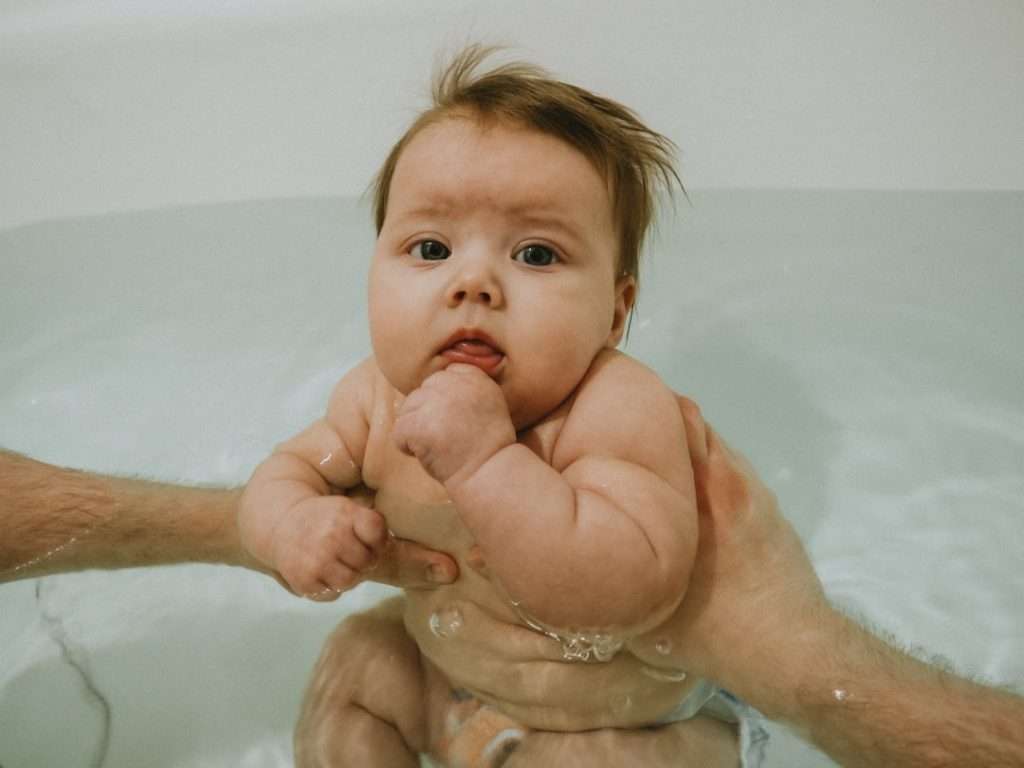
The rules below come directly from Product Safety New Zealand and align with the Australian mandatory safety standard for baby bath aids. They apply to every type of bath seat, every brand, and every bathroom. Following them does not eliminate risk, but ignoring them dramatically increases it.
- Never leave your baby unattended in the bath, not even for a few seconds. If you need to leave the bathroom for any reason, take your baby with you. This is the single most important rule, and no product on the market changes it.
- Stay within arm’s reach at all times. This exact phrase appears in both Product Safety NZ guidance and the Australian mandatory standard warning label. A bath seat does not change this requirement.
- Use minimal water. Product Safety NZ advises using only enough water to wet your baby using your hands. Babies can drown in just a few centimetres of water, and a seated baby who slips can end up with their face submerged very quickly.
- Check suction cups before every use. If your seat uses suction cups, press each one firmly before putting your baby in. Do not use suction-cup seats in baths with uneven, slip-resistant, or worn enamel surfaces, because the cups will not stick.
- Check water temperature before placing your baby in the bath. Aim for 37 to 38 degrees Celsius, which is the maximum recommended bathing temperature for young children in New Zealand. Run cold water first, then add hot, and test the final temperature with your elbow or a digital thermometer. At 55 degrees, a child can suffer a full-thickness scald in just 8 seconds.
- Never leave your baby in the care of an older child. Product Safety NZ is specific about this: older children may not recognise or react fast enough if a baby is getting into difficulty.
- Check the seat for worn or broken parts before each use. Cracked plastic, torn mesh, or loose suction cups mean the product is no longer safe.
- Position the seat away from taps and the spout. Your baby may reach for the tap and accidentally turn on hot water. This is especially relevant as your baby gets older and more curious, around 8 to 10 months.
Water Safety New Zealand and Plunket distribute a free bathmat at your baby’s five-month Well Child visit. The bathmat has a water safety message printed on it and is designed to prevent slippage in the bath. If you have not received yours, ask your Plunket nurse or Well Child provider. This is a free resource that complements safe bathing practices whether or not you use a seat.
For any concerns about your baby’s health, development, or safety, PlunketLine is free to call on 0800 933 922. No question is too small, and the nurses who answer have heard it all before, including bath time worries at 2am.
When to Stop Using a Bath Seat
Stop using any bath seat the moment your baby begins pulling to a standing position, which is typically around 10 months of age. This is not a suggestion. Every major manufacturer includes this instruction, and the international safety standard (ASTM F1967) requires it on the product labelling itself. The reason is straightforward: a baby who can pull to stand can use the seat’s backrest or armrests as leverage to climb out, and a fall into shallow water or onto the bath edge is immediate.
Other signs it is time to stop:
- Your baby tries to climb out of the seat, even if they are not yet pulling to stand
- Your baby’s weight exceeds the seat’s stated maximum (check the manufacturer’s limit)
- The seat feels unstable or the suction cups no longer hold firmly even on a clean, smooth surface
- Your baby seems cramped or uncomfortable, or their legs extend past the seat’s leg openings
Once your baby outgrows the seat, you have a few options. You can bath them without a seat, staying within arm’s reach at all times. You can use a non-slip bath mat (like the free one from Plunket and Water Safety NZ) to reduce slips. Or you can switch to showering with your baby, which many parents find easier once their little one is steady on their feet. For more on keeping your growing baby clean and comfortable, our baby grooming essentials guide covers skin care, nail trimming, and bath routines for older babies.
Frequently Asked Questions
Ready to Make Bath Time Easier?
If you are weighing up whether a baby bath seat is right for your family, the honest answer is that it depends on your baby’s stage and your bath setup. A mesh or contoured support can be genuinely helpful in the newborn months, and an upright seat can free a hand during the sitting stage, but only if you commit to constant supervision. NappyCare.store carries a range of bath and grooming essentials for every stage, and every order ships free within New Zealand with a 30-day hassle-free return policy, so if a product does not work for your baby, you are not stuck with it.
You can also contact your Plunket nurse or call PlunketLine free on 0800 933 922 for personalised advice about your baby’s bath routine. No question is too small. You are doing an amazing job, and we are so excited to be part of your family’s story.
Frequently Asked Questions
Are baby bath seats safe to use?
Baby bath seats are helping hands, not safety devices. Product Safety New Zealand states clearly that bath aids do not keep babies safe, and babies have drowned while using them. If you use one, you must stay within arm’s reach at all times, use minimal water, and never leave the bathroom without taking your baby with you.
At what age can I start using a baby bath seat?
It depends on the type. Mesh hammock and contoured reclined supports can be used from birth for babies who cannot yet sit. Upright support seats are suitable only once your baby can sit independently, which is around 5 months of age. Always check the manufacturer’s age and weight limits before using any product.
When should I stop using a baby bath seat?
Stop using any bath seat the moment your baby begins pulling to a standing position, typically around 10 months. At this stage, the seat becomes a climbing hazard. Also stop if your baby tries to climb out, exceeds the weight limit, or the suction cups no longer hold securely.
Can I leave my baby in a bath seat to grab a towel?
No. Never leave your baby unattended in a bath seat, not even for a few seconds. If you need to leave the bathroom for any reason, take your baby with you. Prepare everything you need (towel, washcloth, nappy, clothes) before running the bath so you never have to step away.
What type of bath seat is best for a newborn?
For newborns who cannot sit independently, a mesh hammock or contoured reclined support is the appropriate option. These hold your baby in a reclined position and free both your hands for washing. Upright seats with suction cups are not suitable for newborns or pre-sitters.