154 infant deaths and 64 serious injuries were believed to involve nursing pillows between 2010 and 2022, according to figures cited during U.S. Consumer Product Safety Commission rulemaking. That history shows why a baby pillow needs a specific purpose. If you’re looking for something to put in an infant’s crib or bassinet, don’t buy a pillow for sleep.
A nursing pillow can support supervised feeding, and some products are designed for other awake activities. Those uses are different from sleep. Check the product’s age range and instructions, and keep sleep safety separate from comfort or positioning claims.
Keep pillows out of an infant’s crib, bassinet, and play yard.
Use nursing pillows only during supervised feeds.
Choose awake-time supports for a specific activity, not sleep.
Ask a pediatrician about reflux or head-shaping concerns.
Wait until at least age 2 and out of the crib for a pillow.
An infant does not need a pillow for sleep
If you’re buying a pillow for a baby’s sleep space, skip it. The American Academy of Pediatrics (AAP) recommends a firm, flat sleep surface with only a fitted sheet. A pillow, even one labeled for infants, does not belong in a crib, bassinet, or portable play yard.
If the product is intended for sleep
For babies under 12 months, the safe choice is a clear sleep space, not a small or specially shaped pillow. Put your baby on their back on a firm, flat mattress designed for the sleep space. Keep pillows, blankets, stuffed toys, bumpers, and other soft objects out.
A product’s name or label doesn’t make it a safe sleep surface. “Baby pillow” can describe a nursing cushion, an awake-time support, a head-shaping product, or a pillow advertised for sleep. Read what the manufacturer says the item is for, but don’t treat a marketing claim as proof that it belongs in an infant’s crib.
Soft bedding can shift against a baby’s face, block airflow, or create a gap where a baby can become trapped. Young infants have limited control over their head and body, so they may not move away from an obstruction. A flatter or firmer pillow doesn’t remove those risks.
There’s no need to fill an empty crib with extra items to make it more comfortable. Babies need a suitable mattress and fitted sheet for sleep, not an adult pillow, a small decorative cushion, or a positioning device. Keep those items out even if the crib looks bare.
If you need support for another activity
A pillow-shaped product may have a separate use while your baby is awake, such as supporting a feeding position. That doesn’t make it suitable for sleeping. Choose based on the activity, follow the product’s instructions, and keep your baby within reach and under direct supervision.
If you’re buying a gift, avoid products advertised as baby sleep pillows. A feeding support or a practical item for the nursery may suit the family better, but check its intended use and age guidance first. When in doubt, ask the parents what they need rather than guessing at a sleep product.
A clinician may recommend a specific approach for a medical concern. Ask for clear instructions about the exact product, when to use it, and what supervision it requires. Don’t use an over-the-counter pillow, wedge, or positioner to address a health concern without that guidance.
A clear, flat sleep space reduces avoidable hazards
Safe sleep advice is about the whole surface, not a pillow’s softness or shape. A firm mattress and fitted sheet help keep the sleep space flat and clear. Extra bedding can move, cover a baby’s nose and mouth, or create an opening that a baby can’t easily escape.
What a clear sleep space does
A pillow may compress under a baby’s head, shift during sleep, or form a raised edge beside the face. A hollow or contoured design can also create a pocket around the head. These problems aren’t solved by using a smaller pillow or choosing one advertised as breathable.
The word breathable describes a product claim, not permission to use the product for infant sleep. A breathable cover or perforated fill doesn’t replace the AAP’s recommendation to keep pillows and other soft items out of the sleep space. Use a firm, flat mattress made for the crib or bassinet instead.
The AAP’s safe-sleep guidance also says to place infants on their backs for sleep, in their own sleep space. A couch, adult bed, swing, or car seat used outside of travel isn’t a substitute for a crib or bassinet. A nearby adult doesn’t turn a pillow or soft surface into a safe sleep area.
“Keep loose blankets, pillows, stuffed toys, bumpers and other soft items out of the sleep space.” — American Academy of Pediatrics
The rule applies to naps, too
Use the same clear setup for daytime naps and nighttime sleep. A baby may fall asleep during a feed or while being held; when that happens, move the baby to a suitable, empty sleep space as soon as you can. Don’t leave a sleeping infant on a nursing pillow, couch, or adult bed.
Some caregivers assume that a short nap or close supervision makes a soft surface acceptable. It doesn’t change the surface itself. If you need to set your baby down, use the crib, bassinet, or portable play yard with its firm mattress and fitted sheet.
The rule also applies when you travel. Pack the fitted sheet made for the travel crib, and keep pillows and other loose soft items out. A familiar-looking cushion may seem convenient in a hotel or relative’s home, but it doesn’t replace a suitable infant sleep surface.
If your baby rolls during sleep, keep following safe-sleep practices and leave the space clear. Place your baby on their back at the start of each sleep; don’t add a pillow to keep the head facing one way. The pillow isn’t a substitute for guidance about normal rolling or a medical concern.
Nursing pillows support feeding only while an adult supervises
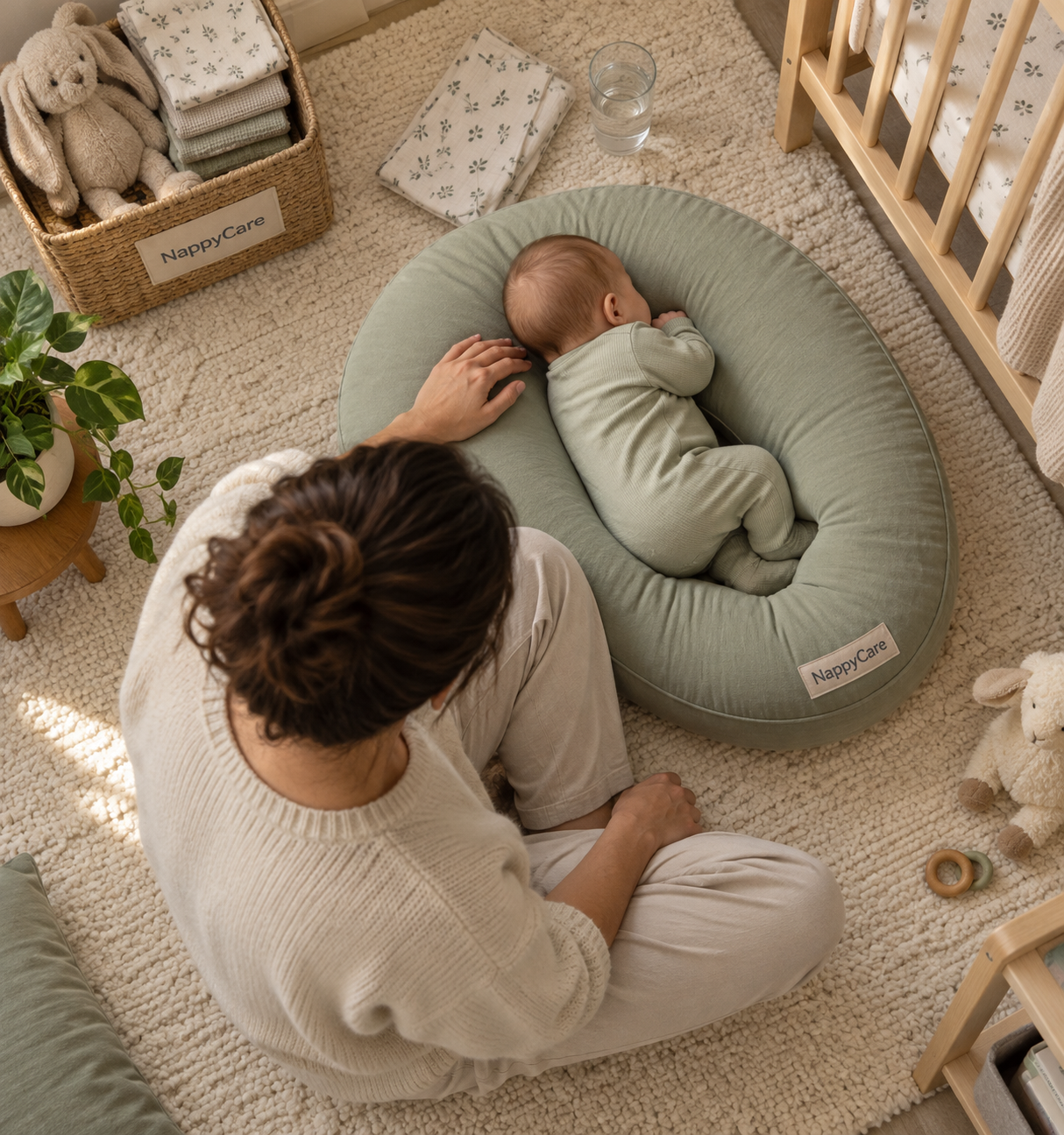
A nursing pillow is a feeding aid, not a place for a baby to rest or sleep. Its shape can bring a baby closer to a caregiver during breastfeeding or bottle-feeding, but the caregiver still needs to support and watch the baby. Remove the baby from the pillow when the feed ends.
Fit the cushion to the feeding position
Choose a nursing pillow that fits your body and the way you feed. The right height can reduce the need to hunch over or hold your arms in an awkward position, but a pillow that’s too high or too bulky can push the baby into an uncomfortable angle. Try to keep your baby close, with the head and body supported by your arms.
The cushion supports the caregiver’s position; it doesn’t replace the caregiver’s hands or attention. Keep your baby’s face visible and check that the nose and mouth stay clear. If the shape makes it hard to see or reposition your baby, don’t use that setup.
Fit varies with the caregiver, chair, and feeding position. A wraparound design may feel secure for one person and restrictive for another. Check whether the product stays in place as you move, and whether the cover or fastening system gets in the way of a comfortable hold.
Supervise every minute
Set up before bringing your baby to the pillow. A simple sequence reduces the chance of leaving the baby on the cushion while you reach for a bottle or adjust your seat:
Place the pillow around your body as directed by the manufacturer.
Sit in a stable position and keep needed feeding items within reach.
Hold your baby securely, with the face visible and airway clear.
Stay awake and actively supervise throughout the feed.
Move your baby to a firm, flat sleep space if they fall asleep.
Don’t use a nursing pillow as a lounger, tummy-time substitute, or surface for an unattended baby. If you need to step away, take the baby with you or place them in a suitable, clear sleep space. A strap or a snug fit around an adult’s waist doesn’t make the cushion a safe place to leave a baby.
The U.S. Consumer Product Safety Commission finalized a mandatory safety rule for infant nursing pillows in 2024, with requirements taking effect in 2025. The rule covers product performance and warnings. It doesn’t change the pillow’s purpose: feeding support under adult supervision, not infant sleep.
Check that the product has clear instructions, warnings, and an age range, and use it only as described. A compliant feeding pillow can still be misused if a baby is left on it or allowed to sleep there. If your baby becomes drowsy, finish the feed safely and move them to their own sleep space.
Awake-time supports must stay separate from tummy time
A baby doesn’t need a pillow to practice tummy time. Place your awake baby on a firm, clear surface, such as a blanket on the floor, and stay close enough to watch. The AAP recommends placing babies on their backs to sleep; supervised awake time is when you can offer other positions.
The floor is a practical starting point
Start with a short period when your baby is calm and alert, such as after a diaper change. Get down at your baby’s level, talk, or place a simple toy nearby. If your baby gets tired or upset, stop and try again later rather than propping them up with a sleep pillow.
A pillow beneath the chest or head can raise the face and make the baby’s position harder to assess. If you use a support product during an awake activity, check the label to confirm that the activity is an intended use. Stay close and keep the baby’s face visible the whole time.
Tummy time doesn’t mean leaving a baby on the stomach to sleep. When the activity ends, place the baby on their back in the clear sleep space if they’re ready for a nap. Keeping the awake and sleep routines separate makes it easier to apply the right safety rules at each point in the day.
Use supports only for the activity named
Some products are designed to support a baby during supervised play or feeding. Read the instructions for the permitted age, position, and setting; “for babies” is too broad to guide use. If the label doesn’t clearly describe your intended activity, choose a simpler option such as floor play on a clean, firm surface.
Don’t use an infant pillow to keep a baby’s head from turning or to shape the head during play. If you’ve noticed a flat spot or a preference for turning one way, tell your pediatrician. They can check whether the head shape or movement needs attention and explain what to do next.
A product that supports a baby while awake can still become unsafe if the adult looks away or the baby falls asleep. Stay close enough to intervene, and stop using the support if the baby slips, slumps, or can’t keep the face clear. A cushion doesn’t provide the same control as an adult’s hands.
A toddler pillow belongs later, after crib sleep ends
A young infant should not sleep with a pillow. For an older child, a cautious rule is to wait until at least age 2 and until the child has moved out of the crib before introducing one. A birthday alone doesn’t mean a pillow is needed; many children sleep comfortably without one.
Treat age and sleep setup as separate checks
The U.S. infant safe-sleep guidance focuses on babies during their first year. As children grow, their sleep setup changes, but moving to a toddler bed doesn’t mean they need a pillow immediately. Follow the product’s age guidance and use a pillow only when it suits the child’s sleep setup.
A child who still sleeps in a crib should have a clear sleep space. Don’t add a pillow because the child asks for one, or because a larger sibling uses one. If you’re unsure how a medical condition affects bedding, ask your pediatrician before changing the sleep space.
When you do introduce a pillow, choose one designed for a young child rather than an adult pillow. A compact, relatively flat pillow is easier to manage than a large, puffy one that can bunch up. Check the manufacturer’s age range and intended use instead of relying on a cute shape or “baby” branding.
Make the transition gradual and easy to check
Start with one pillow and keep the rest of the bed simple. That makes it easier to notice whether the pillow stays in place and whether your child actually uses it. If the child pushes it aside or sleeps without it, there’s no need to reposition it or add another cushion.
Don’t use a toddler pillow in an infant’s crib just because the label says it’s suitable for children over 12 months. The child’s actual sleep setup and the product’s instructions both matter. Keep any pillow out of a crib used by a younger baby.
For trips, use the same age and sleep-surface rules you use at home. A pillow that belongs in an older child’s bed doesn’t belong in a baby’s travel crib. If siblings share a room, keep each child’s bedding separate and don’t let an older child’s pillow drift into the infant’s sleep space.
Fit, shape, and fill matter only for the intended use
A pillow’s dimensions and shape can make it easier or harder to use for its stated purpose. They don’t make an infant sleep pillow appropriate for a crib. First decide whether you need feeding support, a later toddler pillow, or no pillow at all; then compare products within that category.
Compare products by their actual purpose
Product type
Intended use
What to check
Infant sleep use
Infant sleep pillow
Marketed for a baby’s sleep
Don’t buy for this purpose
Keep out of the sleep space
Nursing pillow
Supervised breastfeeding or bottle-feeding
Fit, instructions, warnings, and cover care
Not a sleep surface
Toddler pillow
Sleep for an older child, when age-appropriate
Age range, dimensions, firmness, and wash instructions
Not for an infant’s crib
Head-positioning pillow or wedge
Often marketed for head shape or positioning
Ask a pediatrician about the concern
Don’t use for infant sleep
For feeding, check whether the pillow fits your body and keeps the baby close without raising them too high. A product that feels stable in a chair may shift on a couch or bed. Try the intended setup in a firm chair, and keep the baby supported in your arms rather than relying on the cushion alone.
For an older child, compare the pillow’s size with the child’s bed and body. An oversized pillow can take up much of a small toddler bed, while a pillow that’s too thick may feel awkward. Follow the maker’s age range and dimensions; there isn’t one size that suits every child or bed.
Inspect shape, filling, and construction
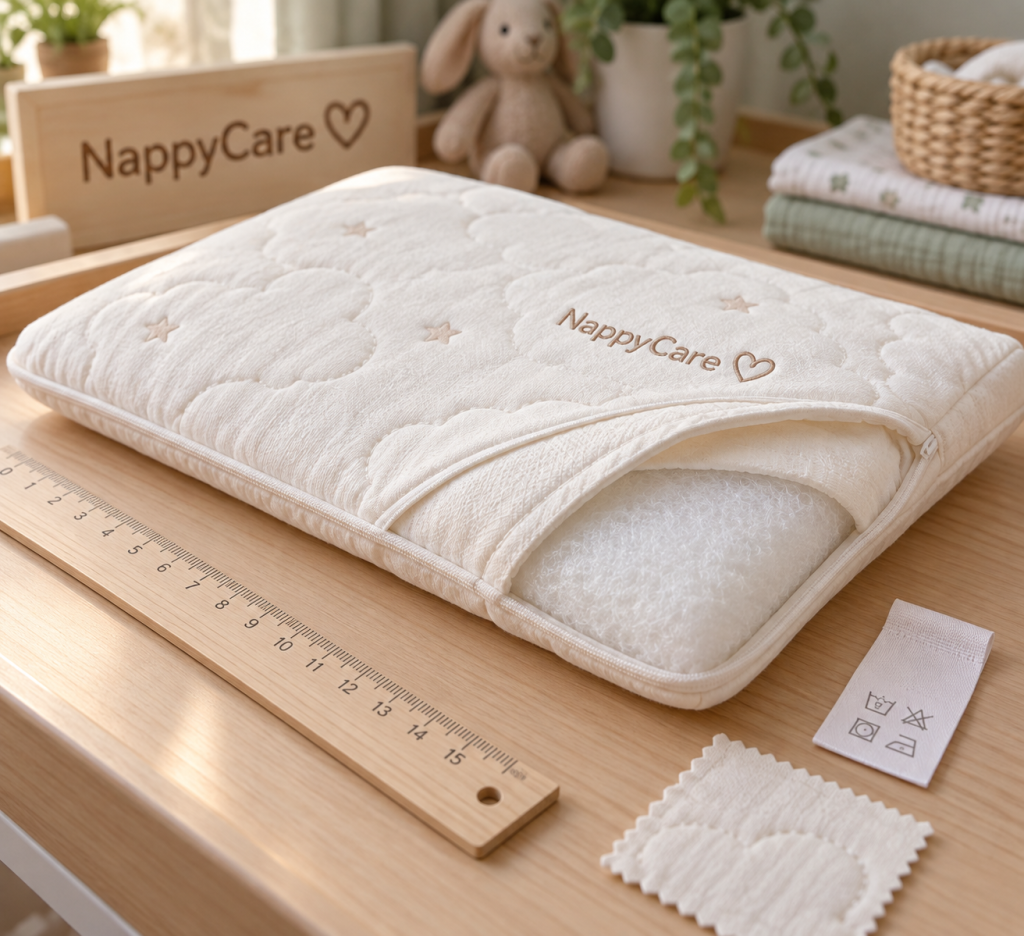
Look at the seams, cover, and closures. Neat stitching and a well-fitted cover help keep filling contained, while a broken zipper or open seam can expose fill or create a loose part. Don’t choose a product only because it looks soft or has a contoured shape.
Fill may include fiber, foam, or other materials, and each product has its own care and feel. For a nursing pillow, focus on whether it holds its shape during a supervised feed and whether the cover can be cleaned as directed. For a toddler pillow, follow the product’s age guidance; a particular fill doesn’t make it suitable for a baby.
“Firm,” “supportive,” and “breathable” are not substitutes for the right intended use. Even a well-constructed, washable, firm pillow remains inappropriate in an infant’s sleep space. That distinction matters more than a particular fabric or filling when you’re shopping for a baby.
Materials, cleaning, and medical claims need separate checks
A cover that can be cleaned according to its label is useful because feeding spills and spit-up are common. Before buying, check whether the cover comes off, whether the filling can be washed, and how the product must be dried. Care instructions matter because washing the wrong way can damage seams or change the shape.
Check the care label before the first wash
Don’t assume every cover is machine-washable or that the entire pillow can go in the washer. Some products require spot cleaning, while others allow a removable cover to be washed separately. Follow the label, and make sure the pillow is fully dry before using it again.
Consider how often the product is likely to need cleaning. A nursing pillow used at several feeds may need more frequent attention than a pillow stored for occasional supervised play. If washing and drying are difficult in your household, choose a product with care instructions you can follow consistently.
Claims such as natural, hypoallergenic, or breathable don’t tell you whether a product is safe for infant sleep. Read the materials list and care instructions for comfort and upkeep, but keep the safe-sleep decision separate. No fabric or fill makes a pillow appropriate for an infant’s crib.
Treat medical promises as a reason to ask questions
Head-shaping pillows are often promoted for flat spots, but don’t use one to change an infant’s head shape without medical advice. A flat area or a strong preference for turning one way is worth discussing with your pediatrician. The clinician can assess your baby and explain whether any follow-up is needed.
Anti-reflux wedges and inclined pillows also need caution. Don’t raise a crib mattress or place a pillow under a baby to manage reflux. If your baby has reflux symptoms, ask the pediatrician what to do; keep sleep on a firm, flat surface unless the clinician gives you specific medical instructions.
The UK Office for Product Safety and Standards issued a product safety alert on baby sleep pillows on December 11, 2025. It warned that products marketed for babies under 12 months shouldn’t be used for sleep or placed in a cot. That alert reflects UK guidance; wherever you live, follow the safe-sleep advice that applies to your family.
Ask a pediatrician about the specific symptom, not just whether a particular product looks suitable. Describe when the concern occurs, how often it happens, and what you’ve noticed. That gives the clinician useful context and helps prevent a marketing claim from standing in for an assessment.
A five-step check keeps the purchase tied to real needs
Before comparing colors or materials, name the job the product needs to do. If the answer is “help my infant sleep,” don’t buy a pillow. If it’s feeding support, check that the product is designed for supervised feeding and fits the way you plan to use it.
Read the label and instructions
Use this short sequence before you pay:
Name the use: sleep, supervised feeding, awake play, or an older child’s bed.
Check the age range: make sure it matches the child, not just the product title.
Read the warnings: look for supervision rules, prohibited uses, and setup instructions.
Inspect care and construction: check seams, closures, removable covers, and washing directions.
Check product details: note the manufacturer, model, and any applicable safety or recall information.
A label should make the intended use clear. If a product page describes both sleeping and supervised play, read the full instructions and warnings rather than assuming every listed use is safe for every age. Stop if you can’t tell whether the pillow is meant for an infant or an older child.
For feeding support, think about where you feed and how much room you have. A bulky shape may not fit your chair or the way you hold your baby. Choose a pillow that supports a comfortable position without blocking your view of the baby’s face or replacing your arms.
For an older child, check the pillow against the child’s bed and current sleep setup. Follow the maker’s age range, and don’t use an adult pillow simply because it’s already at home. A pillow isn’t a required purchase when a child moves to a bed.
Before buying, write down the product’s intended use and the child’s age. If the use is infant sleep, leave the pillow off your list. If it’s feeding support, choose a nursing pillow with clear instructions and use it only while you’re actively supervising. For reflux, head shape, or another medical concern, bring the question to your pediatrician before buying a positioning product.
Frequently Asked Questions
Can my baby sleep on a nursing pillow if I stay nearby?
No. A nursing pillow isn’t a safe sleep surface, even when an adult is close by. If your baby falls asleep during a feed, move them to their own firm, flat, clear sleep space.
Does my baby need a pillow for reflux?
No. Don’t use a pillow or wedge to incline an infant’s sleep surface. Ask your pediatrician about reflux symptoms and follow their advice while keeping the baby’s sleep space firm and flat.
When can a toddler use a pillow?
A cautious starting point is after age 2 and after the child has moved out of the crib. Check the product’s age guidance, and remember that a toddler can sleep without a pillow.
Can I put a pillow in a stroller or car seat?
Don’t add an unapproved pillow or cushion to a car seat; it can interfere with the harness fit. For a stroller, follow its manual and keep pillows out of the setup if the child might sleep there.
Does a head-shaping pillow prevent a flat spot?
Don’t rely on a pillow to prevent or treat a flat spot. Tell your pediatrician what you’ve noticed and ask whether your baby needs an assessment or specific follow-up.