
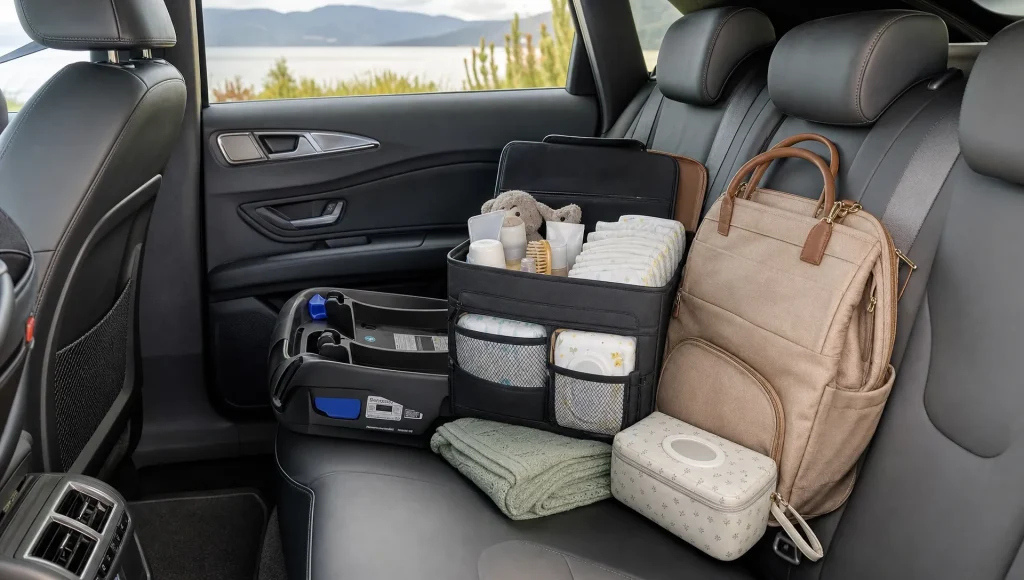
Leaving the house with a baby can feel like packing for a weekend away, even when you are only heading to a cafe, a grandparent’s house or a beach walk. The trick is not to carry everything. It is to carry the right things in a small, tidy kit that solves the most common problems: a nappy change, a hungry baby, a spill, a weather change and a tired little one.
A simple baby care kit is different from a full nappy bag. It is the grab and go set you can keep by the door, in the pram basket or ready to transfer between bags. For first time parents, it takes the guesswork out of leaving home. For baby shower gift shoppers, it also makes a genuinely useful present, especially when paired with practical baby care products the parents will use every week.
What a day away from home really needs
Most parents overpack because they picture every possible emergency. That is understandable, but a heavy bag can make outings harder. A better approach is to pack for the type of day you are actually having.
A two hour visit to family does not need the same supplies as a full day of errands. A newborn needs more feeding and nappy change support than an older baby who is eating snacks. A winter outing in Wellington may need warmer layers, while a summer trip in Northland calls for shade, fluids for feeding parents and extra clothing for sweat or dribbles.
Think of your kit as a compact answer to five questions:
- Can I change baby safely and cleanly?
- Can I feed baby the way we normally feed?
- Can I handle a leak, spill or spew?
- Can I keep baby comfortable if the weather changes?
- Can I settle baby enough to get home calmly?
If your kit covers those five points, you are well prepared for most ordinary days out.
The simple baby care kit checklist
The best kit is easy to restock. Use a small pouch, packing cube or mini organiser so everything has a place. If you use a pram often, you may prefer one kit in the pram and another in the car or by the front door.
| Category | What to pack | Why it helps |
|---|---|---|
| Changing | Nappies, wipes, change mat, nappy bags, barrier cream | Handles routine changes, leaks and messy surprises |
| Feeding | Burp cloth, bib, bottle items or breastfeeding support, baby spoon if needed | Keeps feeding calm and familiar away from home |
| Clothing | One full change, extra singlet or bodysuit, socks or booties | Covers spills, nappy leaks and temperature changes |
| Comfort | Dummy if used, small toy, teether or muslin | Helps settle baby in a new or noisy place |
| Clean up | Hand sanitiser, tissues, wet bag or spare zip pouch | Keeps dirty items contained until you get home |
| Weather | Sun hat, light blanket, warm layer or rain cover depending on the day | Makes NZ’s changeable weather easier to manage |
You can adapt the quantities depending on the age of your baby and how long you will be out. For a short outing, two nappies may be enough. For a longer day, pack one nappy for every two to three hours plus one extra.
Nappies and changing items: pack for delays
Nappy changes are the main reason a baby care kit exists. Even if you expect to be home before the next change, babies have their own timing. A spare nappy and wipes can save a trip from becoming stressful.
For newborns, include a soft change mat or disposable change liner so you are not relying on public change tables being spotless. A few nappy bags are useful for disposable nappies, wipes and soiled clothing. If your baby is prone to rash, add a travel sized barrier cream or a small amount decanted into a clean, labelled container.
If you are still learning the basics, it is worth reading a practical guide to changing a newborn nappy safely before your first longer outing. Good habits, like keeping one hand on baby and preparing supplies before you start, matter even more when you are away from your usual change space.
Wipes deserve their own mention. They are used for much more than nappies: sticky hands, milk spills, pram handles, cafe high chairs and your own clothes after a surprise spew. If you go through them quickly, buying in larger quantities can be more convenient, and NappyCare has a helpful guide on how to buy baby wipes in bulk without overstocking the wrong type.
Feeding supplies without overpacking
Feeding needs depend on your baby’s age and routine. Breastfed babies may need fewer items, but it still helps to carry a burp cloth, spare breast pads if you use them and a light cover or muslin if that makes you more comfortable. If you are bottle feeding, pack only what you need for the outing and follow safe preparation and storage advice from your midwife, Plunket nurse or healthcare provider.
For babies who have started solids, keep things simple. A small bib, baby spoon, food pouch or soft snack can be enough for a short outing. Pack food in a way that suits the temperature and length of the day. If you are driving between errands, avoid leaving milk or perishable food sitting in a hot car.
Parents who are preparing for the early weeks may find it useful to separate home feeding supplies from travel feeding supplies. The items you keep in a day kit should be easy to clean, easy to replace and not something you would miss if it stayed in the car overnight. For a broader setup, NappyCare’s guide to breastfeeding essentials covers what can help before and after baby arrives.
Clothing, weather and sleep backups
New Zealand weather can change quickly, so the clothing part of your kit should do more than cover nappy leaks. A full change of clothes is the minimum. For younger babies, that usually means a bodysuit or onesie. For older babies, add leggings or pants as well.
A muslin cloth is one of the most versatile items you can pack. It can work as a burp cloth, light blanket, shade layer, feeding cover or quick surface cover. In cooler months, add a beanie or warm layer. In warmer months, pack a sun hat and keep baby shaded, especially during the strongest part of the day.
If your baby sleeps well in the pram or car seat, include one familiar comfort item, such as a small soft toy or dummy if used. Keep sleep items safe and age appropriate. Avoid loose blankets or bulky items in car seats, and follow current safe sleep guidance whenever baby is sleeping away from home.
A simple packing formula by age
Your kit will change as your baby grows. Newborn outings usually centre on feeding, changing and keeping baby comfortable. Older babies need more snacks, teething support and clothing changes from crawling or messy eating.
| Baby stage | Focus of the kit | Helpful additions |
|---|---|---|
| Newborn to 3 months | Frequent feeding, frequent changes, soft layers | Extra muslin, spare singlet, change mat, burp cloth |
| 3 to 6 months | Longer awake time, more dribble, more routine | Teether, bib, small toy, extra top |
| 6 to 12 months | Solids, sitting, crawling and mess | Spoon, food pouch, larger bib, wet bag, spare pants |
| 12 months plus | Snacks, movement and independent play | Snack container, drink bottle if used, sun hat, compact activity |
This table is a starting point, not a rule. Some babies reflux often and need more cloths. Some babies rarely leak through clothing. After a few outings, you will know what your baby actually uses.
How to keep the kit small and easy to use
A baby care kit stops being useful when it becomes a bottomless bag. The aim is to create a small system you can trust.
Choose travel sized items where possible, but avoid making the kit so tiny that it fails when you need it. A mini pack of wipes, for example, is handy for short outings, but a half empty pack can run out at the worst time. Check it regularly.
Use clear pouches or labelled sections if more than one caregiver will use the kit. Grandparents, partners and babysitters should be able to find a nappy or spare outfit without unpacking everything. If your baby attends visits with family, having a duplicate mini kit at a grandparent’s house can make life easier.
A good rule is to remove anything you have not used after several outings unless it is a genuine emergency item, such as a spare nappy bag or clean change of clothes. You can always add seasonal items back later.
The quick restock routine
The best time to restock is as soon as you get home, not five minutes before you leave again. Make it part of the unpacking rhythm: remove dirty clothes, refill nappies, top up wipes and replace any used feeding items.
Try this simple reset after each outing:
- Throw away rubbish and empty used nappy bags.
- Put soiled clothes, bibs and cloths straight into the wash.
- Replace nappies, wipes and creams you used.
- Check weather items for the next few days.
- Put the kit back in the same place every time.
This habit is what makes the kit reliable. You should be able to leave the house without mentally rebuilding the bag from scratch.
Turning a baby care kit into a thoughtful gift
For baby shower gift shoppers, a ready made day out kit is practical, personal and unlikely to sit unused in a cupboard. Instead of buying only cute clothing, choose everyday items that support real life with a newborn.
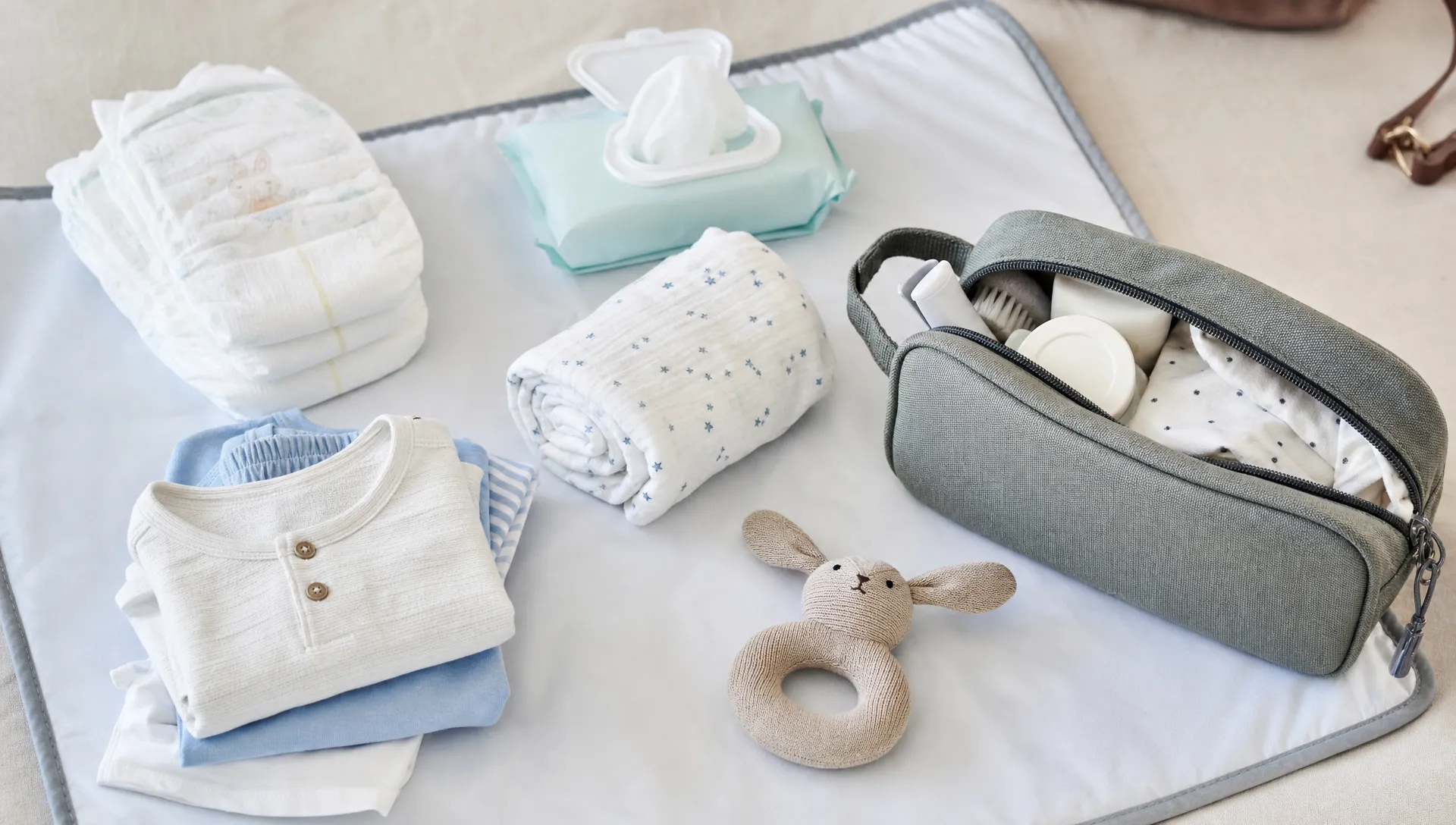
Start with a soft pouch, small nappy caddy or compact organiser. Add nappies in a newborn or size one option, gentle wipes, a muslin cloth, a bib, a simple toy and a change mat. If you are unsure about the parents’ preferred nappy or feeding style, keep the gift neutral and include a gift card so they can choose what suits their baby.
Presentation can still be beautiful. Roll the clothing, tie the muslin with ribbon and include a short note explaining that the kit is designed for first outings, car trips and visits with family. It is a gift that says, “I know the small daily things matter.”
Common mistakes to avoid
One common mistake is packing too many duplicates. Four outfits, three toys and a large container of cream may feel safe, but they add bulk fast. For most outings, one full clothing change and one comfort item are enough.
Another mistake is forgetting the parent. Add a water bottle, snack, spare top or breast pads if relevant. A calm, fed parent is part of a calm outing.
It is also easy to forget that babies change quickly. A kit that worked at eight weeks may be missing key items by six months. Review your kit at the start of each new size, season or feeding stage.
Frequently Asked Questions
How many nappies should I pack for a day away from home? For short outings, two nappies plus one spare is often enough. For longer days, pack roughly one nappy for every two to three hours away, then add one extra in case plans change.
Do I need a separate baby care kit if I already have a nappy bag? Not always, but a small kit can make life easier. It keeps the most used items together, which is helpful when switching between a pram, car, handbag or caregiver’s bag.
What should I pack for a newborn’s first outing? Keep it simple: nappies, wipes, a change mat, nappy bags, one full change of clothes, a muslin, feeding supplies and a warm or light layer depending on the weather.
How often should I update my baby care kit? Check it after every outing and review it properly each month. Babies grow fast, so clothing sizes, nappy sizes and feeding items can become outdated quickly.
Is a baby care kit a good baby shower gift? Yes. A practical day away kit is useful for first time parents because it supports real outings, appointments and family visits. It also works well with a gift card if you are unsure what the parents already own.
Make days out feel easier
A simple baby care kit will not prevent every surprise, but it gives you a calm starting point. Pack for changing, feeding, clothing, comfort and clean up, then adjust as your baby grows.
If you are building a kit for your own family or putting together a practical baby shower gift, you can browse baby essentials, feeding items, sleeping accessories and thoughtful gifts at NappyCare. Choose the baby care products that fit your routine, keep the kit light and enjoy getting out with a little more confidence.