

It is 2am, your baby is crying, and you can see a white nub of tooth pushing through swollen gums. You are rifling through the medicine drawer and you find a tube of Bonjela. But is it actually safe to use? The answer depends entirely on which Bonjela tube you are holding, because there are two different products in New Zealand pharmacies and supermarkets, and the age limits are not the same.
Here is the quick version: Bonjela Soothing Teething Gel contains no choline salicylate and is suitable for babies 6 months and over. Bonjela Mouth Ulcer Gel contains choline salicylate and is restricted to children 18 months and over unless a healthcare provider has advised otherwise. Since May 2023, Medsafe reclassified the choline salicylate product to pharmacy-only for infants under 18 months, following a case where a baby in New Zealand nearly died from overdose.
Quick Answer: Is Bonjela Safe for Your Baby?
Yes, Bonjela teething gel is safe when you use the right product for your baby’s age and follow the dosage instructions exactly. The single most important thing to know is that New Zealand has two separate Bonjela products with different active ingredients and different age limits. Getting them confused is the most common and most dangerous mistake parents make at 2am.
If your baby is under 6 months, neither Bonjela product is recommended. For babies 6 months and older, the Soothing Teething Gel (the one without choline salicylate) is the product designed for teething. For children 18 months and over, the Mouth Ulcer Gel (containing choline salicylate) can also be used, but it is pharmacy-only for under 18 months so a pharmacist can give you dosage advice directly.
How Bonjela Works and NZ Age Guidance
The Bonjela brand in New Zealand covers two products that look similar on the shelf but work very differently inside your baby’s body. Knowing the difference is the key to using Bonjela teething gel safely.
Bonjela Soothing Teething Gel (No Choline Salicylate)
This is the product designed specifically for teething babies. It contains natural extracts including chamomile, aloe vera, and mallow, along with xylitol and hyaluronic acid. It works by creating a protective film over the gums to soothe inflammation and discomfort. There is no choline salicylate, no sugar, and no alcohol in this formulation.
Age guidance: 6 months and over. You can buy it from both supermarkets and pharmacies. Apply enough gel to cover the sore area on your little finger, then gently massage it into the gums up to 3 to 5 times a day if needed. Applying it after meals and before sleeping works best, because saliva and the tongue will gradually remove the gel.
Bonjela Mouth Ulcer Gel (Contains Choline Salicylate)
This is the product that older generations often think of when they hear “Bonjela.” Its active ingredient is choline salicylate, a mild analgesic related to aspirin. It also contains 33.45% ethanol (alcohol). It works by reducing pain and inflammation at the site where it is applied, similar to how aspirin works systemically but delivered topically to the gums or mouth ulcer.
Age guidance: 18 months and over, unless a healthcare provider has specifically advised you to use it for a younger child. The label also states it should not be used in babies under 4 months under any circumstances. Since 1 May 2023, Medsafe reclassified this product as pharmacy-only for children under 18 months, meaning you can no longer buy it off a supermarket shelf for a baby. You must speak to a pharmacist, who can give you dosage advice and check that it is appropriate for your child.
Why Medsafe Changed the Rules
The reclassification happened after a New Zealand baby nearly died from Bonjela overdose. In 2019, a mother gave her teething daughter Bonjela on the advice of her GP, applying it alongside Pamol and Nurofen. The baby developed metabolic acidosis from the choline salicylate and was rushed to Starship Hospital, where she was placed in an induced coma. She survived, but the case prompted Medsafe to review the entire classification.
Between January 2017 and June 2020, the National Poisons Centre received 370 calls about choline salicylate exposure. Of those, 368 involved children, and the majority were in the teething age range of 0 to 2 years. The issue is not that choline salicylate is inherently dangerous when used as directed. The problem is that it is very easy to apply too much, too often, especially when your baby is crying and you just want to help.
What Choline Salicylate Does in the Body
Choline salicylate is a salicylate, the same family of compounds as aspirin. When applied to the gums, it reduces pain and inflammation locally. But a portion of it is absorbed through the gum tissue into the bloodstream. If you apply too much or apply it too frequently, salicylate levels build up in your baby’s system. Because babies are small and their bodies process salicylates more slowly than adults, the threshold for toxicity is much lower than most parents realise.
This is why Medsafe’s guidance is specific: apply a pea-sized amount (about 0.5 cm of gel) to the affected area, no more than every 3 hours, and no more than 6 times in any 24-hour period. Prolonged or excessive use can lead to salicylate poisoning, which is a medical emergency.
How to Apply Bonjela Safely
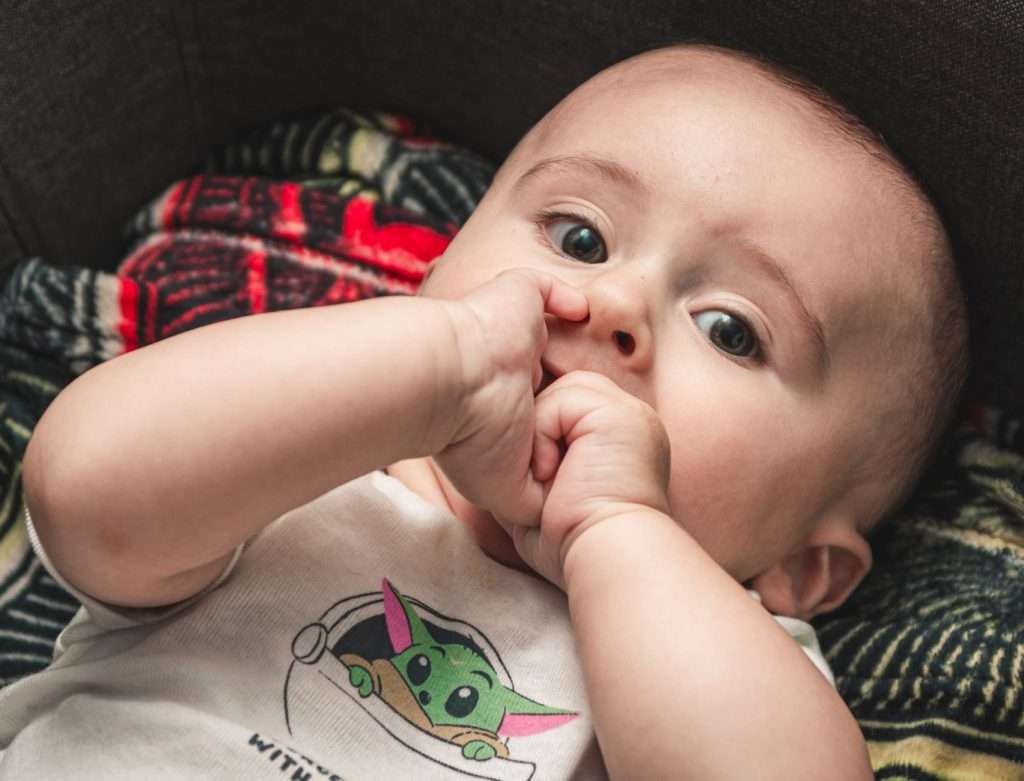
Whether you are using the Soothing Teething Gel or the Mouth Ulcer Gel, the application method matters. The gel needs to stay on the gums long enough to work, and the amount you use must stay within safe limits.
Step-by-Step Application
- Wash your hands thoroughly before starting.
- Squeeze a small amount of gel onto your little finger. For the Mouth Ulcer Gel, this means a pea-sized amount, roughly 0.5 cm. For the Soothing Teething Gel, use enough to cover the sore area.
- Gently massage the gel onto the affected gum area. Do not rub aggressively, as inflamed gums are already tender.
- Try to apply after meals and before sleep, when saliva production is lower and the gel is less likely to be washed away quickly.
- For the Mouth Ulcer Gel, wait at least 3 hours before reapplying, and do not exceed 6 applications in 24 hours.
- For the Soothing Teething Gel, you can apply up to 3 to 5 times per day as needed.
Practical Rule: Less Gel, More Often Is Not Safer
One of the most common mistakes is thinking that a smaller amount applied more frequently is safer than a proper dose applied at the correct interval. It is not. The risk with choline salicylate is cumulative, meaning total exposure over 24 hours is what matters. Six pea-sized applications at the correct intervals is the maximum. Seven or eight smaller applications is an overdose, even if each individual amount looks tiny.
Products and Conditions to Avoid
The Mouth Ulcer Gel containing choline salicylate should not be used if your child:
- Is under 18 months of age, unless a healthcare provider has advised it
- Is under 16 years and has, or is recovering from, chickenpox or influenza
- Is under 16 years and has a fever
- Has a known allergy to salicylates (including aspirin)
- Has a stomach ulcer
Plunket also notes that teething itself does not make babies sick. If your baby has a fever, diarrhoea, or seems genuinely unwell, teething may not be the cause. This is exactly the kind of situation where you should pick up the phone rather than reach for another dose of gel. For more on keeping your baby safe during everyday routines, see our guide on which baby bath seat type works and which to skip, which covers similar safety-first decision-making for nursery products.
Signs of Salicylate Poisoning to Watch For
If you have used the Mouth Ulcer Gel and notice any of these symptoms, seek medical help immediately. Call Healthline on 0800 611 116, take your baby to an after-hours clinic, or call 111 if symptoms are severe.
- Unusual sleepiness or drowsiness that seems out of proportion
- Vomiting
- Fever that develops after using the gel
- Rapid or fast breathing
- Ringing in the ears (older children may be able to describe this)
These signs can develop within hours of application. Do not wait to see if they resolve on their own. Salicylate poisoning can progress to metabolic acidosis, which is a life-threatening condition requiring hospital treatment.
What Else Works for Teething Pain?
Bonjela teething gel is one tool in the kit, but it is not the only one, and Plunket advises that there is little evidence teething gels are effective since most of the gel is quickly removed by saliva and the tongue. Having non-gel alternatives means you are not reaching for the tube every time your baby fusses, which reduces the risk of accidental overuse.
Cold Teething Rings

This is the first-line remedy Plunket recommends. A clean teething ring cooled in the fridge (not the freezer) can numb the gums and give your baby something productive to chew on. The cold reduces inflammation, and the counter-pressure from chewing actually helps the tooth push through. Frozen teething rings are too hard and can bruise already tender gums, so stick to the fridge.
Look for one-piece silicone or natural rubber teethers with no detachable parts. Avoid liquid-filled rings, which can break and leak. BPA-free food-grade silicone is the gold standard because it does not harbour bacteria the way cloth or wooden teethers can. You can read more about safety considerations for baby products in our NZ newborn essentials guide, which covers what to prioritise and what to skip.
Gum Massage with a Clean Finger
Sometimes the simplest solution is the most effective. Wash your hands, then gently rub your baby’s gums with a clean finger or the back of a cold spoon. The pressure provides relief and the physical touch is comforting. Plunket recommends this as a first option before reaching for any product.
Chilled Fruit in Muslin
If your baby has started solids (around 6 months), you can wrap a piece of chilled fruit in a muslin cloth and let them suck on it. The cold and the texture provide relief, and the muslin prevents chunks from breaking off and becoming a choking hazard. This is a Plunket-endorsed method that works well during the day when you can supervise.
Ice Wrapped in a Face Cloth
Wrap an ice cube in a clean face cloth and hold it against your baby’s cheek on the side where the tooth is coming through. The cold numbs the area through the skin. Never give an ice cube directly to a baby, as it is a choking hazard and can damage gums.
Paracetamol or Ibuprofen for Real Pain
When teething pain is severe enough that your baby cannot settle to sleep, paracetamol may be appropriate. Plunket’s guidance is that you can give paracetamol to children over 3 months who are in pain or have a fever over 38.5 degrees and are miserable. Always talk to a doctor before giving paracetamol to a baby under 3 months. Never exceed 4 doses in 24 hours, and always dose by weight, not age. If you are unsure about the correct dose, call PlunketLine on 0800 933 922.
Natural Teething Balms
Some NZ parents use aromatherapist-formulated teething balms that are applied externally along the jawline rather than inside the mouth. These can be a good option if your baby clamps their mouth shut or if you prefer not to apply products inside the mouth. Look for products suitable from 3 months and always check the ingredient list for potential allergens.
Teething Relief Options Compared
| Option | Age | How It Works | Best For | Watch Out For |
|---|---|---|---|---|
| Bonjela Soothing Teething Gel | 6 months+ | Protective film over gums, natural ingredients | Daytime gum discomfort | Limited evidence of effectiveness |
| Bonjela Mouth Ulcer Gel | 18 months+ (pharmacy-only under 18 months) | Choline salicylate reduces pain and inflammation | Severe gum pain, mouth ulcers | Salicylate poisoning risk if overused |
| Cold teething ring | 3 months+ | Cold numbs gums, chewing pressure helps tooth break through | Anytime, especially before feeds | Avoid frozen rings and liquid-filled rings |
| Gum massage | Birth+ | Manual pressure relieves gum tension | Quick, no-product relief | Wash hands first |
| Chilled fruit in muslin | 6 months+ (solids started) | Cold and texture soothe gums | Daytime with supervision | Choking risk without muslin wrap |
| Paracetamol (e.g. Pamol) | 3 months+ (doctor under 3 months) | Systemic pain relief | Severe pain preventing sleep | Dose by weight, max 4 doses in 24 hours |
| External teething balm | 3 months+ (check product) | Aromatherapy blend applied to jawline | Babies who refuse in-mouth products | Check for allergens |
When to See a GP or Plunket Nurse

Teething causes fussiness, drooling, and disrupted sleep. It does not cause high fever, diarrhoea, vomiting, or a widespread rash. If your baby has any of those symptoms alongside what you thought was teething, something else may be going on and you need to speak to a health professional.
Plunket is clear on this point: teething does not make babies sick. If your baby is unwell, do not assume it is just teething. Call your GP, your Plunket nurse, or PlunketLine on 0800 933 922. PlunketLine is a free 24/7 service answered by registered Plunket nurses, and you do not need to be a Plunket client to use it. You can also call Healthline on 0800 611 116 for general health advice.
Red Flags That Are Not Teething
- Fever above 38.5 degrees that does not settle
- Vomiting or diarrhoea
- Bleeding or pus in the gums
- Swelling in the mouth or face
- Your baby seems unusually drowsy or lethargic
- Symptoms that last more than a few days without a tooth appearing
Any of these warrant a prompt call to your GP or PlunketLine. Trust your instincts. If something does not feel right, it is always worth checking.
Frequently Asked Questions
Stocking Your Teething Toolkit
Having the right teething products ready before you need them means you are not making decisions at 2am with a crying baby in your arms. We carry a range of teething essentials at NappyCare.store with free NZ shipping and 30-day hassle-free returns, so if a teething ring or balm does not work for your baby, you are not stuck with it. Pair any gel or balm with a good quality silicone teething ring, and you have options for day and night.
For any medical questions about teething pain, dosage, or whether a product is right for your baby, PlunketLine on 0800 933 922 is your best first call. The nurses are available 24/7, the call is free, and they would rather hear from you at 2am than have you second-guessing alone. You are doing an amazing job, and we are so glad to be part of your parenting village.
Frequently Asked Questions
Can I use Bonjela on my 4-month-old baby?
No. Bonjela Soothing Teething Gel is suitable for babies 6 months and over, and Bonjela Mouth Ulcer Gel (containing choline salicylate) is for children 18 months and over. Neither product is recommended for a 4-month-old. For younger babies, try gum massage with a clean finger, a cold teething ring from the fridge, or ice wrapped in a face cloth held against the cheek.
What is the difference between Bonjela Soothing Teething Gel and Bonjela Mouth Ulcer Gel?
Bonjela Soothing Teething Gel contains natural ingredients like chamomile and aloe vera, with no choline salicylate, and is suitable for babies 6 months and over. Bonjela Mouth Ulcer Gel contains choline salicylate (related to aspirin) and alcohol, and is suitable for children 18 months and over. The Mouth Ulcer Gel is pharmacy-only for children under 18 months since Medsafe reclassified it in May 2023.
How often can I apply Bonjela teething gel?
For the Soothing Teething Gel (no choline salicylate), you can apply it up to 3 to 5 times a day as needed. For the Mouth Ulcer Gel (containing choline salicylate), apply a pea-sized amount no more than every 3 hours, and no more than 6 times in 24 hours. Applying it after meals and before sleep works best because saliva removes the gel quickly.
What are the signs of Bonjela overdose in babies?
Signs of salicylate poisoning from Bonjela overdose include unusual sleepiness, vomiting, fever, and rapid breathing. These can develop within hours of application. If you notice any of these symptoms after using the Mouth Ulcer Gel, seek medical help immediately by calling Healthline on 0800 611 116 or taking your baby to an after-hours clinic.
Is teething gel better than a cold teething ring?
Plunket and Healthify note there is little evidence that teething gels are effective, because saliva and the tongue quickly remove most of the gel. Cold teething rings are a first-line remedy recommended by Plunket because the cold numbs the gums and the chewing pressure helps the tooth break through. Many parents use both: a teething ring during the day and a small amount of gel before sleep.