
Bringing a newborn home turns the day into a loop of tiny checks. You feed, burp, settle, then open the nappy again because the smell, the squirm, or the wet line on the front says it’s time. For many first-time parents, the confusing part isn’t just the mess, it’s figuring out whether the diaper for newborn is the right size, the right material, or not being changed often enough.
That’s why a good newborn diaper routine is less about shopping harder and more about reading what the nappy is telling you. Wetness, urine output, stool, fit, and skin condition all give clues about feeding, comfort, and whether the current size is still doing its job. If you treat the diaper as a daily observation tool, the whole newborn stage becomes easier to interpret.
Table of Contents
- Bringing Baby Home and Choosing the First Diaper
- Newborn vs Size 1 and Why Weight Beats Age
- Inside a Newborn Diaper and What Each Layer Does
- Hypoallergenic and Skin-Friendly Options for Sensitive Newborns
- Getting the Fit Right with Fastening and Placement Tips
- How Often to Change a Newborn Diaper
- Preventing Diaper Rash and Protecting Newborn Skin
- Putting It All Together and Stocking Smart
Bringing Baby Home and Choosing the First Diaper
The first night at home often looks quiet from the hallway and busy at the changing mat. You may have blankets folded, wipes ready, and a stack of nappies that seemed generous in the shop, until you start seeing how often a newborn needs changing. Early on, many babies go through 8 to 12 diaper changes per day, so the smallest size is a short, high-turnover stage, not a box to store away for months Texas Diaper Bank guidance. That same pattern is why families are often told to expect only about 200 to 300 newborn diapers total before the baby grows out of this first size.
That can catch first-time parents off guard. The box says “newborn”, and it is easy to read that as a long stretch of use. In practice, the first size can disappear quickly, especially if the baby is born larger or gains weight steadily in the first weeks.
What matters before you buy
The useful question is simple, will this fit the baby’s weight band, hold frequent small wees, and stay kind to skin through repeated changes? A diaper for newborn use should be judged by fit, material feel, and leak control, because the diaper is doing more than absorbing wetness. It is also giving you clues about hydration, output, and how the skin is coping.
That is why the first pack is best treated as a trial, like checking the fit of a tiny coat before buying the next size. If you want to browse a broad range of baby items while you are still organising the first weeks, NappyCare.Store baby products is one place that carries newborn-related essentials alongside other infant items. The aim is not to buy more, it is to choose with less guesswork.
Practical rule: Buy the smallest newborn pack you are comfortable testing first. If the fit is good and the output pattern matches, restocking becomes much easier than trying to return unopened boxes later.
Newborn vs Size 1 and Why Weight Beats Age
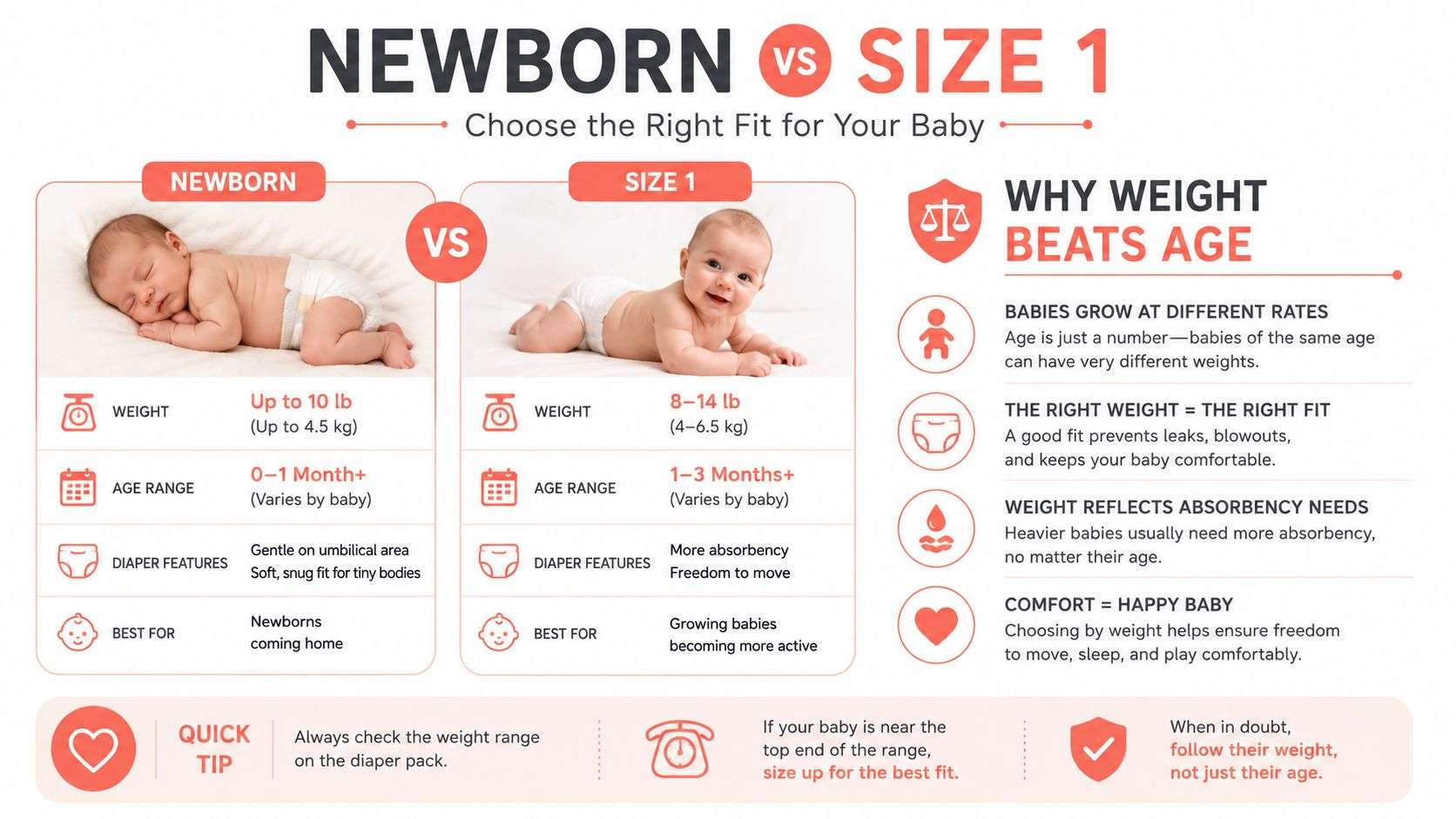
The simplest sizing rule is also the one many parents ignore. In New Zealand, newborn diapers fit babies up to 4.5 kg (10 lb), and that weight band is more useful than the age printed on the box because babies don’t follow the same timetable McKesson product specification. A smaller baby may stay in newborn size longer, while a bigger baby may need the next size almost immediately.
Read the body, not the label
A diaper that’s too small usually leaves clues. You may see red marks at the waist, tight leg gathers, or blowouts at the back because the seal can’t hold. That’s not a parenting failure, it’s just the diaper telling you the current size has lost its shape on the body.
Size 1 becomes the workhorse stage for many families because it usually lasts longer and gives a little more room for growth. The practical habit is to watch for fit, not to cling to a label just because the pack says “newborn”. A baby who’s nearing the upper weight band or starting to leak regularly may be ready to move on even if the size still looks “right” in the drawer.
Visual guide
The easiest test is mechanical, not emotional. If the waist closes comfortably, the leg elastics sit where they should, and the back panel stays snug without digging in, the size is probably still doing its job.
Fit beats age every time: if a baby’s body says the diaper is too snug, the number on the pack doesn’t matter.
Video guidance can help when the fit feels hard to judge at home.
Inside a Newborn Diaper and What Each Layer Does
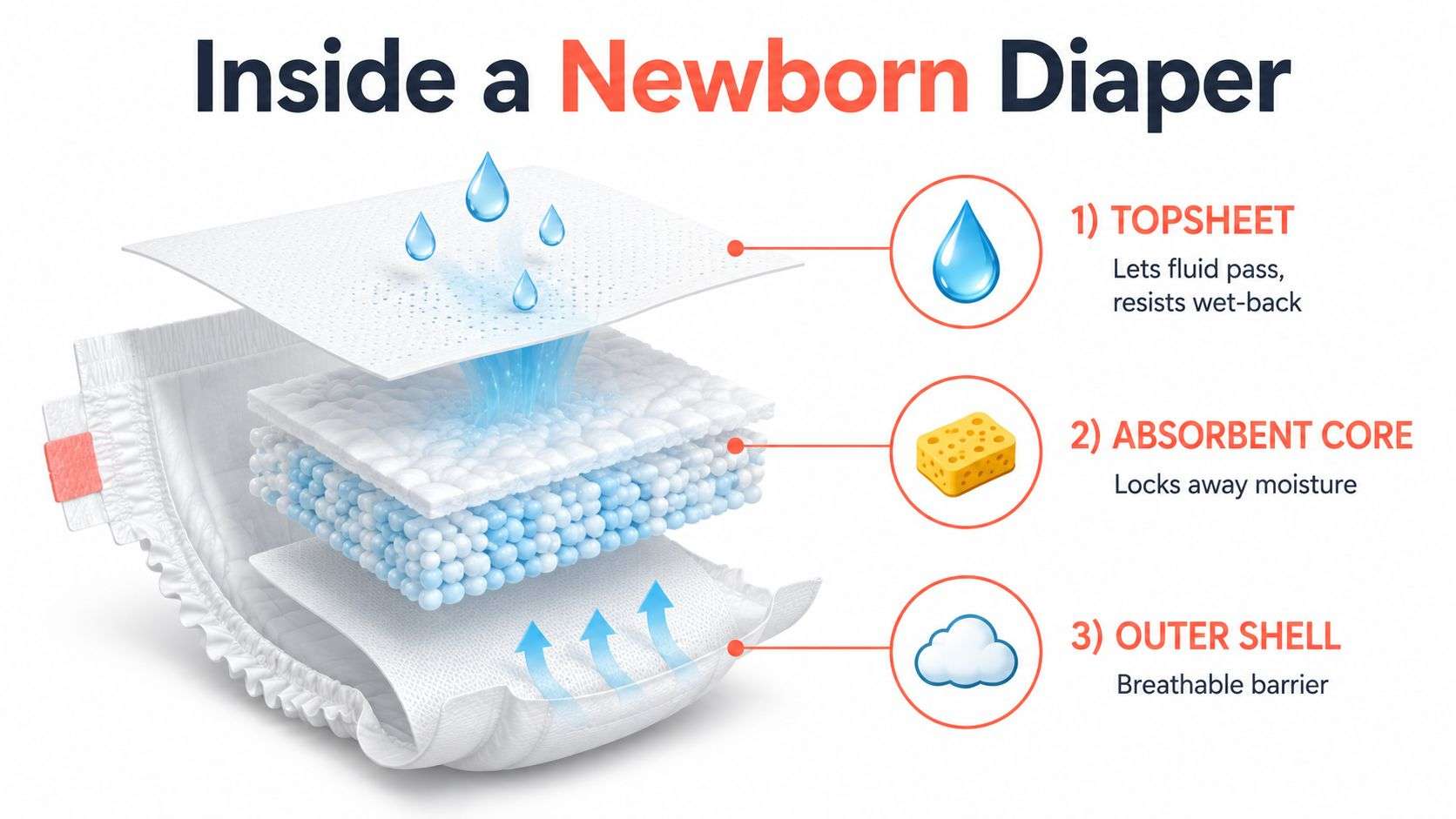
A disposable nappy works because each layer has a specific job, and that makes it useful as a daily observation tool, not just a piece of hygiene gear. The topsheet sits against the skin and needs to move fluid through quickly while resisting wet-back, so moisture travels away from the baby instead of lingering on top. Beneath it sits the absorbent core, usually built from fluff pulp and superabsorbent polymer, or SAP, which helps hold urine inside the diaper rather than letting it spread back across the surface technical diaper specification.
Why SAP loading matters
The absorbent core is a lot like a small sponge system with different jobs in each part. In the technical sheet, a lighter mini diaper with 3 g SAP is listed at 200 mL max absorption, while a slightly heavier midi diaper with 4.5 g SAP reaches 300 mL technical diaper specification. That does not mean every newborn needs the highest absorbency available. It does show that absorbency is built into the diaper by design, not added as a vague promise after the fact.
The outer part matters too. The referenced technical sheet describes a cloth-like outer surface, a hydrophilic inner nonwoven, and an extra-high hydrophobic leg barrier, which helps keep moisture in the diaper rather than on clothes or skin technical diaper specification. For newborns, that matters because output is frequent and small, so leaks often come from layer design that does not match the baby’s body rather than from one large accident.
What to look for on a pack or spec sheet
- Hydrophilic topsheet: helps fluid move down fast.
- SAP-based core: helps hold urine away from the skin.
- Elastic leg gathers: helps reduce side leakage during squirming or sleep.
- Soft inner surface: matters more than people expect in the first weeks.
A parent can use these details the same way a nurse checks a diaper between changes. A dry-looking outer layer, a topsheet that pulls fluid inward, and leg gathers that sit flat can all help show whether the diaper is keeping skin drier between checks. If a diaper does not name these features, it may still work, but you are choosing with less visible information about how it is built.
Hypoallergenic and Skin-Friendly Options for Sensitive Newborns
Newborn skin can react quickly, and preterm skin is even more vulnerable because it’s thinner. That’s why the safest comparison is usually not between “premium” and “budget”, but between fragrance-free, simple-material diapers and ones loaded with extra extras that sound nice on a shelf but add more variables at home.
How to read common claims
Hypoallergenic is a helpful word, but it doesn’t tell you everything by itself. It suggests the product is designed to reduce the chance of irritation, yet parents still need to check for fragrance, dyes, and a long ingredient list. Fragrance-free is easier to judge because it tells you there’s no added scent, which matters when skin is already adjusting to wipes, stool, moisture, and rubbing.
Breathability also matters overnight. A diaper that traps too much dampness can leave the skin sitting in a warmer, wetter environment, which is the last thing a newborn’s bottom needs after several changes in one day. For babies with eczema-prone or very reactive skin, a simpler material profile often makes more sense than chasing a “softer” marketing claim that doesn’t explain what’s inside.
Use the diaper as a skin check: redness after repeated changes can point to friction, moisture, or a reaction to the product, not just “sensitive skin” in general.
If you’re comparing options alongside other baby-care items, NappyCare.Store baby care products is a straightforward place to look at the kinds of essentials many families bundle together. For a sensitive newborn, though, the most important filter is still plainness, not packaging.
A sensible shortlist is easy to remember. Choose fragrance-free first, keep the material list simple, and treat “hypoallergenic” as a reassuring label rather than a guarantee. That approach gives you a cleaner baseline for noticing whether a rash is coming from the diaper, the wipes, or just normal newborn skin adjustment.
Getting the Fit Right with Fastening and Placement Tips
Fit is where a lot of leaks start. Two nappies can look identical on the shelf and behave very differently once they’re on a baby’s body, because the diaper needs to sit snugly in the right places without squeezing. If the fastening tabs land unevenly or the leg openings sit too low, moisture has an easy escape route.
Check the fastening points
Start with the waist. In the early days, the waistband should sit just below the umbilical cord stump, and the tabs should land symmetrically on the front panel. That keeps the diaper anchored without rubbing an area that’s still healing.
Then check the legs. The gathers should rest flush against the thighs, not gape out or collapse inward. A quick two-finger test at the waist helps you judge tightness, and if the back panel sags or pulls away, the size may already be off.
A useful way to think about it is like fastening a tiny raincoat. Too loose, and the rain gets in. Too tight, and the coat is uncomfortable and leaves marks. The right fit protects clothes, skin, and sleep.
Signs the fit needs adjusting
- Red pressure marks: the waist or thighs are being compressed too much.
- Gaps at the leg openings: the seal isn’t sitting in the right place.
- Back leaks: the diaper may be sitting too low or failing to contain output.
- Tabs crossing awkwardly: the front panel may be too small for the body shape.
Some adjustable fastening systems help a lot in the first weeks, especially when babies are changing shape quickly. If a leak happens once, that doesn’t automatically mean the absorbency is wrong. It may just mean the diaper is sitting in the wrong position for your baby’s body.
How Often to Change a Newborn Diaper
A newborn diaper changes the day into a series of small checks. After a feeding, after a stool, and whenever the diaper feels wet, you get a chance to read what the baby’s body is telling you. In practice, that usually means changing every 2 to 3 hours during the day, and overnight when the nappy is obviously wet or soiled newborn diaper timing guidance. The routine helps protect skin, catches leaks before they spread, and makes output easier to track.
That output is one of the clearest early signals in newborn care. NZ newborn-care guidance says a baby should usually have about 2 wet nappies by day 2, 3 by day 3, and 6 or more wet nappies daily from day 4 onward NZ newborn wet-nappy guidance. If those wet diapers are not showing up, the diaper itself may not be the problem. Wetness also reflects how feeding is going, so a low count deserves a closer look at intake, latch, or bottle volume.
Newborn wet-nappy targets by age
| Age | Expected Wet Nappies | What to Watch |
|---|---|---|
| Day 2 | About 2 | A low count can mean intake still needs close watching |
| Day 3 | About 3 | Look at feed frequency and whether urine is becoming clearer |
| Day 4 onward | 6 or more daily | Ongoing low output deserves a feeding review |
Early urine may also show brick-dust crystals, which can be normal in the first few days. If they keep appearing beyond the first week, that can point to dehydration and should prompt feeding advice or medical review NZ newborn wet-nappy guidance. A diaper is not just a place to contain mess. It works like a small daily logbook, showing whether milk is coming in, moving through the baby, and leaving the body as expected. If you want a place to compare baby-care supplies while you build your routine, NappyCare.Store baby care products can be one starting point for that search.
A dry nappy means different things at different ages. In the first days, it can be part of normal adjustment. Later on, the same pattern can be a warning sign.
Preventing Diaper Rash and Protecting Newborn Skin
Clinical guidance for newborn rash prevention starts with routine, not expensive products. Change promptly after soiling, cleanse gently, avoid vigorous rubbing, and keep the fit snug but not tight. Those basics matter more than chasing the most absorbent option on the shelf, because a diaper that causes friction or holds too much dampness can still leave skin irritated.
What clinicians recommend
For babies prone to diaper dermatitis, a petrolatum or zinc-oxide barrier can help protect the skin surface NICU developmental diapering guidance. That matters especially for preterm babies, whose skin is thinner and easier to break down. If you’re caring for a very small newborn, start with a gentle routine before you focus on speed.
Developmental diapering also treats the diaper as part of overall comfort, not just cleanup. Wetness indicators can reduce unnecessary opening and waking, and skin-to-skin contact still matters even when the diaper routine is dialled in. That perspective helps tired parents, because it keeps attention on the baby’s comfort rather than only on whether the nappy held everything in.
If the skin already looks red, do not keep changing products every hour. Start with the basics, watch the pattern over a day or two, and pay attention to whether the rash seems to appear after poop, after wipes, or after the diaper has been left on too long. A steady routine usually shows the cause faster than a frantic switch between brands.
A diaper can also work like a daily skin check. Redness, lingering dampness, and repeated irritation are signals, not just mess, and they help you notice when the skin needs a gentler approach. If you want a place to compare baby-care supplies while you build your routine, NappyCare.Store baby care products can be one starting point for that search.
Putting It All Together and Stocking Smart
A sensible newborn diaper plan has five parts. Start with weight-based sizing, not age. Choose a gentle, fragrance-free material profile if the skin is reactive. Look for a SAP-rich core if you need better overnight containment. Check the fit after the first change, then keep a steady 2 to 3 hour change rhythm during the day.
The bigger context matters too. The global baby diaper market was valued at USD 83.3 billion in 2025 and is projected to reach USD 141.8 billion by 2033, with Asia-Pacific holding 40.6% of revenue in 2025 Grand View Research market overview. At the same time, disposable diapers can take up to 500 years to decompose, and around 20 billion are discarded annually in the United States alone. Those numbers are a reminder that diapering is a recurring household decision, not a one-time purchase.
A simple stocking mindset
- Buy small first: newborn size is short-lived for many babies.
- Watch output and skin: the diaper is giving you information.
- Move up when fit changes: leaks, marks, and back gaps matter.
- Don’t overstack one size: the drawer should match the baby, not your anxiety.
Newborn baby clothes can also matter in the first weeks because clothing and nappy fit affect how easily you spot leaks and check the waistline. Simple clothing makes the diaper easier to read, like keeping a chart uncluttered so the important signals stand out. A onesie that sits smoothly at the waist can help you notice whether the diaper is damp, sagging, or leaving marks, and that turns everyday dressing into a quick check of your baby’s output and skin. Use that observation to adjust your stock based on your baby’s actual body shape and wetness pattern, rather than filling drawers ahead of time.
If you’re putting together a newborn care list, NappyCare.Store offers baby and maternity essentials, secure checkout, and worldwide shipping in one place. For parents comparing practical items for the first weeks, it can be a simple place to review baby-care basics and make a more measured purchase. Visit NappyCare.Store when you’re ready to build a newborn routine that matches your baby’s size, skin, and daily needs.
Produced via the Outrank app